Bar Cabinet Cost Drivers: Solid Wood Explained in Singapore
Solid wood furniture is often described as a simple material choice, but the price of a bar cabinet, dining table, bed frame, or wardrobe can vary by thousands of dollars. The label alone does not explain the cost. Timber species, moisture control, joinery, dimensions, hardware, finishes, delivery, and warranty terms all affect the final amount.
For Singapore homes, these factors become especially practical. An HDB flat in Tampines may have a 90 cm corridor and a lift with limited turning space, while a Punggol condo might have wider common corridors but strict building rules for moving bulky furniture. GST should also be included when comparing prices. MIDHILL, a Foshan solid wood furniture maker established in 2008, exports to more than 15 countries and backs its products with a 10-year structural warranty, lifetime refinishing, free shipping above US$350, and a 14-day return period. Those terms explain part of the value, but they do not replace an examination of how the furniture is made.
What determines the price of a solid wood bar cabinet?
The wood itself is only the first layer of pricing. A bar cabinet built from North American oak may use different grade, thickness, drying method, and surface treatment from one made with European oak or rubberwood. A cabinet finished with natural oil can require more preparation than one coated with a standard lacquer. The number of drawers, adjustable shelves, glass doors, cable openings, and anti-tip fittings also changes the labour.
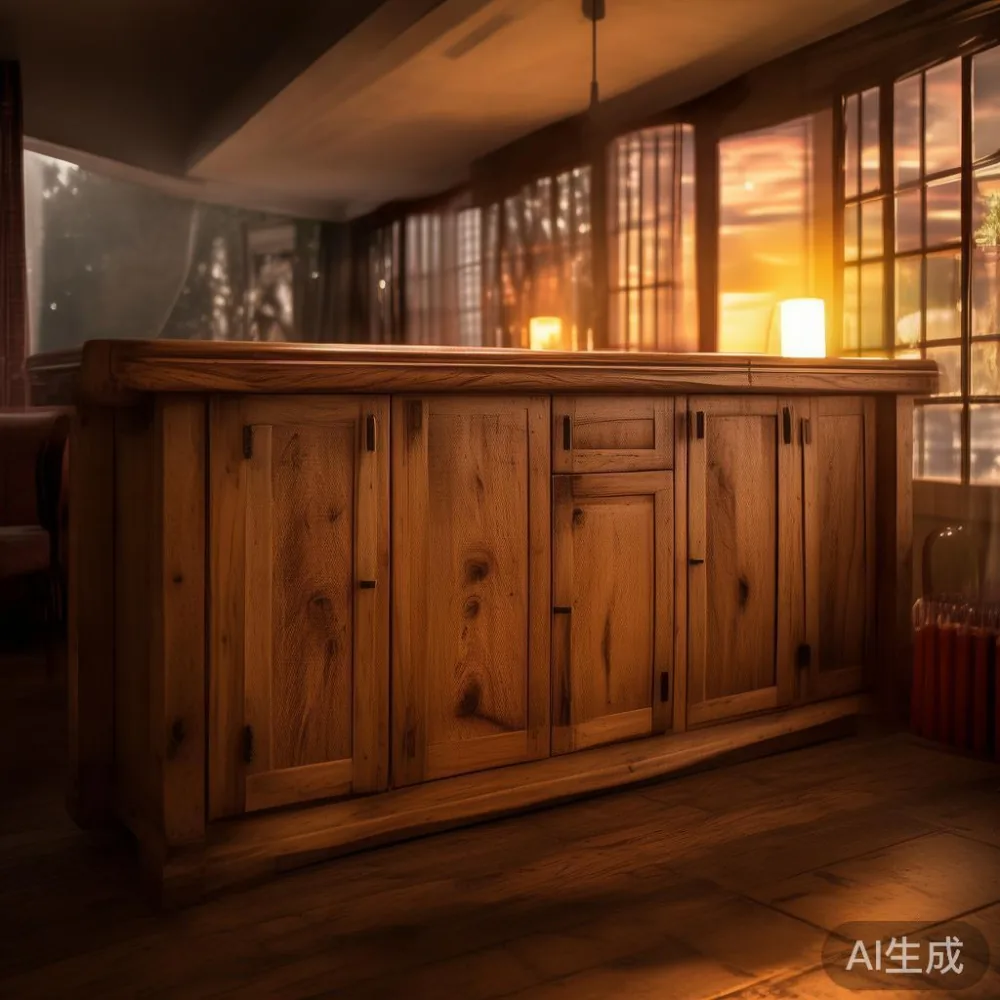
Consider a practical example. A bar cabinet measuring 180 cm wide, 45 cm deep, and 95 cm high, weighing approximately 78 kg, may retail around SGD 2,280 before GST. A similar 150 cm unit at 62 kg might cost SGD 1,680. The smaller cabinet is not simply less expensive because it is smaller; it may use fewer components, but the difference can also reflect the grade of timber and the finish standard.
Solid wood construction also needs careful attention to movement. Wood expands and contracts as humidity changes, so experienced makers use appropriate panel construction rather than treating every board like a fixed piece of metal. In Singapore’s humid conditions, a well-finished bar cabinet should have sealed edges, stable joints, and doors that can be adjusted after delivery.
How much should timber quality affect the price?
Timber grade is one of the clearest price drivers. Premium hardwood can show pronounced grain, small mineral streaks, and colour variation. Select-grade timber may cost more because the boards are chosen for appearance as well as strength. Lower grades can still make durable furniture when the construction is sound, but they may have more knots, filled repairs, and colour changes.
Species matter too. White oak, walnut, teak, ash, and cherry each have different market prices and machining behaviour. Solid wood furniture made from walnut, for example, may cost more than comparable rubberwood products because walnut boards are less abundant and require closer visual sorting. Plywood, MDF, and particleboard are different products with different cost structures; they should not be compared as if they were the same material simply because all are engineered wood panels.
Thickness is another measurable factor. A 20 mm solid wood tabletop has roughly twice the board volume of a 10 mm panel, before defects, waste, and machining are considered. A dining table with a 30 mm top may therefore cost more than one with a 20 mm top even when the timber species is identical. Weight is useful as a rough comparison: a 200 cm dining table might weigh 68 kg, while a lighter 160 cm model may weigh 42 kg.
Buyers should ask for the actual species, board thickness, finish, and construction details. “Solid wood” should not mean solid wood only on the most visible front, with concealed panels made from cheaper materials. For a bar cabinet, the carcass, shelves, drawer boxes, doors, and backing are all worth checking.
Does joinery explain why one furniture piece costs more?
Yes. Joinery is where timber, accuracy, and labour meet. Mortise-and-tenon joints, dovetail drawer construction, dowelled joints, and well-fitted hardware can take considerably longer to produce than basic screw-and-cam assembly. The finished piece may look nearly identical at a distance, yet its internal construction can affect longevity, repairability, and resale value.
Last month I visited a workshop where a cabinet maker showed me two drawer boxes that looked similar from outside. One used a plywood base with inserted hardwood strips and machine screws; the other used solid timber dovetails. The dovetail version took 74 minutes to assemble for one drawer, compared with 18 minutes for the simpler box. That extra time does not create the entire retail price difference, but it shows why “same wood” is not a complete comparison.
In a Singapore bedroom, a 120 cm solid wood bed frame may use mortise-and-tenon corner joints, a slatted support system, a centre support leg, and a headboard with upholstered panels. A low-cost frame may use dowels, fewer support points, and thinner components. A typical engineered frame might weigh 38 kg, while a heavier hardwood frame may weigh 55 kg. The heavier unit usually needs more timber, but construction quality must be assessed separately.
Is a more complicated finish worth a higher price?
Finishes protect the surface, but expensive finishes are not always the most suitable ones. Lacquer, stain, natural oil, wax, and open-pore treatments each offer different levels of colour control, repairability, and maintenance. A light-luxury finish usually emphasises subtle grain, soft contrast, and a calm appearance rather than a heavy orange tint.
French light luxury often uses pale woods, creamy upholstery, restrained profiles, and refined hardware. American light luxury tends toward clean lines, generous proportions, and durable performance fabrics. Post-modern light luxury may pair unusual shapes with visible material character. The style label can guide the look, but the finishing process determines durability.
A bar cabinet that takes 6 hours to sand, fill, stain, seal, and dry will cost more in labour than one finished in 2 hours. However, a thick layer of glossy lacquer is not automatically better. If it chips, it can be difficult to repair. A repairable oil finish may be more useful in a busy dining room, particularly for families with children.
This is one reason MIDHILL includes lifetime refinishing. It is not simply a decorative promise: it recognises that a real wood surface will age, scratch, and lose its original tone. A customer comparing a USD 2,400 imported cabinet with an SGD 2,900 local-order cabinet should compare what happens after 3 years, not only the invoice on day one.
How do dimensions, weight, and Singapore access affect delivery costs?
Size affects both manufacture and logistics. A 220 cm wardrobe may need separate sections, protective wrapping, and a two-person installation. A bar cabinet at 180 cm wide and 82 kg may enter a service lift, while a 240 cm unit may need to be tilted or carried through a stairwell. Corridors with a 92 cm clear width and a right-angled turn can make a larger cabinet difficult to manoeuvre even when it fits through the door.
For HDB flats in Bedok, Punggol, and Tampines, buyers should measure the lift door, lift depth, hallway corners, and the intended installation space before ordering. Condo corridors may be wider, but the loading bay, parking distance, and reserved lift time can add charges. In Singapore, a building management fee of SGD 50 to SGD 150 is possible, while a long carry from the loading area may add SGD 80 to SGD 250.
Delivery timing also matters. A stock item may arrive in 5 to 9 working days within Singapore, while a made-to-order bar cabinet may take 35 to 60 days. Custom sizes can require another 10 to 20 days. GST is normally 9%, so an SGD 2,400 item becomes SGD 2,616 before delivery or building charges.
Large furniture should be measured diagonally, not only by width and height. A 150 cm cabinet may need a clear route of at least 162 cm when tilted on its side. That small arithmetic exercise can prevent a return trip with a damaged cabinet or scratched corridor.
How much do hardware, function, and storage planning add?
Hardware can be a meaningful cost. Soft-close drawer runners, concealed hinges, adjustable shelf pins, lock systems, LED strips, and charging modules each add price. A bar cabinet with 4 drawers, 2 adjustable shelves, 2 glass doors, and integrated cable management may be around SGD 2,680 before GST. A simpler version with 2 drawers, 1 fixed shelf, and solid doors may be around SGD 1,890.
Storage planning can reveal the difference between a cheaper cabinet and a more expensive one that works better in an HDB dining area. The height of the working counter, the reach of a seated guest, the depth needed for bottles, and the clearance needed for a marble table all matter. A marble table may look compact but weigh 115 kg, so it should never be treated as a lightweight surface to move alone.
The same principle applies to other products. A wardrobe with adjustable hanging rails, deep drawers, and a ventilated section may cost more than a basic two-door model. A nightstand with a soft-close drawer and a concealed power socket may add SGD 90 to SGD 180. The question is not whether every feature is necessary, but whether the extra cost improves daily use.
What should I compare besides the sticker price?
Start with a written specification. Ask for the timber species, finish type, dimensions, internal dimensions, shelf load rating, drawer construction, assembly requirements, warranty, and after-sales support. For a dining table, check whether the 180 cm length seats 6 comfortably and whether the apron or frame allows 58 cm of knee clearance. For a bed frame, confirm the mattress size and whether the headboard fits a 300 cm-wide bedroom wall.
It also helps to compare furniture by use rather than by category. A search for the best European sofa for 2026 is useful only after checking seat depth, frame material, cushion density, fabric rub rating, and delivery access. Likewise, the best Vintage sofa for 2026 may suit a condominium living room but overwhelm a 420 cm-wide HDB living room. The best French provincial sofa for 2026 may match light-luxury interiors, yet its carved details will not automatically make it practical for a family with two children.
Design terms should be read with some care. A market may associate solid wood sofa with solid wood framing, but the cushions and upholstery remain separate choices. An Italian light luxury bed may use premium textiles and Italian design references, yet its structural timber still needs to be identified. A guide to how to style Japanese sofa in room layouts can provide useful proportions, but it should complement rather than replace clear furniture measurements.
For buyers interested in best Italian light luxury furniture, the relevant questions are the same: who made it, what materials were used, what service is available, and how will it age? MIDHILL’s 10-year structural warranty and 14-day returns provide a useful benchmark, although buyers should still confirm local service arrangements, delivery terms, and the conditions attached to each order.
Why do light-luxury solid wood pieces cost more?
Light luxury is not defined by one extravagant feature. It is usually the combination of proportion, tactile materials, controlled detailing, and a sense of calm. A bar cabinet may have a restrained frame, gently bevelled edges, discreet storage, and hardware that feels pleasant to operate. Those details can take longer to design and produce than a visually louder product with simpler construction.
Cost also follows refinement. A carefully graded timber with fewer knots, a tighter grain pattern, and more consistent colour takes more sorting. Hand-sanded edges, matched grain direction, aligned doors, and uniform gaps require extra checks. A post-modern light luxury bar cabinet might use an arched door and a curved handle, but the shape must still be stable and the moving parts must remain serviceable.
The final price may reflect scale and labour rather than the word “luxury.” A 210 cm solid wood sofa with 3 large cushions can require more fabric, foam, stitching, and frame material than a smaller 2-seat model. A solid wood bed frame with shaped headboard panels and slatted support may take 14 hours to assemble, compared with 4 hours for a flat-pack design.
There is no need to pay for every fashionable detail. Spending SGD 200 more on a correctly sized bar cabinet may produce more value than spending SGD 1,000 on an oversized marble table that blocks a corridor or weakens the room’s layout.
How can Singapore buyers compare quotations fairly?
A fair comparison uses the same conditions. Compare before and after GST, delivery, stair carrying, assembly, and building fees. Check whether the quotation includes door removal, floor protection, and anchoring. A lower advertised price of SGD 1,980 may become SGD 2,650 after 9% GST, SGD 120 delivery, and SGD 150 building access charges, while an SGD 2,200 quotation may arrive fully assembled with anchoring included.
Then compare the costs that appear after purchase. A 5-year warranty with no refinishing service may offer less long-term support than a 10-year structural warranty with lifetime refinishing, even if the first invoice is higher. A 14-day return period can also reduce risk, especially when access and dimensions are uncertain.
Finally, think in terms of cost per year. A bar cabinet used for 10 years at SGD 2,616 with GST has a simple purchase-price equivalent of about SGD 262 per year, excluding service. That is more useful than treating the amount as a single unavoidable sum. If the cabinet fits properly, stores what the household needs, and can be maintained, its price becomes more rational.
Solid wood furniture is priced through a chain of material, precision, labour, design, and support decisions. The timber species and grade establish the material baseline; board thickness and joinery add structural cost; finishes, hardware, and function add utility; delivery and access determine the landed amount; and warranties influence long-term value. Once those parts are visible on the quotation, the price becomes far easier to judge against design, room size, and expected years of use.