Singapore's Solid Wood Cabinet Prices: The Truth Behind
Solid wood furniture is often reduced to a photograph, a material label, and a sales price. That makes comparison difficult. Two bar cabinets may look related while differing by S$1,200, while a dining table can carry a premium that is visible only in its joinery, finish, and dimensions. Price is not a simple measure of appearance. It reflects the chain of decisions that turns timber into a usable household object.
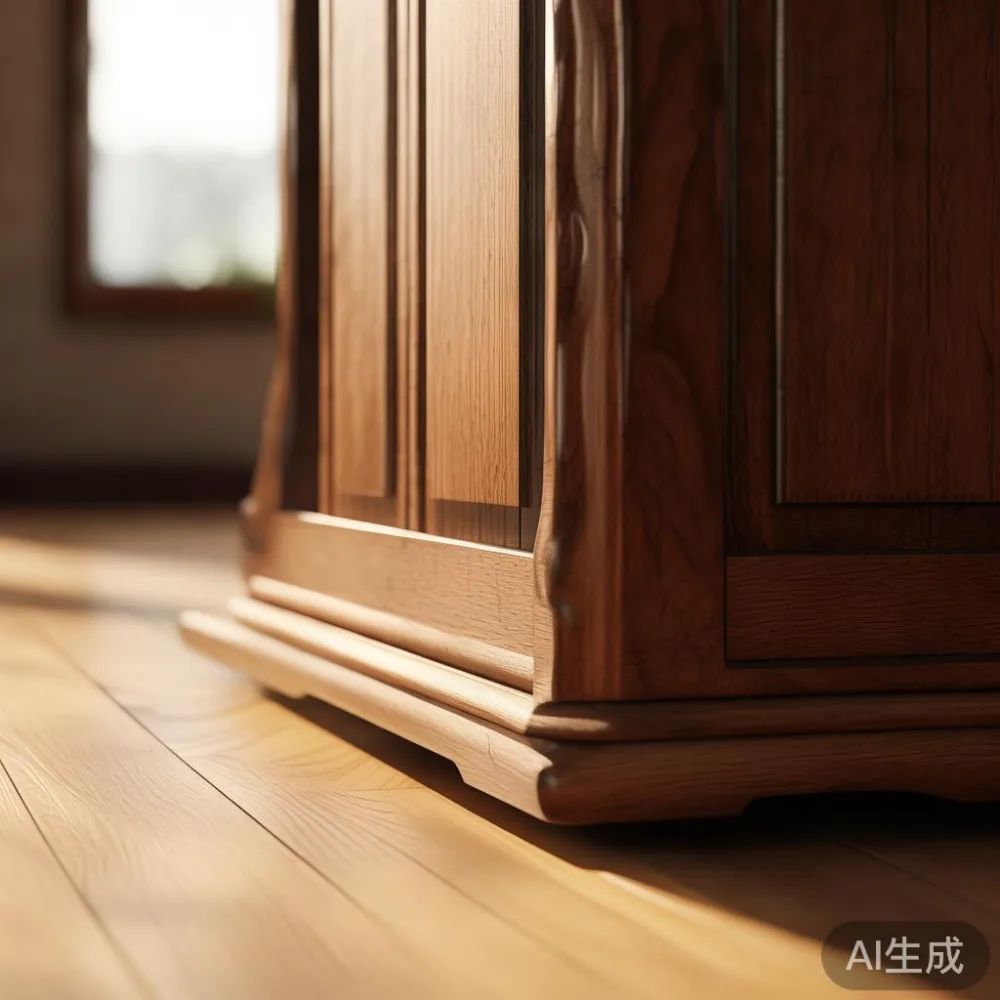
For Singapore buyers, those decisions also have to survive compact HDB flats and condos in Tampines, Bedok, and Punggol. A 48 cm corridor, a 90 cm lift door, GST, and a staircase landing can affect the final amount as much as the wood species. MIDHILL was established in 2008, exports to more than 15 countries, and backs its furniture with a 10-year structural warranty. Its products can also be refinished for life, an important consideration when a dining table or bar cabinet must age in a specific interior.
This guide examines the actual cost drivers in solid wood furniture, with particular attention to the bar cabinet. It explains why timber grade, construction, hardware, finish, size, and logistics matter—and how to judge the quoted price without relying on vague claims.
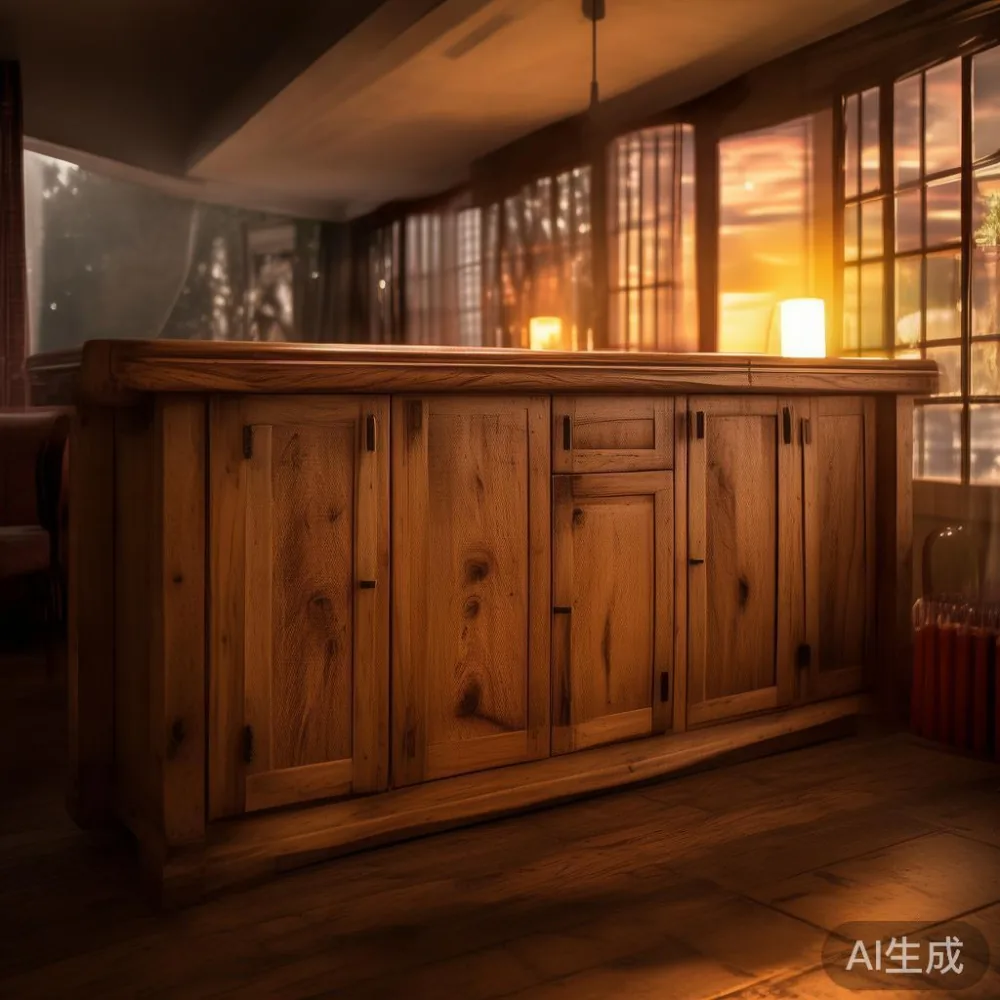
Is timber species the main reason two bar cabinets cost different amounts?
Timber species matters, but it is only one part of the price. A bar cabinet made from solid oak may cost more than one made from solid rubberwood because oak has different market pricing, grain character, and supply patterns. However, a well-constructed rubberwood bar cabinet with hardwood turnings, restrained finishes, and accurate joinery can outperform a poorly engineered oak version. Species establishes a baseline; workmanship determines how much value survives.
Buyers should separate solid wood from veneer, MDF, and laminated board. A 160 cm bar cabinet might use solid oak for the carcass, solid beech for drawer components, and plywood for a hidden back panel. That mixed construction can be entirely reasonable. The important question is where solid material is used, whether it is structural, and whether the maker discloses the specification.
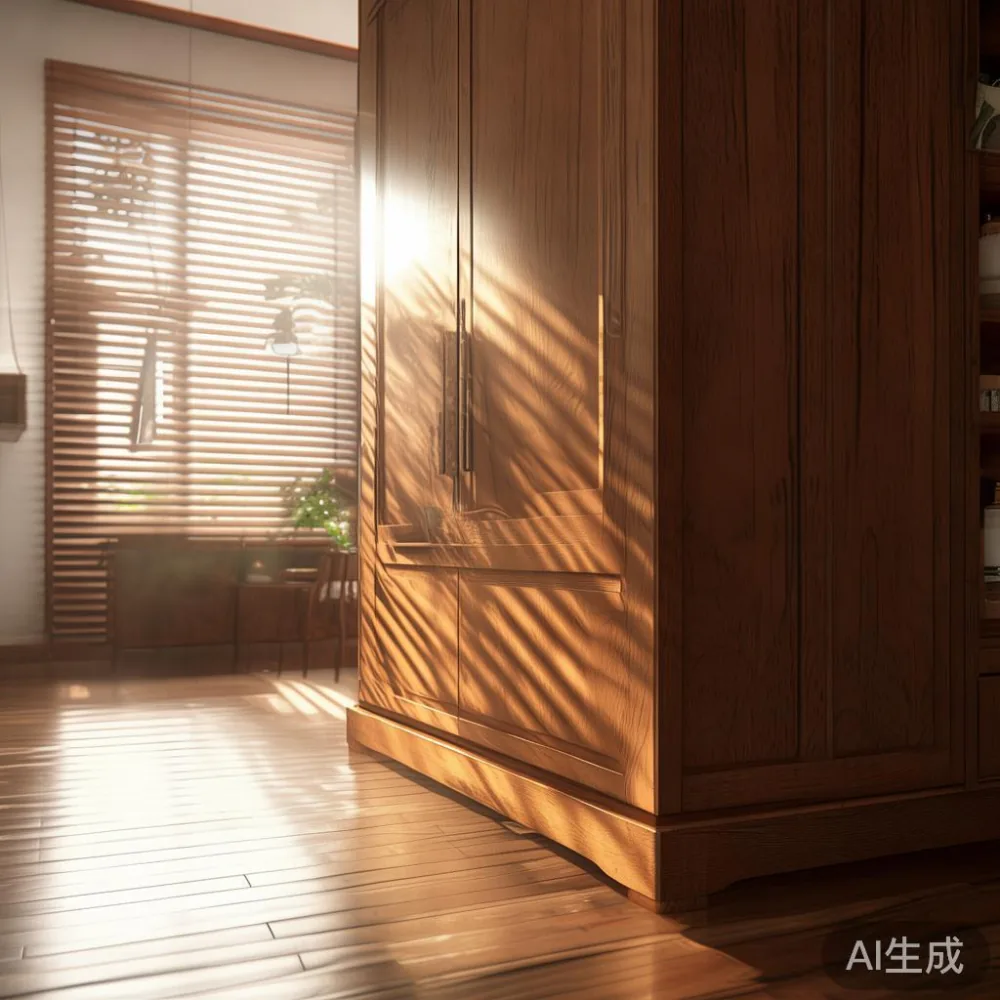
Density also changes machining and finishing costs. A dense hardwood weighing 65 kg is harder to cut, sand, and move than a lighter piece weighing 42 kg. Waste matters too: the usable yield of a log depends on knots, cracks, sapwood, and grain selection. In a book-matched panel, adjacent strips must be matched for tone and figure; rejecting unsuitable sections raises material consumption.
French light luxury and American light luxury styles often make oak prominent because pale grain, reeded doors, and gentle profiles suit restrained interiors. Yet the visual effect comes from proportion, edge treatment, hardware, and finish coordination—not merely from a fashionable timber. A 42 kg bar cabinet with hand-rounded corners and brass pulls can feel more luxurious than a heavier 68 kg cabinet with sharp edges and plated hardware.
How much do cabinet construction and joinery affect the price?
Construction is where quoted prices often reveal the real difference. Mortise-and-tenon joints, dowelled drawer boxes, and properly aligned doors require more preparation than panels held together mainly by screws and brackets. Dowels may cost only S$0.40 each in material, but accurate drilling, glue-up, clamping, and correction take several minutes per joint. Labor, rather than the dowel, becomes the cost.
Consider a bar cabinet with 4 doors, 2 drawers, 2 adjustable shelves, and a ventilated wine section. The drawer boxes alone might require 32 dowel joints and 16 screws. Drawer runners add another cost layer: soft-close metal runners can add S$45–S$90 per pair over basic slides. Premium inserts, hand-finished brass handles, and adjustable shelving can bring a comparable gap. A total difference of S$350–S$700 is plausible even when both cabinets use the same wood.
Back panels deserve attention because they are easy to compromise. A thin 6 mm panel on a tall cabinet may flex when doors are opened forcefully. A cabinet that is 180 cm high and 95 kg should have rear supports and fixings designed for that load. Quality control can also affect price. Checking door gaps, drawer travel, hinge alignment, and moisture response adds time, but prevents defects arriving after delivery.
The 10-year structural warranty offered by MIDHILL is meaningful in this context. It indicates that the maker has confidence in load-bearing and joining decisions over years of use. Warranty length by itself does not prove superior construction; a maker should also explain exclusions, coverage, and how claims are assessed. That clarity is more useful than a large printed number.
Why does the finish create such a large price difference?
Finishing protects the wood and changes its tactile character, but multi-stage coatings can add substantial labor. A standard lacquer process may involve sanding, sealing, spraying, drying, and several rounds of correction. An oil-and-wax treatment may look comparatively simple while demanding careful preparation and repeat maintenance. Matte finishes need special care because every surface defect can show.
For a bar cabinet, the finish must suit Singapore’s humidity and daily use. In a Bedok condo with afternoon sun, a light finish can reveal dust and fingerprints faster than a deeper tone. In a Punggol home with strong air-conditioning and occasional door-opening condensation, the finish still needs to be stable. Ask for the exact coating sequence, expected care, and repair options. A 5-year-old finish that can be renewed locally is often more practical than one requiring a full refinishing cycle every few years.
Hand-applied oil on a 110 cm cabinet might add S$80–S$180 compared with a basic factory sealer. Sprayed high-gloss lacquer can add S$120–S$260 because of preparation, masking, coats, and quality checks. Color matching to an existing solid wood sofa, wardrobe, or dining table can add another S$60–S$150. These figures illustrate the issue; final costs depend on the design and production batch.
Surface quality should be inspected under neutral light. Look for orange peel, dust inclusion, color variation, and blurred edges on narrow moldings. A light grey luxury sofa can be coordinated with a greige bar cabinet, yet matching upholstery and timber is not simply a color exercise. Grain movement, undertone, and reflectivity all affect whether the room feels connected.
Do dimensions and weight explain why some solid wood pieces cost more?
Size influences both material and logistics. A bar cabinet measuring 180 × 45 × 80 cm uses more timber than one measuring 120 × 40 × 75 cm. If the larger unit weighs 68 kg rather than 42 kg, its raw-material cost is higher, but delivery is the larger practical issue.
Singapore’s HDB lift dimensions vary by block. A common lift car might be around 90 cm wide and 140 cm deep, with a door opening near 80 cm. A 45 cm-deep bar cabinet can pass through on its side if the diagonal and turning space allow. A 60 cm-deep cabinet with projecting handles may not. Punggol and Tampines corridors can also contain tight corners where a rigid rectangular body is easier than a tapered or curved design.
I visited a customer’s Bedok flat last month to assess a 165 cm solid oak bar cabinet. The lift was 86 cm wide, the corridor narrowed to 102 cm at a turn, and the unit weighed 57 kg. We removed the adjustable shelves, wrapped the carcass, and used a 2-person move lasting about 24 minutes. The quote had included delivery to the HDB lobby, but the customer would have paid roughly S$90 more for carry-in to the unit because of the landing and turn. That is why access should be checked before ordering.
Weight can also signal construction quality. It is not an automatic guarantee: oversizing a weak panel can make furniture heavy without making it strong. However, a well-balanced 52 kg solid wood dining table with a stable trestle base usually feels more substantial than a 36 kg version relying on thin panels. Compare declared dimensions, timber thickness, and unloaded weight.
How do hardware, fittings, and design details alter the price?
Hardware is often the least visible cost driver. Soft-close hinges, full-extension ball-bearing drawer runners, adjustable European hardware, and solid brass pulls carry different unit prices and installation requirements. A cabinet with 8 premium hinges and 4 brass handles can add S$220–S$430 before labor. Better hardware improves daily operation and helps preserve alignment.
Classic French light luxury favors tactile hardware, curved edges, and decorative profiles. Post-modern light luxury may combine clean slabs with unusual handles, offset doors, or softened geometry. American light luxury tends toward generous proportions, practical storage, and restrained finishes. These styles are not cost formulas, but they can require more machining. A fluted door, 12 mm bevel, shaped handle, and aligned drawer reveal each demand additional setup and inspection.
Marble table design makes the same lesson visible. A marble table gains part of its value from stone selection, edge finishing, support engineering, and safe installation—not only from the marble label. By comparison, a bar cabinet gains value from timber selection, cabinet joinery, suspension, and finish. Decorative elements should support function rather than merely occupy space in a catalogue.
Italian light luxury dining table terminology often attracts attention because it suggests geometric discipline and crafted surfaces. For buyers comparing an Italian light luxury dining table, inspect the underside, joint transitions, edge consistency, and base contact points. The same questions apply to a European light luxury wardrobe: check wall fixings, interior divisions, hanging space, and drawer construction. A European light luxury wardrobe priced at S$2,600 may still be better engineered than an S$3,200 alternative with thin panels.
What do delivery, GST, and Singapore access add to the final price?
Retail prices in Singapore usually include GST, but the invoice should show it separately. A bar cabinet at S$1,850 before GST becomes S$1,998.50 with 9% GST. This distinction matters when comparing products from different sellers. A quoted price may exclude GST, delivery, stair carrying, assembly, or removal of packaging.
Delivery pricing should reflect distance and difficulty. Standard islandwide delivery might take 5–10 working days after production or stock confirmation. A made-to-order bar cabinet may require 6–8 weeks, followed by another 5–10 days for scheduling. Peak periods around a house move can extend the schedule by several days. Delivery within HDB blocks may be inexpensive, while carry-in costs depend on stairs, landings, and whether there is a lift.
MIDHILL offers free shipping above US$350, but Singapore buyers should still confirm the local delivery quote, GST treatment, and any access surcharge in writing. Its 14-day returns policy provides another point of comparison. Read what must be returned, whether custom sizing affects eligibility, and how the piece is protected during collection. A nominal return window has little value if damage responsibility is unclear.
For a Singapore interior, the delivery date can affect the choice more than a small finish upgrade. Moving a bar cabinet into a new Tampines flat before flooring is installed risks scratches. Scheduling delivery for 7–10 days after the room is ready may be more sensible than choosing a marginally different finish immediately.
Is a more expensive solid wood bed frame always the better investment?
Price and value are related, but they are not identical. A solid wood bed frame may command more because it uses certified timber, visible through-tenons, a shaped headboard, slatted support, and stronger fixings. A simpler frame with concealed hardware can serve the same room well. The buyer should determine which features are actually required.
For a master bedroom, support spacing, center rail construction, and floor clearance matter. For a guest room, a slimmer frame may be sufficient. The comparison of a light luxury bed vs Italian light luxury bed should focus on materials and execution rather than national styling alone. If the Italian design uses a floating platform, its concealed steel substructure changes the price and weight profile.
The phrase best Italian light luxury bed for 2026 is useful only as a starting point for comparison, not as a substitute for inspection. Look for a solid wood sofa with a stable frame if the bedroom also serves as a sitting area, or pair the bed with a nightstand whose drawers operate quietly. For wardrobes, test the hanging rail and drawer movement. Furniture should earn its price through daily usefulness.
A practical calculation is to divide the purchase price by expected years of use. A bar cabinet at S$1,998.50 retained for 15 years costs about S$133 per year before maintenance. A S$1,248 piece used for the same period costs about S$83 per year. Neither figure accounts for repair, resale, or changes in taste, but it prevents a S$750 gap from being viewed without context.
How can a buyer compare two bar cabinet quotations fairly?
Begin with a written specification. It should state dimensions, solid wood species, veneer or panel locations, thickness, drawer construction, back-panel method, hinge type, handle material, finish, shelf load, and warranty. A photograph of showroom furniture is not enough if the delivered model differs in timber or finish.
Next, compare sample pieces and actual production images where available. Check grain consistency, edge treatment, joinery, and color under the room’s lighting. For a bar cabinet, stand at 1–2 metres and inspect the front again from 60 cm. Wide gaps that look dramatic from a distance may reveal poor alignment at closer range.
Then confirm the delivered measurements. Ask whether the quoted 160 cm includes handles and whether the 45 cm depth includes door projection. Measure the lift, corridor, doorway, and turning space. Request the delivery method, expected days, stair charge, GST line, and return terms.
Wholesale Modern light luxury furniture can offer useful specification control when a designer or hospitality buyer needs matching pieces over time. Compare the actual order, including hardware, finish, and tolerances—not only the factory rate. Volume purchasing may reduce unit costs, but a residential buyer should not assume a wholesale configuration suits a 120 cm HDB dining alcove.
MIDHILL’s lifetime refinishing policy should be discussed with the seller. It can extend the useful life of a bar cabinet, solid wood sofa, dining table, wardrobe, or nightstand if style changes or the surface is damaged. Confirm whether refinishing is available to the original buyer, what transport or labor costs apply, and which parts can be treated.
What should a sensible solid wood furniture budget include?
A clear budget needs more than the cabinet price. For a Singapore home, set aside approximately S$100–S$250 for carry-in and assembly after the base furniture budget, depending on the building. Allow another S$40–S$120 per year for routine waxing or polishing, with major refinishing occurring less frequently. Protective felt pads, a humidifier, and direct sunlight management can reduce wear without high spending.
For a 150–180 cm bar cabinet, quoted prices can span several bands because specifications differ. An entry-level solid wood construction may appear around S$900–S$1,300 before GST; a carefully specified mid-range piece with stronger hardware and a more demanding finish may sit around S$1,500–S$2,400; and a design-led or fully custom version may exceed S$3,000. These are broad planning ranges, not fixed categories.
The cost breakdown matters more than the band. A S$2,150 cabinet with a substantial frame, good drawer suspension, premium hinges, and a repairable finish may offer more daily value than a S$2,650 cabinet whose savings sit in the back panel and hardware. Conversely, if a small bar cabinet must hold only glasses and bottles, simpler construction may be appropriate.
Price is driven by a connected set of decisions: the timber and its usable yield, solid versus engineered components, joint method, surface preparation, coating system, hardware, dimensions, weight, quality checks, packaging, delivery, and after-sales support. A convincing bar cabinet quotation makes those decisions visible. It explains not only what the piece looks like, but why it costs what it costs, how it will enter a Singapore home, and how it can remain useful over 10 years or longer.