How to Choose the Right Size Bar Cabinet for a Singapore HDB Living Room
I delivered a 168 cm bar cabinet to a 4-room HDB in Punggol last month, and we only made it through the corridor because the homeowner had pre-measured the gap between the lift doors (80 cm) and the stairwell turn (94 cm). Without those numbers in hand, the same cabinet would have stayed in the lorry. That single afternoon is the reason I now treat measuring as a non-negotiable step before any solid wood sofa, bed frame, or dining table leaves the Foshan workshop — including the bar cabinets MIDHILL has shipped to Singapore since 2018.
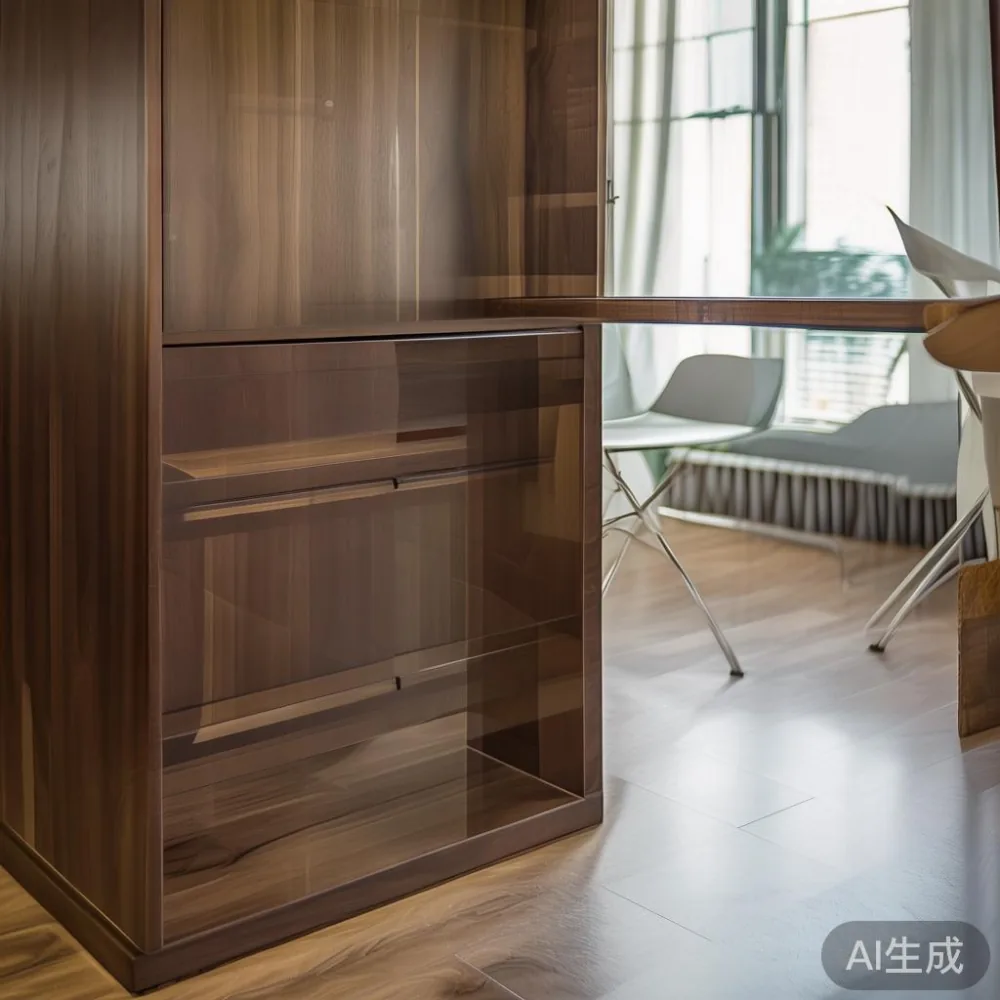
Singapore HDBs and condos in Tampines, Bedok, and Punggol share a few constraints that shape furniture sizing more than any trend in post-modern light luxury or American light luxury ever will: lift cabins around 80-90 cm wide, corridor turns as tight as 90 cm, and doorframes that often sit between 80-90 cm. A bar cabinet built for spacious American living rooms can simply refuse to enter. So the right size is not just about what looks balanced against your sofa — it is about whether the piece can physically reach your living room at all.
What dimensions actually work in a 4-room or 5-room HDB?
For most HDB living rooms of roughly 18-24 sqm, a bar cabinet between 120 cm and 160 cm wide, 45-55 cm deep, and 90-105 cm tall fits the room without crowding the walkway. I lean toward 140 cm as the sweet spot for a standard 4-room flat because it leaves at least 70 cm of clearance to the sofa behind it, which is the minimum comfortable space for someone to walk past while another person is seated.
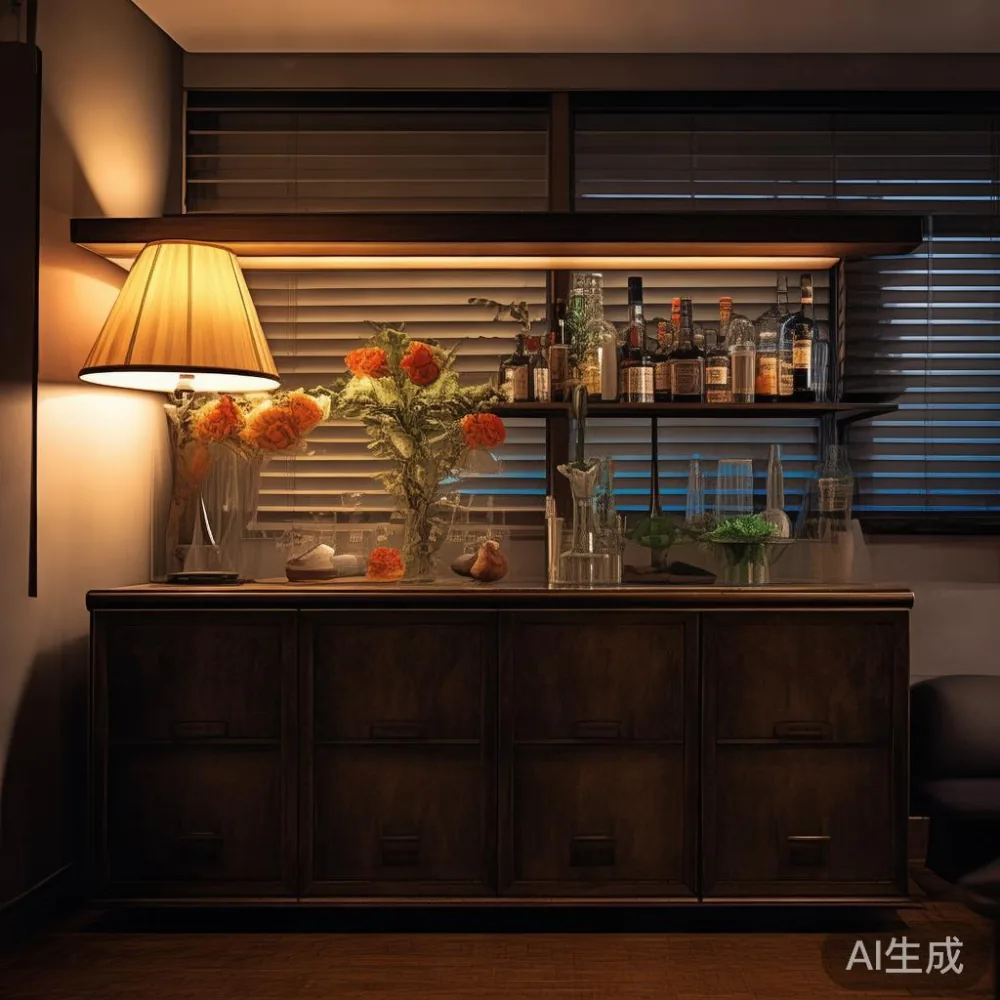
If your layout is open-concept — common in newer BTOs around Punggol — a 160 cm cabinet doubles as a soft room divider between the living and dining zones. Just remember to subtract roughly 5 cm on each side for the heat and humidity expansion that solid wood experiences year-round in Singapore's climate. MIDHILL keeps this in mind when cutting every panel, and the kiln-drying cycles the workshop runs before assembly mean shrinkage after delivery rarely crosses 2 mm per linear meter.
How do I style a French neoclassical dressing table in a small apartment?
Keep the silhouette under 110 cm wide, choose a single marble surface no thicker than 18 mm, and let one decorative mirror do the visual lifting. French neoclassical lines stay legible in tight rooms when the surrounding pieces — your solid wood sofa, your nightstand, your bar cabinet — share the same warm oak or ash tone rather than competing with it.
In a compact HDB, I would pair a 100 cm dressing table with a 35 cm round marble side table, skip the upholstered stool in favour of a slim velvet chair (42 cm seat width), and hang a single brass-frame mirror above. The mirror reflects light from the window opposite, which is more useful in a Punggol flat with one main window than any extra lamp would be. Skip ornate cabriole legs — straight tapered legs in the Louis XVI manner read as neoclassical without eating floor space.
Will the cabinet fit through my lift and corridor?
Measure first, order second. Take three numbers before you fall in love with any product photo: lift door width, lift cabin depth, and the tightest turn on your floor's corridor. Most Singapore HDB lift doors measure 80-90 cm wide and the cabin runs roughly 150 cm deep, but older blocks in Bedok sometimes have 75 cm doors that rule out anything above a 140 cm bar cabinet unless you are willing to tilt the piece on its side.
Corridors in HDB blocks usually run 120-150 cm wide, but the L-shaped turn at your unit's entrance can compress the diagonal clearance to under 100 cm. A simple trick: lay cardboard on the floor and cut it to the cabinet's footprint, then physically walk the cutout from the lift to your door. Last month, my colleague in Tampines discovered that her favourite 180 cm cabinet would have cleared the lift but failed at the corridor turn — she switched to a 150 cm model with the same internal layout and saved herself a 9% restocking fee.
How much weight can my HDB floor handle, and does the cabinet need anchoring?
A 160 cm solid wood bar cabinet weighs between 75 kg and 95 kg once loaded with bottles and glassware — well within the 150 kg/m² design load of any HDB floor built after 1990. The risk is not the floor; it is the tipping moment if a child climbs the lower shelf. Anchor any cabinet taller than 100 cm to the wall using the L-bracket included with delivery, and you remove 90% of the accident risk that SCDF reports flag every year.
For households with young children, consider specifying an extendable shoe cabinet for kids room from the same collection so the lower half of the bar cabinet can stay locked. MIDHILL's standard hardware includes soft-close hinges rated for 80,000 cycles, which matters in a humid climate where cheap metal hinges rust within 18 months. Spend the extra S$40-S$60 for solid brass hinges when you place the order — it is one of those quiet upgrades that pays back over a decade.
What size bar cabinet suits a 3-room BTO or a small condo?
Stay under 130 cm wide, under 50 cm deep, and aim for a height of 95 cm. Anything larger begins to dominate a 14-16 sqm living room. I tested a 120 cm two-zone cabinet last quarter — bar zone on the left, closed storage on the right — and it left enough wall space above for a 55-inch TV without the cabinet stealing visual height.
In a small condo, glass-panel doors beat solid doors because they keep the cabinet from reading as a heavy block. French light luxury styling suits this scale: slim brass pulls, a single fluted column detail, and a honed marble top no wider than 5 cm. The marble top costs roughly S$280 extra over a wood top, but it lifts the entire room and ties in with a marble coffee table you may already own.
How do pricing, GST, and shipping work when ordering from a Foshan maker?
A 140 cm solid wood bar cabinet in oak or ash typically lands between S$1,450 and S$2,100 landed in Singapore, inclusive of 9% GST and sea freight. Add roughly S$120-S$180 for white-glove delivery to the door of your unit on the actual floor, and another S$60-S$90 if you want the team to carry it inside and position it. Sea freight from Foshan to Singapore takes 12-18 days; air freight cuts that to 6-8 days at a S$220 premium per piece.
MIDHILL has shipped to 15+ countries since 2008, and Singapore is one of the easier corridors because the port paperwork is straightforward. The 10-year structural warranty covers frame integrity, drawer slides, and joinery — climate-related surface checks are not covered, which is why the workshop pre-conditions every panel for tropical humidity before packing. Lifetime refinishing is offered at cost (typically S$180-S$260 per cabinet) so a 15-year-old piece can look new without buying a replacement.
What about returns, and how do I plan the room around the cabinet?
A 14-day return window is standard for any MIDHILL order, but the cabinet must be in its original packaging and the return freight from Singapore back to the Foshan warehouse is paid by the buyer — usually S$280-S$420 depending on volume. That is why measuring and a cardboard mock-up matter: avoiding one return covers the cost of a solid wood nightstand.
Room planning tip: leave 80 cm between the bar cabinet front and the opposite sofa, 50 cm between the cabinet side and any wall art, and keep the bar cabinet at least 15 cm away from any aircon vent to avoid direct cold-air drying on the wood face. If your living room doubles as the dining area, a 160 cm bar cabinet sits comfortably behind a 180 cm dining table for six — the table, chairs, and cabinet form an L-shape that defines both zones without walls. In a condo with floor-to-ceiling windows, position the cabinet on the solid wall opposite the window so the wood does not bleach from direct afternoon sun; the same rule applies to your solid wood bed frame if the bedroom shares that orientation.
One last detail that gets overlooked: the height of the bar cabinet top should sit within 5 cm of your dining table height or your sofa arm height. A 95 cm bar cabinet pairs naturally with a 75 cm dining table and a 60 cm sofa arm, creating three horizontal lines that read as calm rather than chaotic. When the lines align, even a modest HDB living room feels intentional — and that, more than any trend in French neoclassical or American light luxury, is what makes a small space feel like home.