Humidity and Your Bar Cabinet: A Singapore Homeowner's Guide to Long-Lasting Solid Wood
Last month I visited a friend's new 4-room HDB flat in Tampines, and the first thing she pointed at was not her new sofa or dining table — it was a small cabinet in the dining corner that she had bought eight months earlier. The top surface had a faint, cloudy ring where a glass of cold water had been left during a family gathering. She looked at me and said, "I thought solid wood was supposed to be tough." It was a fair question, and it is the same question I hear from customers almost every week at our Foshan factory where we have been building solid wood furniture since 2008.
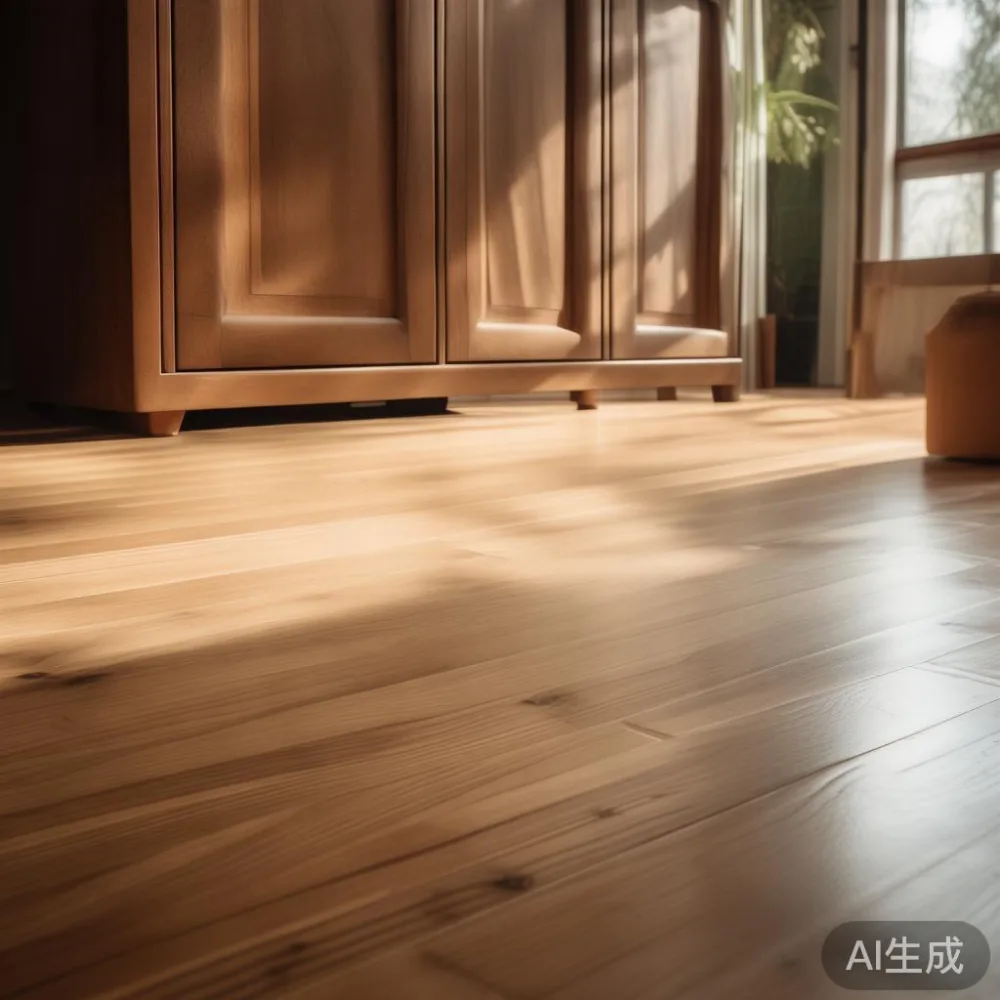
Singapore's climate is a stress test for any piece of wooden furniture. The average relative humidity sits between 70% and 85% for most of the year, and during the monsoon months from November to January it can climb higher. If you own a solid wood dining table, bed frame, wardrobe, or a smaller piece like a bar cabinet, you have already noticed the signs: doors that feel a little stiff in the morning, a faint haze on the lacquer, or that stubborn ring left by a sweaty glass. None of this means the wood is bad — it means the wood is reacting to the room, and that is something you can manage.
Why Humidity Makes Wood Move
Solid wood is not a static material. Every plank is made of millions of long cellulose fibres, and each fibre absorbs and releases moisture depending on the air around it. When humidity rises above 65%, the fibres swell; when it drops below 45%, they shrink. Because the movement is rarely even across a panel, you get the classic cupping, bowing, or cracking that worries so many owners of solid wood sofas, bed frames, dining tables, and wardrobes in Singapore.
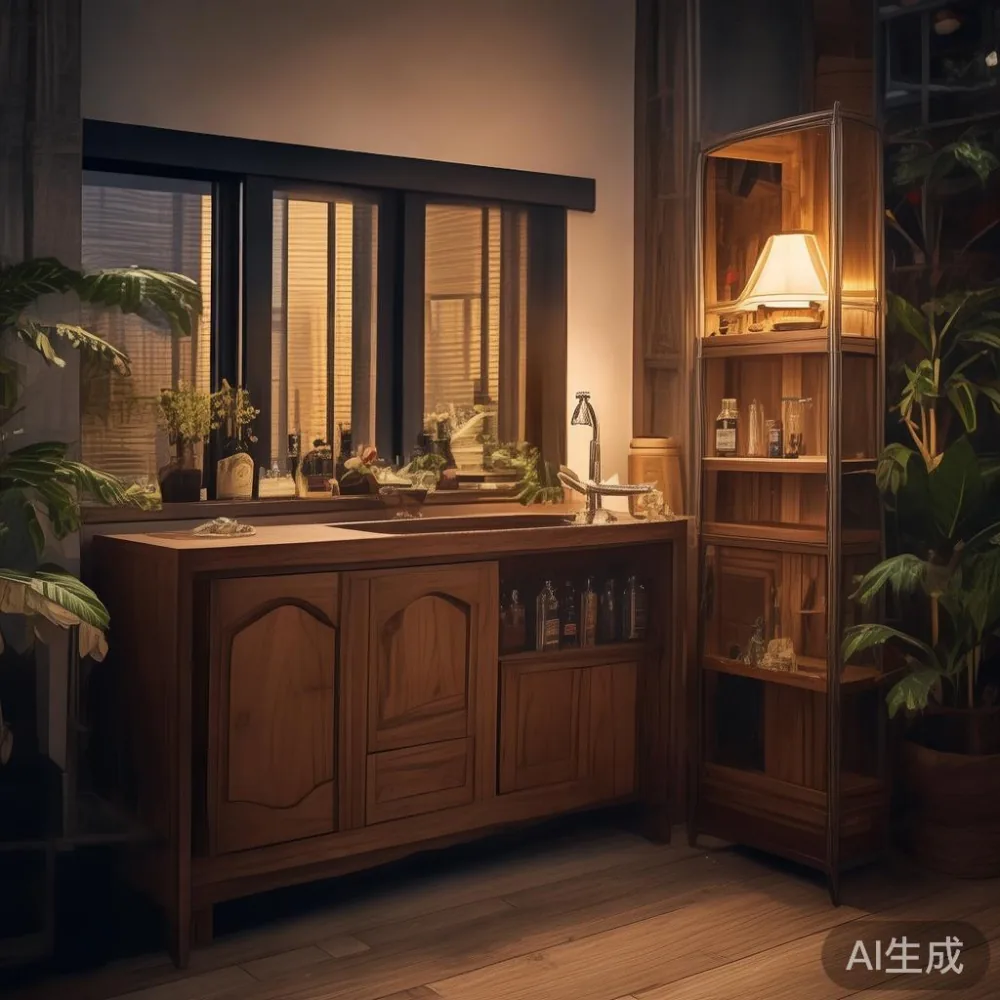
The numbers are unforgiving. A 180 cm dining top made of ash or oak can change width by roughly 2–4 mm across a single humid season. On a tall wardrobe door, that same movement is enough to throw the hinges out of alignment by a millimetre or two, which is enough to make the door stick. On a bar cabinet with glass-panelled doors, the same swelling can press the glass against the frame and produce a fine crackle line that looks alarming but is usually only the putty flexing.
At our Foshan factory, every panel is kiln-dried to between 8% and 10% moisture content before assembly. That is the sweet spot for a tropical climate. If you are browsing showrooms in Singapore, ask the salesperson what moisture content the wood was dried to. If they cannot answer, that is a sign the supplier has not thought about how their furniture will behave once it crosses the South China Sea.
What Humidity Actually Does to a Bar Cabinet
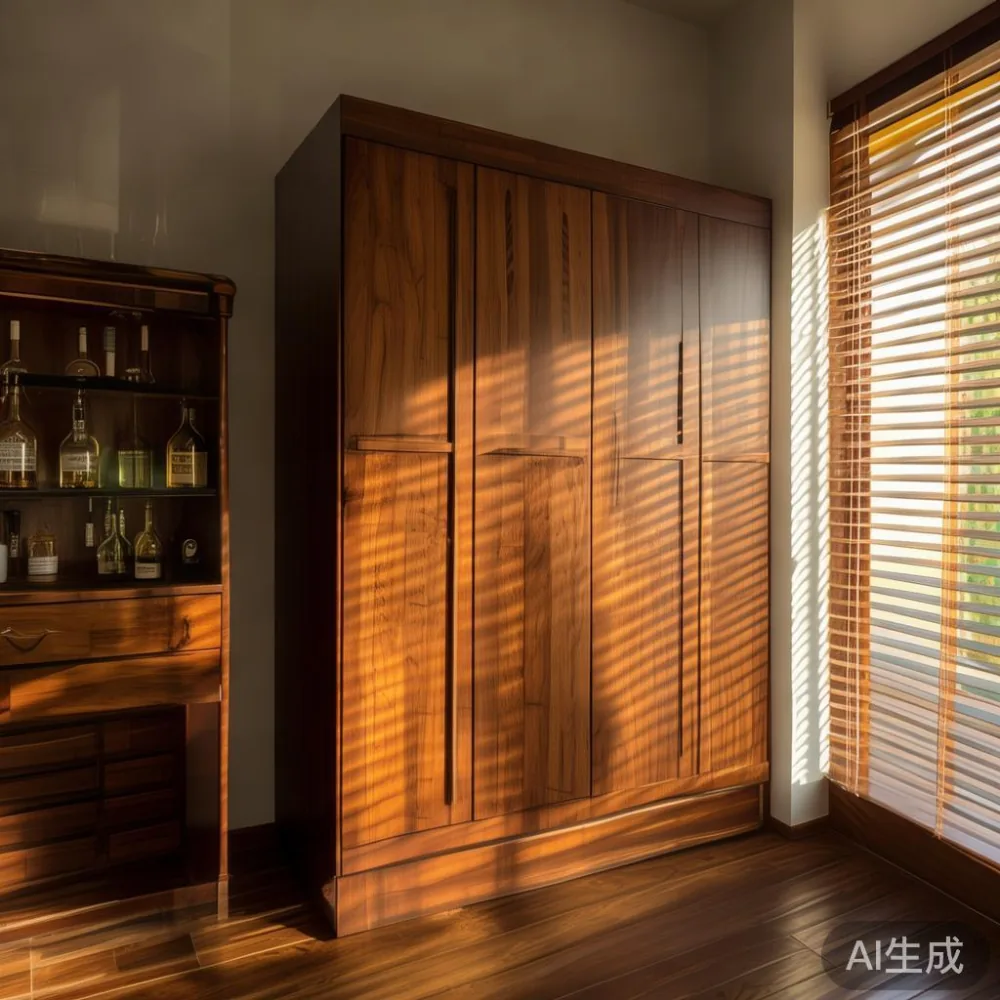
A bar cabinet is one of the most exposed pieces in a home because it lives at the intersection of three humidity sources: the kitchen steam, the air-conditioning cycle in the living room, and the open balcony door during a weekend gathering. Because the cabinet is often narrower than a full wardrobe but taller than a nightstand, the movement of its vertical panels is amplified. A 150 cm cabinet body that swells 2 mm on each side is, proportionally, moving twice as much as a 300 cm wardrobe.
I have personally inspected a bar cabinet returned from a Punggol condo where the customer blamed the manufacturer. The cabinet itself was fine. What had happened was that the customer had placed the unit against an external wall that received afternoon sun, and the back panel had absorbed enough heat to warp. The fix was not a new cabinet — it was moving the unit 30 cm away from the wall and adding a felt pad behind it.
The most common humidity issues I see with bar cabinets in Singapore are:
- Cloudy white rings from cold glasses and condensation
- Sticking doors in the morning that loosen by lunchtime
- A faint musty smell inside enclosed sections during the December monsoon
- Hairline cracks along the grain on the top surface after long dry spells from the air-conditioner
None of these are defects. They are signals. Once you learn to read them, a bar cabinet can last twenty years or more in a Singapore flat.
How to Style a Bar Cabinet in a Singapore Flat (HDB or Condo)
Style matters here, because placement determines how much humidity stress the cabinet takes. In most HDB flats in Bedok, Tampines, and Punggol, the bar cabinet ends up in one of three spots: the dining corner, the dry kitchen, or the balcony. The first two are acceptable. The third is the most common mistake I see.
If your unit is a 4-room or 5-room HDB, the corridor width outside your unit is usually around 1.2 m, and the lift door is roughly 0.9 m wide. That means any cabinet you order must be built in sections no wider than 110 cm or it simply will not fit through the door. A well-designed bar cabinet in the 120–150 cm range usually ships as two bodies plus a top, and our team has packed thousands of these for HDB corridors across Singapore. Always check the packaging dimensions against your lift before you click add to cart.
Inside the cabinet, the trick is to leave breathing room. A bar cabinet is part storage, part display. Line the back panel with a single row of glasses, then leave 30 cm of vertical space above for airflow. Add a small LED strip on a warm tone (2700 K), and the cabinet suddenly reads as a piece of French provincial furniture, even though the joinery is post-modern light luxury. Pair it with a marble table in the dining corner and a solid wood sofa across the room, and the entire space feels coherent without feeling busy.
One thing I always tell customers: do not push the bar cabinet flush against the back wall. Leave a 5 cm gap so air can circulate. It is a small thing, but it cuts the risk of mildew on the back panel by half.
Will a Solid Wood Bar Cabinet Last in Singapore's Climate?
Yes, if it is built for it. Our warranty covers structural integrity for 10 years, and we offer lifetime refinishing on every piece that leaves our Foshan factory. The refinishing matters more in Singapore than in drier markets, because the lacquer surface takes the brunt of the humidity cycle. A refinish every 5 to 7 years keeps the seal tight and the colour even.
For customers thinking about long-term value, the math is straightforward. A SGD 1,650 bar cabinet refinished twice over twenty years is roughly SGD 2,300 in total cost. A SGD 680 particleboard cabinet replaced three times over the same period is SGD 2,040 — and that does not include the hassle of disposal, the carbon footprint, and the inevitable mismatch with the rest of your furniture. Solid wood is not just nicer to touch; it is more efficient over decades.
Buyers often compare a solid wood bar cabinet against cheaper options made of MDF or plywood. In a dry climate, those materials perform well. In Singapore, they absorb moisture through the cut edges, swell at the joints, and start to delaminate within three to four years. If you have ever opened a flat-pack wardrobe in a new condo and noticed the corners looking fuzzy after a single wet season, that is exactly what has happened.
How Should I Care for My Bar Cabinet During the Monsoon Months?
This is the question I get every November, and the answer is calmer than people expect.
During the December to January monsoon, keep your air-conditioner running at 23–25°C with the dehumidify mode on for at least four hours a day. The goal is to bring the room humidity down to around 55%. At that level, solid wood is stable, and the cabinet doors will feel the same in the morning as they do at night.
Wipe the top surface once a week with a barely damp microfibre cloth, then follow with a dry cloth. Never use a wet cloth, and never spray polish directly onto the wood. If you want a natural wax finish, apply a thin coat of beeswax once every three months. It is what we use in the MIDHILL workshop before a piece is packed for export to one of the fifteen countries we ship to.
If you spill a drink, wipe it within ten minutes. The cloudy ring that worried my friend in Tampines was caused by condensation sitting under a glass for about forty minutes. Ten minutes is the threshold; beyond that, the moisture penetrates the lacquer and leaves a mark. The good news is that most marks can be buffed out with a soft cloth and a little beeswax, and a deep refinish at our workshop will reset the surface completely.
Light-Luxury Styling: French, American, and Post-Modern Cues
Light luxury is a useful frame for Singapore homes because the ceiling heights in HDB flats are typically 2.6 m, and oversized furniture overwhelms the room. A French light luxury bar cabinet in whitewashed oak or limed ash, with tapered legs and brushed brass handles, sits comfortably beside a marble table and a solid wood sofa without crowding the space. American light luxury tends towards darker walnut tones and cleaner lines, which work well in the larger condos in Punggol and the Tanjong Pagar area. Post-modern light luxury plays with mixed materials — fluted glass, curved edges, and a single accent of travertine — which suits the open-plan layouts common in newer Singapore developments.
If you are choosing between these three directions, my suggestion is to pick the one that matches the floor tone. Light oak floors take French or post-modern. Dark teak floors take American. If you are renovating, decide the floor first, then the bar cabinet, then everything else.
For homeowners planning an entire room around the cabinet, the same logic applies to a solid wood sofa and a dining table. A sofa in a light linen fabric next to a walnut bar cabinet reads as American light luxury. A curved-back sofa in boucle next to a whitewashed bar cabinet reads as French provincial furniture. Either way, keep the wood tones within two shades of each other and the room will feel pulled together.
What About a Bedroom Wardrobe and a Nightstand — Do They Need the Same Care?
Yes, with one extra rule. A wardrobe is larger and heavier, so the moisture movement is slower but more powerful when it does happen. In Singapore bedrooms that run the air-conditioner at 22°C every night, the humidity can drop to 40% inside the room while sitting at 75% outside. That 35-point swing across a closed wardrobe door is enough to cause cupping over a year or two. The fix is to leave the wardrobe doors slightly ajar for ten minutes after you wake up, so the inside and outside equalise.
A nightstand sees less air movement but more direct contact — cups of tea, phones, books, and the occasional spill. Treat it the same way as the bar cabinet top: weekly wipe, immediate spill response, and a beeswax coat every quarter.
For anyone researching how to style French provincial wardrobe in apartment settings, the rule is to anchor the wardrobe to a wall that does not receive direct sun, then style the surrounding space with a marble table or a side table in a similar pale tone. The result is the calm, layered look that defines French provincial furniture without feeling dated.
Buying Tips for Singapore Homeowners
Before you commit to a bar cabinet, run through this short checklist:
- Measure the lift and corridor of your block. Standard HDB lifts are about 1.0 m wide and 1.4 m deep; anything larger must be sectional.
- Ask for the moisture content of the wood. A reliable answer is between 8% and 12%.
- Confirm the finish is a spray-applied conversion lacquer or a hand-rubbed wax, not a thin roller coat.
- Check the warranty covers at least ten years on structural joints, including dowels, mortise-and-tenon, and mitre glue-ups.
- Ask whether the supplier offers refinishing. A workshop that refinishes its own furniture takes the material seriously.
- Calculate the delivered price including GST. At 9% GST, a SGD 1,500 cabinet becomes SGD 1,635 at your door.
For readers comparing options under 2000 Industrial furniture or hunting for a single Japandi sofa, the same moisture rules apply — solid wood is solid wood, regardless of the design label. A piece built for Southeast Asia will be marked with kiln-dried timber, dovetail or mortise-and-tenon joinery, and a finish that has been cured rather than air-dried.
If you are still deciding on the larger pieces, here are two quick guides. For those working out how to style Japandi sofa in apartment layouts, the trick is to pick a sofa with a low back and exposed wooden legs, then pair it with a low bar cabinet to keep the visual line unbroken. For buyers wondering how to choose Mid-century modern sofa, look for a solid wood frame, tapered legs, and a single row of buttons or a clean tufted back — anything heavier usually drifts into a different era.
Final Word from the Workshop
Humidity is not the enemy of solid wood furniture. Sudden, unmanaged swings in humidity are. A bar cabinet built from properly dried timber, finished with a proper lacquer, and placed with a little breathing room will outlast every flat-pack alternative on the market. When something does go wrong — a ring, a stuck door, a faint crack — it is almost always fixable, and that is the real advantage of buying from a workshop that has been doing this since 2008.
If you are in the market for a new bar cabinet, or a complete set including a bed frame, dining table, wardrobe, and nightstand, talk to a supplier that can tell you the moisture content of their wood and the origin of their timber. Singapore homes deserve furniture that has been designed for Singapore weather, and that is the standard we hold ourselves to at our Foshan workshop every day the kilns are running.