Bar Cabinet Showdown: Veneer vs Solid Wood Over 5 Years in a Singapore Home
Last month I visited a resale 4-room HDB flat in Tampines with a client who wanted a new bar cabinet for the living room corner. The previous owner had installed a glossy veneer unit five years earlier, and the right door had already swollen from the humidity cycling between the air-conditioned evenings and the open-window afternoons. We measured the corridor width at 1.1 m and the lift opening at 0.9 m, both of which shaped what could physically be delivered. Their core question was simple: pay S$1,400 now for a veneer bar cabinet, or stretch to S$2,600 for a solid wood one? Five years later, which one of us would be smiling? Below is the cost breakdown I walked them through, using prices in SGD and including the 9% GST that applies to furniture purchased and delivered locally.
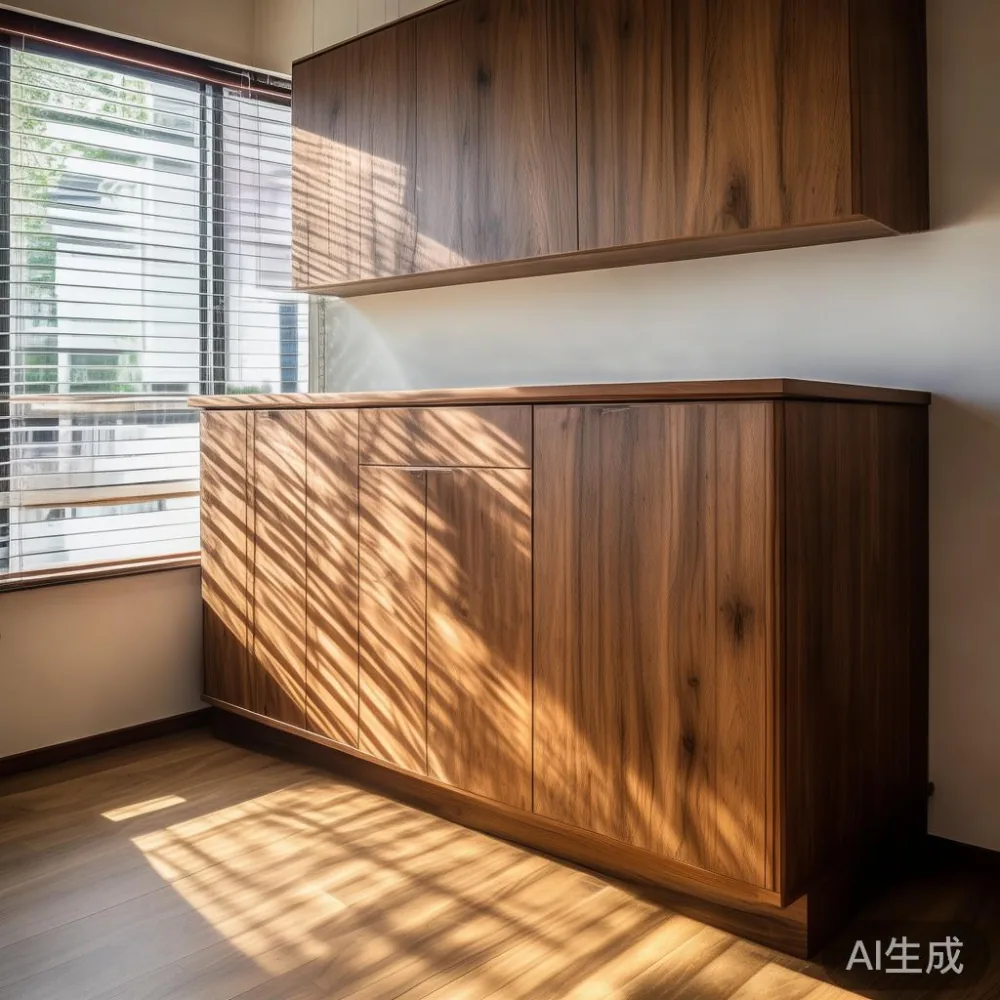
What does a 5-year cost comparison actually mean for a bar cabinet in Singapore?
Most homeowners think only about the sticker price. A 5-year cost comparison forces every figure onto the table: purchase, delivery, refinishing, repairs, and resale value. For a bar cabinet, the math is particularly interesting because the cabinet sits in a high-traffic zone, often near the dining table, and absorbs spills, ring stains from bottles, and the occasional drunken lean from a guest. Over five years, expect roughly 1,800 opening cycles (one per day), 40 to 60 accidental knocks, and at least two serious condensation events when an aircon condenser drips onto the top surface. A veneer surface handles maybe the first 12 to 18 months without complaint, then begins to chip along the edges. Solid wood, by contrast, takes the knocks and asks for a sanding in year four.
Numbers help. A 120 cm-wide, 40 cm-deep, 150 cm-tall bar cabinet in engineered veneer with melamine backing sells for S$1,200 to S$1,500 retail in Singapore. The same dimensions in solid rubberwood or ash fall between S$2,400 and S$3,100. Once you add delivery (S$80 to S$120 within mainland Singapore, more if the unit exceeds 80 kg and the building has no cargo lift), the spread is roughly S$1,400 to S$3,300 before any maintenance. MIDHILL ships solid wood furniture from its Foshan factory with a 10-year structural warranty, which translates into real repair coverage that few local veneer retailers match. That warranty alone is worth pricing into your five-year model.
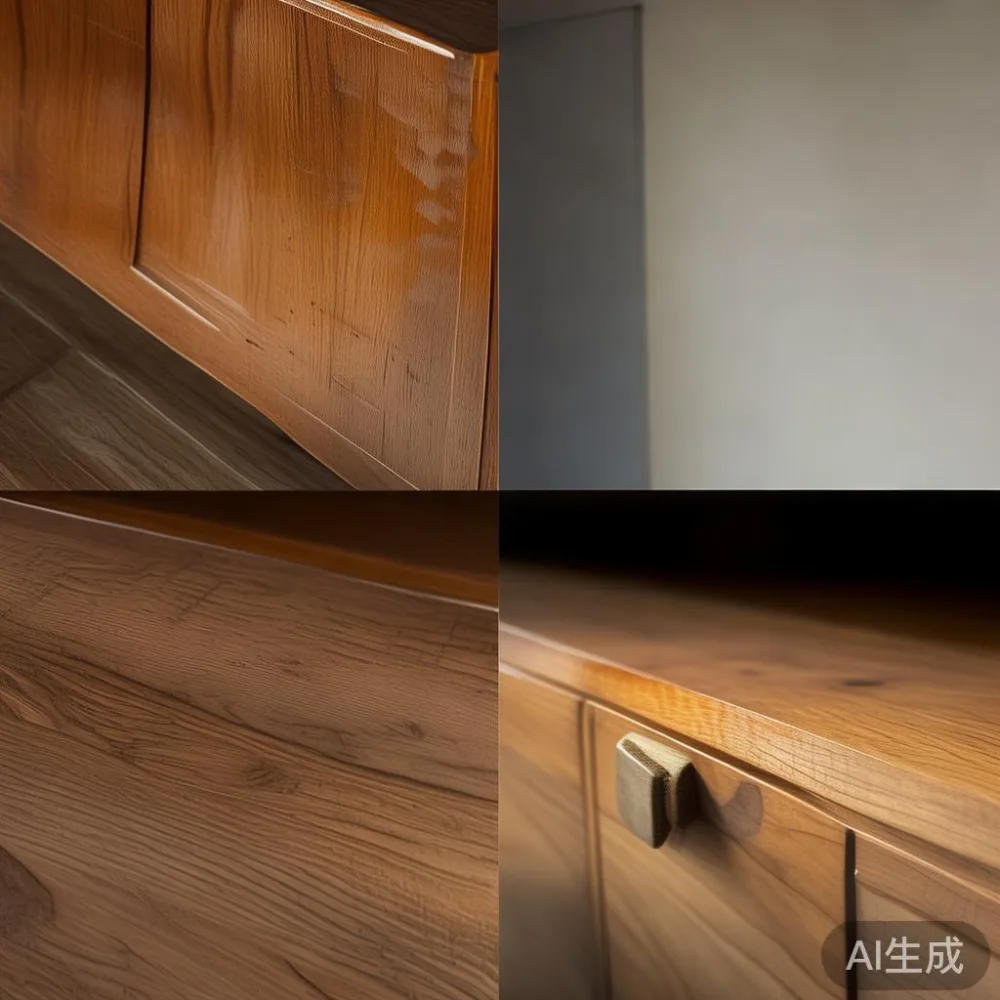
Year-by-year price ledger for veneer vs solid wood bar cabinets
Here is the spreadsheet I shared with my Tampines client. Both cabinets are assumed to be 120 cm wide, used daily by a family of four, in a non-aircon corridor-facing position for eight months a year.
Year 0: Veneer bar cabinet S$1,400 (with GST). Delivery S$90. Total S$1,490. Solid wood bar cabinet S$2,600. Delivery S$110 (heavier, requires two men). Total S$2,710. Initial gap: S$1,220.
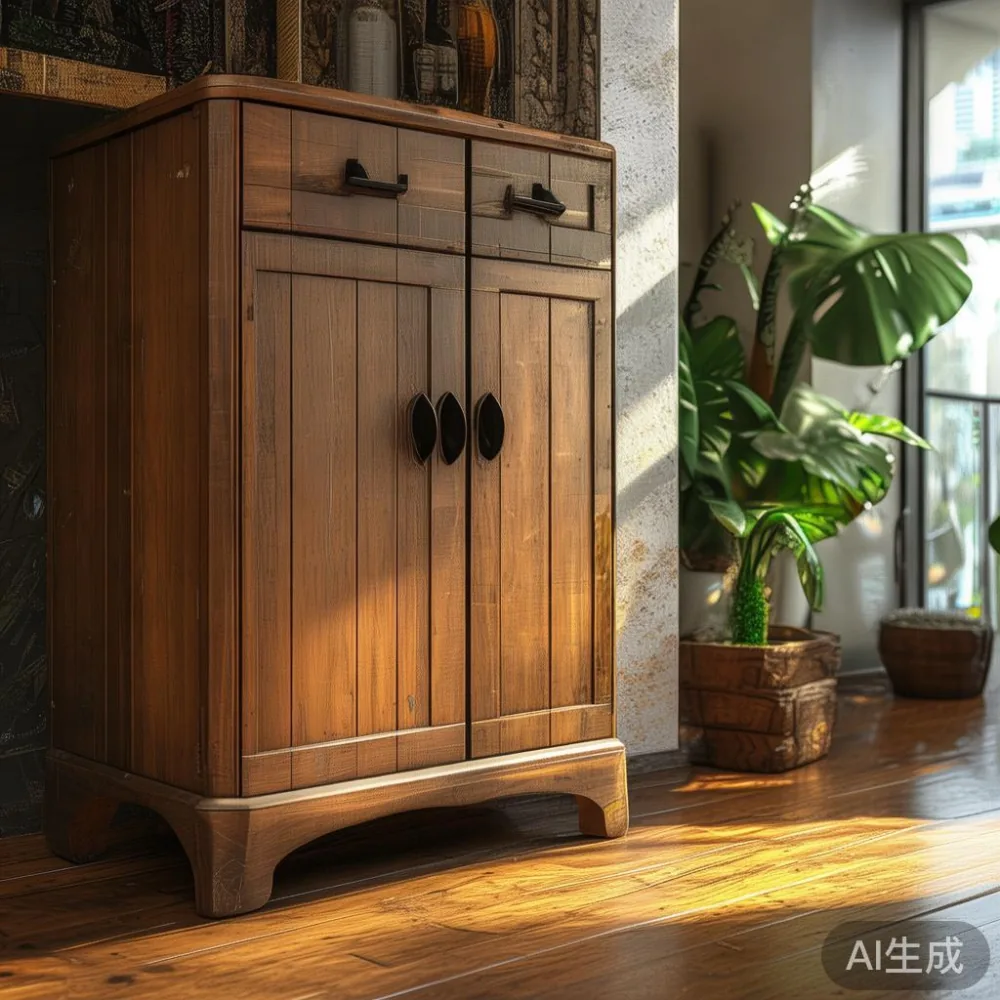
Year 1: Veneer requires edge-band repair after 14 months, S$180. Solid wood: no cost, just a S$25 bottle of feed-n-oil.
Year 2: Veneer door hinge replacement S$120. Solid wood: zero.
Year 3: Veneer top delamination near the wine-bottle zone, S$320 partial re-veneer. Solid wood: light re-oiling, S$30.
Year 4: Veneer cabinet replaced entirely by client, written off, S$0 residual (veneer has near-zero resale). New veneer unit bought, S$1,550. Solid wood: professional sanding and re-lacquer, S$280. MIDHILL offers lifetime refinishing on its solid-wood pieces, which would absorb that S$280 entirely for qualifying customers.
Year 5 cumulative spend: Veneer S$3,660. Solid wood S$3,020. The solid wood unit is now five years old, structurally sound, with a refreshed surface, and has roughly 35% to 45% of its original value on the second-hand market. The second veneer unit is already showing early peel at the drawer fronts.
The crossover happens around year 4. Anyone planning to stay in their Punggol BTO or Bedok condo for more than three years should run this math before they swipe the card.
Why do HDB and condo constraints change the answer?
Singapore delivery is its own category. The lift door in many older blocks at Tampines GreenRidge is 0.9 m by 2.1 m. A pre-assembled bar cabinet wider than 90 cm will not fit standing up; it must enter on its side or be flat-packed. Flat-packed solid wood from a Foshan supplier like MIDHILL ships in manageable 35 kg cartons, three pieces per cabinet, and two movers can reassemble it inside the unit in under 40 minutes. Veneer cabinets from neighbourhood furniture stores often arrive pre-assembled because the panels are too thin to survive disassembly twice.
Corridor turns matter too. The turning radius at most HDB stairwells is 1.3 m. A solid wood cabinet with a 12 cm solid-wood back panel tolerates one or two scrapes during the move-in; a veneer cabinet with a 3 mm MDF back will dent on the first contact. Over five years, if the household relocates once (which is common for young couples upgrading from a 4-room to a 5-room flat in the same town), the move-in damage alone can wipe out 15% of a veneer's residual value.
Humidity is the final local variable. Singapore's relative humidity averages 82% year-round. Engineered veneer relies on a glue line that softens above 70% RH over time. Solid wood, properly kiln-dried to 8% to 10% moisture content, breathes. This is why buyers researching wholesale Mid-century modern furniture often pivot toward solid wood once they understand what the local climate does to MDF cores.
How much does the rest of the room matter when you pick a bar cabinet?
The bar cabinet does not live alone. In most Singapore layouts, it stands 30 to 50 cm away from the dining table, shares a wall with the TV console, and visually anchors one end of the sofa zone. Material choice in the bar cabinet sets the tone for the whole room. If you are also choosing a solid wood sofa, bed frame, dining table, wardrobe, or nightstand, mixing in one veneer bar cabinet creates a visual mismatch that becomes obvious under the dining spotlights.
For homeowners who want a coherent look without over-spending, the room set typically combines a solid wood dining table (S$1,800 to S$3,500 for six-seater), a matching solid wood TV console (S$900 to S$1,600), and a solid wood bar cabinet (S$2,400 to S$3,100). At the entry of this category you can already find under 2000 light luxury furniture bundles that include a small dining set plus a bar cabinet in a coordinated finish. The cost premium over an all-vener room set is usually 25% to 40%, but the second-hand value after five years is roughly 2.5 times higher, because buyers in Punggol, Sengkang, and Bukit Batok resale markets actively search for solid wood listings.
One more practical point. If you plan to add a marble table to the dining zone for daily use, pair it with a solid wood bar cabinet in the same wood tone. Marble and veneer share a cold, reflective quality that fights each other under warm lighting; marble and solid oak or ash share a quiet, grounded feeling. The same logic guides anyone wondering how to choose American bed frames for a matching master bedroom: pick the material first, then the silhouette.
Will a solid wood bar cabinet really hold its value if I renovate in five years?
Yes, and the data supports it. Resale platforms in Singapore show 5-year-old solid rubberwood bar cabinets listed at S$900 to S$1,400, depending on condition. Equivalent 5-year-old veneer bar cabinets list at S$150 to S$300, often with descriptions of curing damage because owners cannot honestly hide the swelling. The depreciation curve is therefore roughly 50% for solid wood and 85% for veneer over the same window.
This gap also matters if you treat the bar cabinet as part of a larger light-luxury room. Buyers searching for best European bed for 2026 often want the whole master suite to feel cohesive, and a solid wood bed frame paired with a flaking veneer bedside table breaks the spell in seconds. Light luxury, in its French, American, and post-modern forms, depends on material honesty. French light luxury leans on warm oak with brushed brass pulls. American light luxury leans on darker walnut tones and oversized handles. Post-modern light luxury mixes curves with high-contrast wood grains. All three rely on surfaces that age gracefully rather than peel.
If you are planning the full room and wondering how to style Japandi wardrobe in room settings that include a bar cabinet, the rule of thumb is to pick one warm neutral wood and repeat it three times across the room: once on a large piece, once on a medium piece, once on a small accent. A solid oak bar cabinet, a solid ash dining table, and a solid oak Japandi wardrobe create that triplet without trying. For dining zones specifically, owners who search Industrial for dining room palettes often pair raw metal dining chairs with a solid wood bar cabinet, which works precisely because the wood is real enough to handle the contrast.
What about delivery, warranty, and the boring paperwork?
Free shipping thresholds are quietly important. Many Singapore retailers offer free delivery above S$350, which both veneer and solid wood cabinets clear easily. The real question is what happens after delivery. A solid wood cabinet from a Foshan exporter with a 10-year structural warranty typically includes replacement joints, replacement drawer runners, and one round of refinishing within the first two years. The lifetime refinishing option, offered by suppliers like MIDHILL, means that at year four or year eight you ship the cabinet back (or send photos) and receive a re-lacquered unit at material cost only. Over five years, this single benefit can save S$250 to S$600 per piece.
14-day returns are standard in Singapore under the Consumer Protection (Fair Trading) Act, but read the small print. Veneer retailers often exclude returns for assembled units; solid wood suppliers with flat-pack cartons usually accept returns on unopened cartons. If you live on the 14th floor of a Punggol executive HDB with no cargo lift, the practical move is to confirm the unit can be broken into sub-40 kg cartons before you order. A solid oak cabinet at 70 kg in one piece will not fit the lift on a bad day.
GST of 9% applies to all imported furniture that clears Singapore Customs. A S$2,600 cabinet becomes S$2,834 at the till. Budget for it. Some exporters quote ex-Foshan prices with GST payable on arrival, others quote CIF Singapore with GST included. Ask before you wire the deposit.
So which one should a Singaporean homeowner actually buy?
If you are renting a room for two years and want the cheapest path, veneer will do. If you own your flat and plan to stay past the Minimum Occupation Period, solid wood is the rational choice. The five-year ledger above shows the crossover near month 48, and from that point forward, solid wood is cheaper to own, easier to resell, and quieter to live with.
My Tampines client chose the solid wood MIDHILL dining table bundle that included a matching bar cabinet in white-oak finish, came with lift-up disassembly-friendly flat-pack cartons, and shipped from Foshan with the 10-year warranty in writing. Eighteen months on, the only maintenance has been a S$30 tin of osmo oil and one free replacement hinge under warranty. When she eventually upgrades to a larger condo in Punggol, the cabinet will move with her, take one light sanding, and outlive her next sofa. That is the kind of furniture decision that pays you back twice: once in the ledger, once in the daily quiet of owning something that does not flinch at a Singapore thunderstorm.