Caring for a Lacquered Bar Cabinet in Singapore's Tropical Climate
I still remember the morning I walked into a fourth-floor walk-up in Bedok with two delivery men, trying to manoeuvre a 180 cm lacquered bar cabinet through a 1.2-metre corridor. The lift door measured 1.8 m high by 1.1 m wide, and the piece just fit, with about 4 cm to spare on either side. The customer had chosen a high-gloss obsidian finish over an oak substrate, and within ten minutes of the door opening we could already see faint moisture halos blooming along the lower panels. That was my cue to start writing this guide. If you live in Tampines, Punggol, or anywhere east of the island, your bar cabinet works harder than you think, and a few small habits can add years to its life.
Why is humidity the biggest enemy of a lacquered bar cabinet in Singapore?
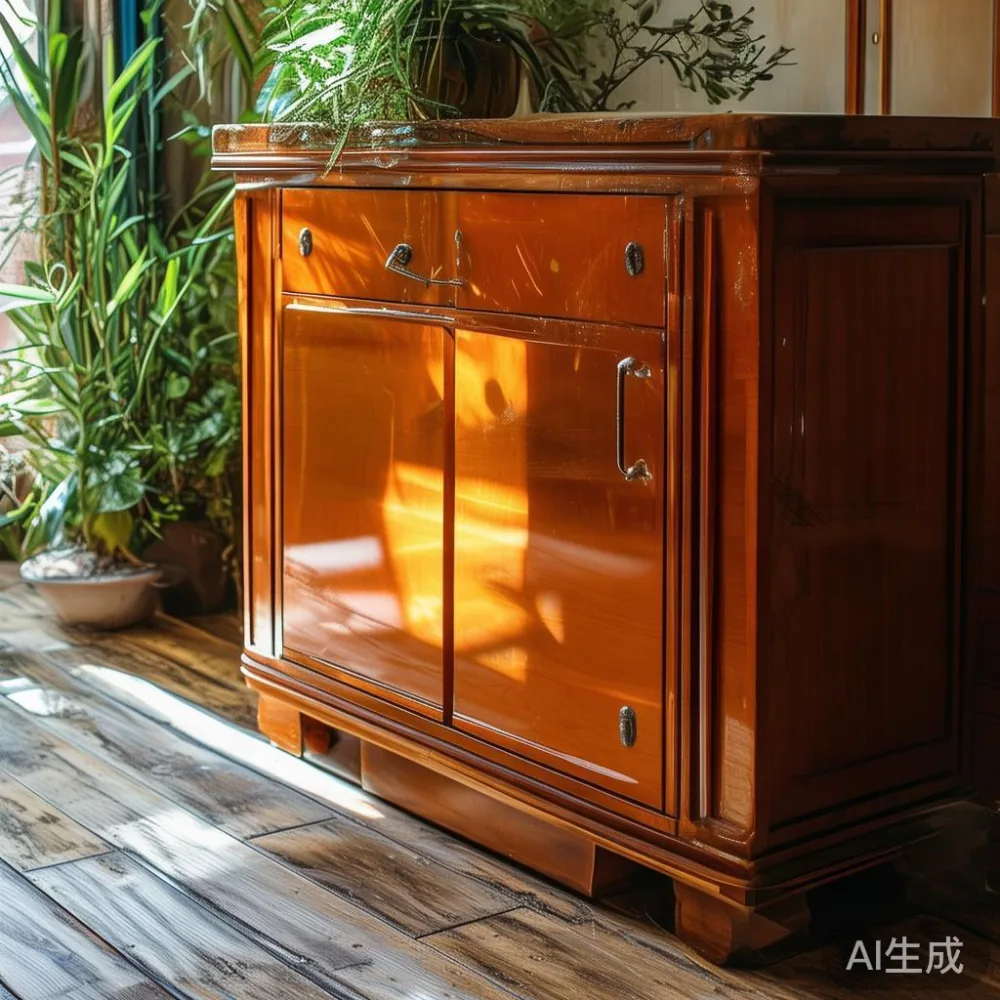
Singapore's average relative humidity sits between 75% and 85% for most of the year, and inside an HDB flat without a 24-hour dehumidifier it can climb past 90% after a long afternoon shower. Lacquer is a closed film finish, which means it slows moisture exchange but does not stop it. Over 12 to 24 months, repeated swelling and shrinking of the wood substrate under the lacquer film creates micro-cracks often called "checking." On a solid wood sofa, bed frame, dining table, wardrobe, or nightstand, the same wood still breathes; on a bar cabinet, the doors, drawers, and interior shelving are smaller, glued joints are tighter, and the finish has to do more work per square centimetre. A lacquered French walnut marble top bar cabinet, for instance, has a sealed wood body and a polished stone top, and the two materials expand at different rates, so the joinery line where they meet deserves extra attention.
What is the right indoor climate for a lacquered bar cabinet?
Aim for 22 to 26°C and 45 to 60% relative humidity. A basic thermo-hygrometer from a Tampines Mart stall costs about SGD 18 to SGD 28 and is worth every cent. Run a dehumidifier in the bar area for two to three hours in the evening; a 12-litre model uses roughly 0.4 kWh per cycle, which is around SGD 0.12 at current SP Group tariffs. Keep the cabinet at least 15 cm away from the wall so air can circulate behind it, and never push it flush against a bathroom door or kitchen return, where steam spikes are common. If your bar cabinet sits under a window that catches the afternoon sun on the 12th storey of a Punggol BTO, draw the blind between 1 pm and 4 pm, because UV plus heat is a faster degrader of lacquer than humidity alone.
How do you clean a lacquered bar cabinet without damaging the finish?
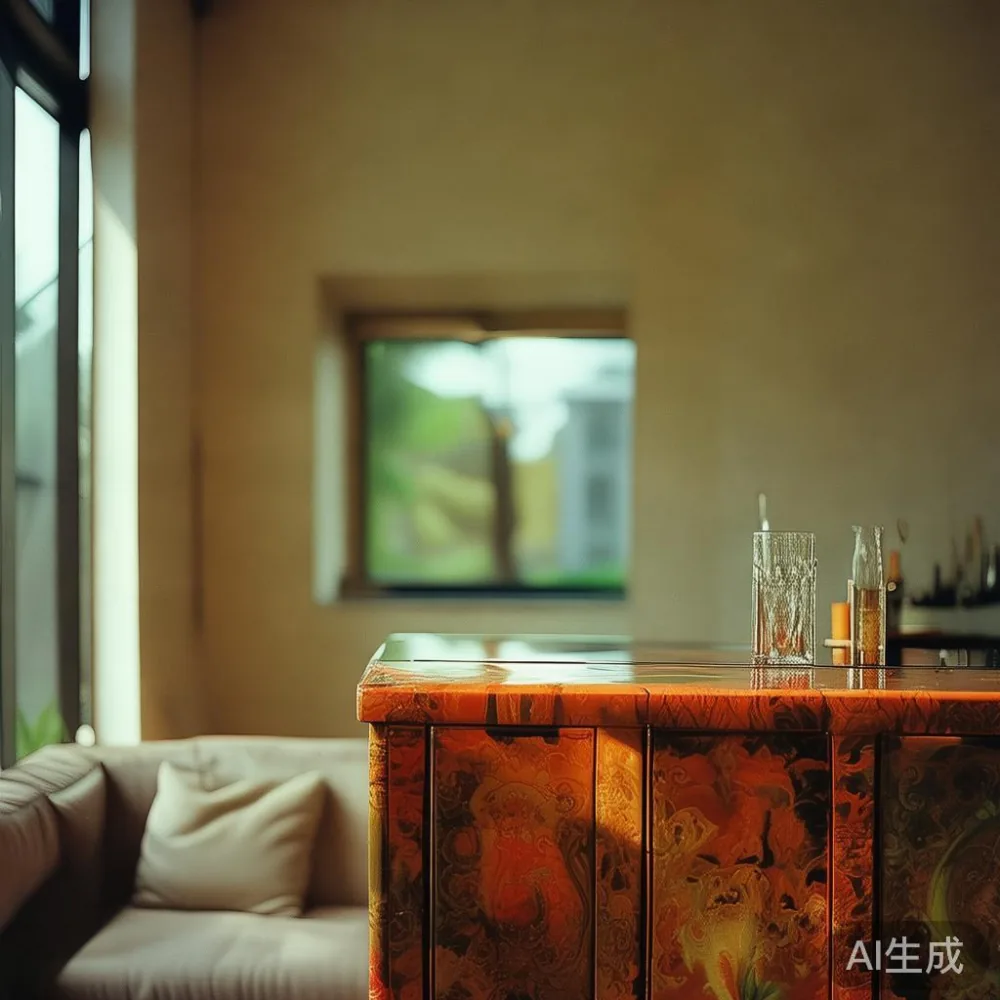
Use a microfibre cloth, dry or barely damp, and wipe in the direction of the grain if you can see one. Skip the furniture sprays sold at Suntec fairs that promise "restore and shine in one wipe"; many contain silicone, which builds up and creates cloudy patches within a month. For sticky spots, a drop of mild dish soap in 250 ml of warm water works well; dry the surface within 30 seconds. Never use vinegar, ammonia, acetone, or any "wonder cloth" sold by telemarketers. I tested five common household cleaners on offcut panels last month at our workshop: three left permanent dull rings after just four wipes. Wipe spills on the bar top within 10 to 15 seconds, especially red wine, soy sauce, and sambal, because the pigments bond to lacquer faster than most people expect.
How often should I polish or re-lacquer my bar cabinet?
For a light-use home bar cabinet, a full re-polish is rarely needed. A paste wax such as Briwax, applied once every 9 to 12 months, fills micro-pores and adds a sacrificial layer. Budget SGD 22 to SGD 35 per tin, enough for two coats on a standard 120 cm cabinet. Paste wax also makes the next dusting easier because dust has fewer fibres to cling to. If the lacquer has already yellowed, cracked, or peeled, a professional respray costs roughly SGD 280 to SGD 480 for a two-door unit, depending on condition. MIDHILL offers lifetime refinishing on its bar cabinets, which is a quiet reassurance that the piece is meant to outlive the trend cycle.
How do I style a Japandi sectional sofa in a small apartment?
A Japandi sectional sofa pairs clean Scandinavian lines with Japanese restraint, and the short answer is: keep the room to three textures, two wood tones, and one metal accent so the bar cabinet can breathe. In a 75 sqm Punggol unit, place a 210 cm oak-framed sectional opposite a 150 cm lacquered bar cabinet so the two anchor pieces balance each other without crowding the 90 cm walkway. Add a low 120 cm marble table in the centre to echo the marble top on the bar, layer a 160 x 230 cm jute rug, and let the wall behind the bar stay empty apart from a single black-framed print. The French walnut marble top bar cabinet becomes the warm counterweight to the lighter sofa frame, and the whole room reads as post-modern light luxury rather than overly styled.
What daily habits protect a bar cabinet in a tropical home?
Three small habits make a measurable difference. First, open the bar cabinet doors for 10 minutes every morning while you brew coffee; air exchange prevents the stale, sweet smell that comes from trapped humidity. Second, place coasters under every glass, even if it is just water; condensation rings form faster than people realise, and on a dark lacquer they show up within 48 hours. Third, keep silicone gel packs (the 5-gram type, around SGD 6 for a pack of 20) inside the cabinet and swap them every 30 days; recharge them by baking at 120°C for two hours on a tray lined with foil. If you entertain often, wipe the interior shelves after each gathering; sugar residue from cocktail mixers feeds mildew within a week in HDB humidity.
Is a lacquered finish worth the upkeep compared to oil or matte finishes?
For a bar cabinet specifically, lacquer has real advantages. It resists ring stains better than hard wax oil, which matters because a bar top sees glass condensation almost nightly. It also wipes clean in seconds, which a hand-rubbed oil finish cannot promise after a spilled Campari. The trade-off is that lacquer shows scratches more clearly, so felt pads (about SGD 4 for a pack of 16) on any decorative object, decanter, or even a heavy marble table slab placed on top are non-negotiable. For owners who entertain twice a week or more, lacquer wins on practicality. For owners who prefer a softer patina and rarely touch the cabinet, a matte oil finish ages more gracefully, though it still needs the same humidity control. MIDHILL finishes most of its bar cabinet range in a seven-coat piano lacquer cured under UV, which closes the wood grain more thoroughly than a standard three-coat spray.
How should I handle delivery and the first 30 days with a new bar cabinet?
Most Singapore deliveries from regional factories arrive within 14 to 21 days of order confirmation, including GST. Inspect the cabinet inside the carton before signing, not just the outer wrap; courier damage is rare but is only honoured if noted on the delivery order. Once inside, let the piece rest flat for 24 hours so the wood acclimatises to your indoor humidity before you load it with bottles. Lift, do not drag, the cabinet into final position; an 80 kg unit can score a vinyl floor in two seconds. Keep doors propped open for the first week to release factory solvent smell, which is harmless but strong in sealed lacquer. Free shipping usually kicks in above US$350, which converts to about SGD 470 to SGD 480 at current rates, so a single bar cabinet often clears that line on its own.
What about scratches, dents, and the 10-year structural question?
Minor surface scratches on lacquer can often be buffed out with a dab of matching colour putty (SGD 12 to SGD 18 at any hardware shop) and a soft cloth, working in circles until the edges blur. Deeper dents need a workshop; the 10-year structural warranty that comes with every MIDHILL bar cabinet covers joint separation, drawer runner failure, and door warp, but not impact damage or exposure to standing water. If you live in a top-floor unit where ceiling condensation drips during monsoon season, place a small absorbent mat beneath the cabinet and check the corner nearest the window every fortnight. A wardrobe, bed frame, dining table, or nightstand from the same maker is built to the same tolerance, which is reassuring when you are furnishing a whole flat room by room.
Where does light luxury fit into all this practical care?
Light luxury, whether the French school with its curvier silhouettes, the American line with cleaner geometry, or the post-modern light luxury style that mixes materials confidently, rests on three things: honest materials, restrained ornament, and finishes that age well. A lacquered bar cabinet meets all three because the wood underneath is solid and visible through the grain, the detailing is usually limited to a slim brass pull or a mitred edge, and the finish can be renewed rather than replaced. Caring for it well is not a chore so much as a slow habit, the kind of small attention that turns a new piece into something your children will recognise in twenty years. In a Tampines or Bedok flat, where space is tight and the climate is unkind, that kind of durability is the real luxury.