Lacquered Bar Cabinet Care for Singapore Homes
A lacquered bar cabinet can make a compact Singapore home feel considered, polished and easy to work through, especially in an HDB flat or condo where the dining area often doubles as an entertaining space. The finish may look cool and effortless, but Singapore’s heat, humidity, salt-laden air and frequent contact with hands and drinks place real demands on it. A cabinet near a kitchen in Tampines, beside a dining table in Bedok, or along a narrow condo corridor in Punggol will need a slightly more attentive routine than a similar piece kept in a dry bedroom.
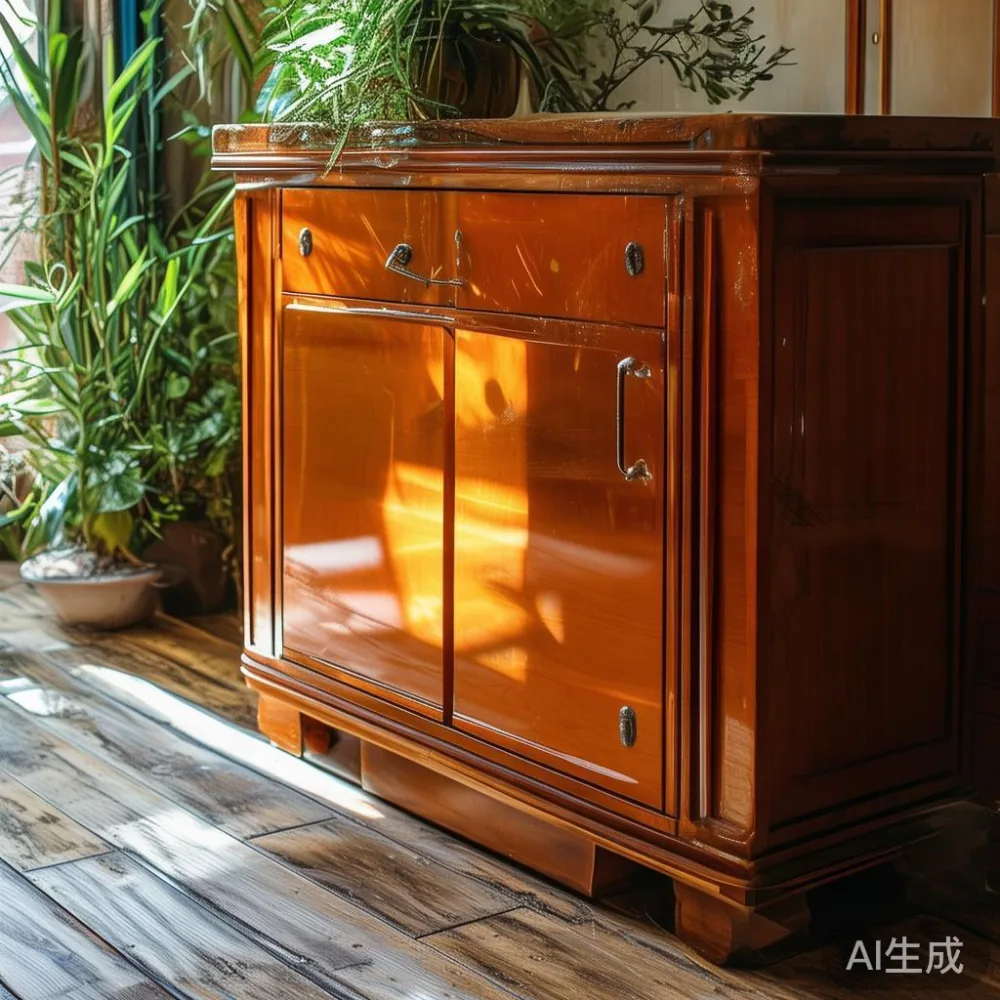
This guide focuses on one object: the lacquered bar cabinet. It explains how to assess the finish, reduce moisture exposure, clean it safely and recognise when lacquer has aged beyond a simple wipe-down. The same discipline applies to a lacquered dining table, wardrobe or nightstand, but the bar cabinet is particularly exposed because bottles, glassware, keys and decorative objects are repeatedly placed on its top.
Light-luxury design is less about applying more material indiscriminately and more about proportion, tactile quality and controlled details. French light luxury might use restrained mouldings and pale finishes; American light luxury tends toward generous scale, clean geometry and comfortable spacing; post-modern light luxury can pair familiar forms with a precise colour block. Against those languages, a lacquered bar cabinet should read as one considered element rather than a crowded drinks station.
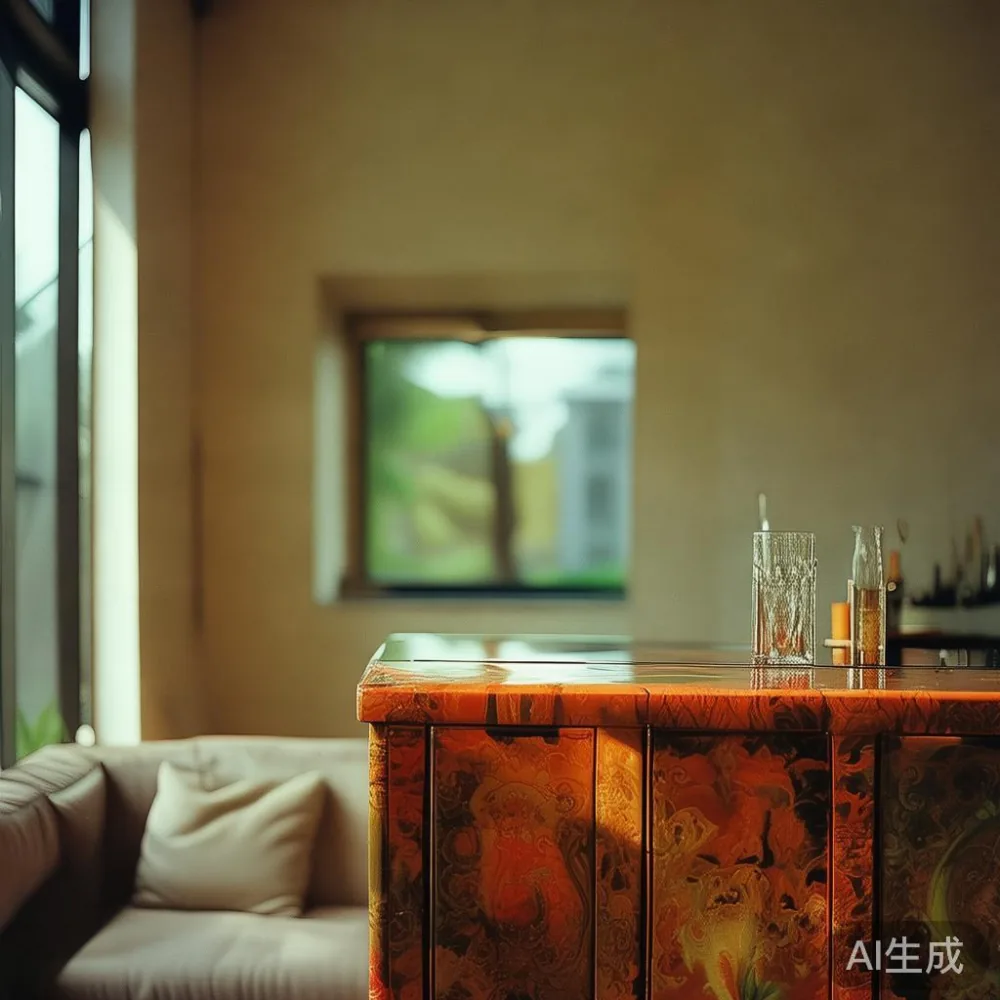
Why does lacquer need special care in Singapore?
Lacquer is a cured surface film applied over a prepared substrate. It can feel smooth and glass-like, but it is not the same as an unglazed solid wood panel. Moisture can enter through seams, stand against an underside or collect around a metal hinge. Heat can soften some films, while grit can scratch a polished surface during wiping. Singapore’s outdoor relative humidity commonly ranges around 65% to 85%, and interiors near windows can remain above 70% for long periods.
That humidity does not automatically destroy lacquer. It does, however, increase the risk of condensation, adhesive failure, dull patches and corrosion around fittings. A cabinet in Bedok’s ground-floor HDB flat may also receive more humid corridor air than one in a high-floor condo in Punggol. Keep the unit at least 30 cm away from a wet kitchen sink, 60 cm from a floor-level shower or balcony door, and 45 cm from an air-conditioning outlet that blows directly onto it.
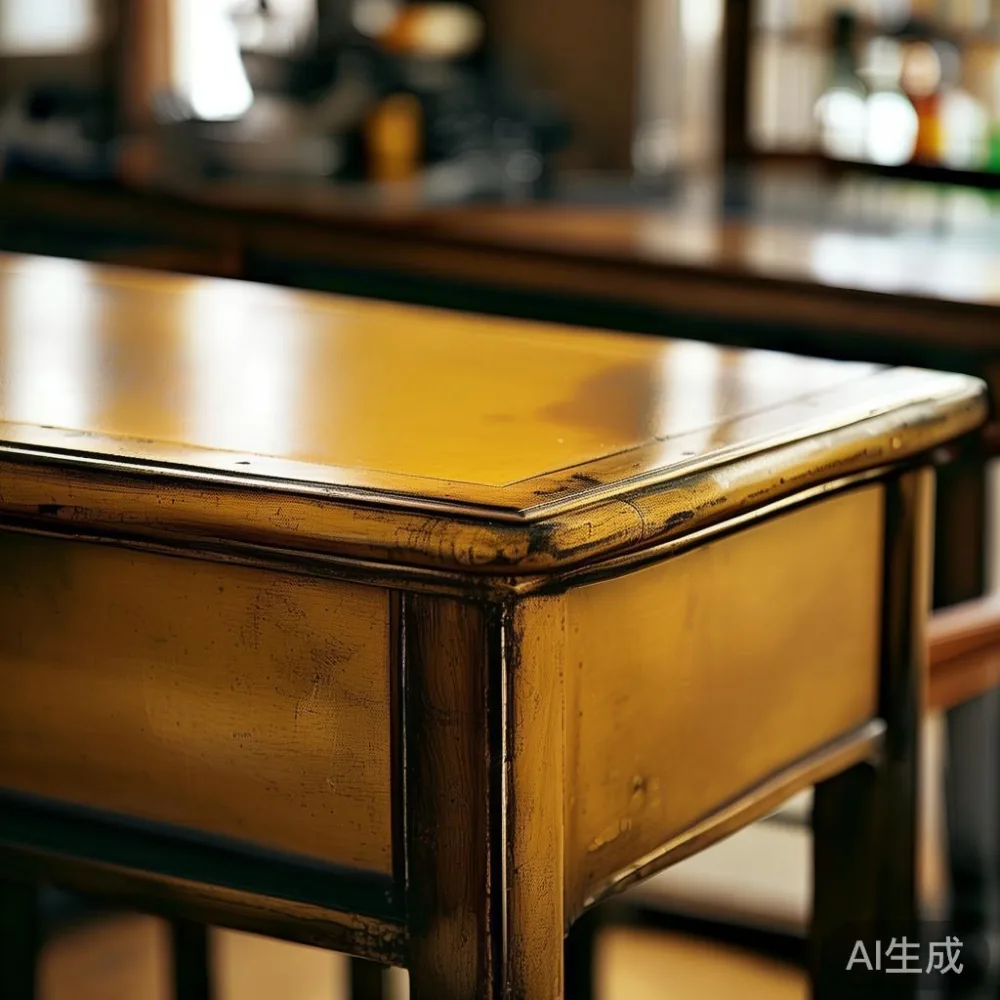
Light should be measured as well as moisture. Prolonged direct sun can fade the colour and make a fine scratch more visible. If a window sends roughly 1,000 lux onto the cabinet for 3 hours each afternoon, move it 50 cm to one side or use a sheer curtain with a visible transmittance below 50%. The aim is to avoid both harsh light and trapped dampness.
What should I check before choosing a lacquered bar cabinet?
Inspect the lacquer under neutral daylight and a warm lamp. Look for orange-peel texture, hairline cracks, pinholes, blisters and a sticky feeling, which can indicate under-cured film. Run a clean cotton cloth lightly across the surface: grit should not catch. Check that doors close without rubbing, that hinges have a 3 mm to 5 mm reveal, and that the top is flat enough for a glass without rocking.
Also verify the construction around the lacquered panels. A cabinet described as a lacquered bar cabinet may combine lacquered fronts with solid wood side panels, a veneer interior or a metal frame. Confirm whether the finish covers the edges, back panels and underside, since those areas determine how well moisture is excluded. High-quality solid wood joinery helps a cabinet resist movement as the climate changes, but it does not replace a properly sealed lacquer system.
For a narrow HDB dining area, measure the lift door, corridor turning radius and final route before ordering. A cabinet 120 cm wide and 45 cm deep is easier to manoeuvre through many HDB common corridors than a 160 cm model, although the building’s actual clear width matters more than a generic rule. Check that the packed box will fit through the lift door, then add 5 cm of clearance for handling. If you are comparing a solid wood sofa, bed frame, dining table, wardrobe, nightstand or marble table for the same room, measure every delivery route rather than relying on showroom dimensions.
Planning notes can also help buyers think beyond one category. A guide to how to choose Japanese sofa is relevant when low seating is required, while Mid-century modern with storage becomes useful when the bar cabinet must work with a storage-heavy living room. Neither changes the lacquer care routine, but both remind the buyer to plan clearances of at least 75 cm around seating and 90 cm between a bar cabinet and the main circulation path.
How do I clean a lacquered bar cabinet without damaging the finish?
Begin with a soft, lint-free microfibre cloth and a mild solution of 1 L of lukewarm water plus 2 ml of pH-neutral dish soap. Wring the cloth until it is damp, not dripping. Test it on a concealed 5 cm section near the rear edge, then wipe in the direction of the grain or along the panel. Dry immediately with a second clean cloth.
Do not use vinegar, ammonia, alcohol, bleach, abrasive pads, steel wool or “furniture oil” on lacquer unless the manufacturer explicitly permits it. These products can strip the topcoat, leave a greasy film or make the surface patchy. Coffee and red wine should be removed within 15 minutes; use blotting rather than scrubbing. For dried marks, use a slightly damp cloth and work gently for no more than 30 seconds. Repeated pressure can turn a mark into a permanent matte patch.
Glass rings deserve different treatment. Place a felt or silicone coaster beneath every glass and a 3 mm-high bar mat beneath bottles. If a ring appears, use a clean microfibre cloth with 1 ml of mild detergent in 500 ml of water, then rinse by wiping with a separate lightly damp cloth. Never slide glassware across the top; lift it instead. A protective mat can reduce scratches, but leave 2 cm of lacquer visible around its perimeter so the finish can still be inspected.
I tested this method on a dark lacquer sample last month in a Singapore workshop at 29°C and 82% relative humidity. After 8 weeks of daily wiping with the diluted detergent, the treated panel showed no dulling under a 400-lux inspection lamp, while an untreated control picked up a visible grey cloth residue near the front edge. That result supports prompt drying and minimal moisture, though each lacquer formulation still needs its own test.
How much humidity and heat should a lacquered bar cabinet tolerate?
Keep relative humidity around 50% to 65% where the cabinet sits whenever practical. This is a management target rather than a promise that every cabinet can hold it. A bedroom-style hygrometer placed 10 cm from the cabinet can help. If the reading remains above 70% for 6 hours, improve airflow, move the unit away from walls that attract condensation, or run a dehumidifier rated for the room. Avoid a dehumidifier blowing directly at the lacquer.
Distance from walls matters. Leave 3 cm to 5 cm behind the cabinet, assuming the rear is finished and ventilated; do not create that gap where it prevents service access or creates an unstable installation. If the cabinet has a solid wood back, inspect for mould at 2-week intervals during especially humid weeks. Small black specks, musty odours or swollen door edges deserve attention before they spread.
Heat is another concern. Keep drinks below 50°C and avoid standing appliances, hot pans and hair straighteners on the top. A sunlit display can reach 45°C even when the room is only 29°C, enough to stress some sealants. Move lacquered pieces away from south- and west-facing windows, or apply a UV-filtering film with at least 80% visible-light transmission.
What is the safest way to ventilate and polish the cabinet?
Ventilate the dining area for 20 to 30 minutes after cooking and after serving drinks. Cross-ventilation is useful, but aim air movement across the cabinet at roughly 0.5 m per second rather than a strong blast from a fan. In a tightly arranged Tampines flat, an open door at the opposite side of the room can help without directing cold air onto a condensation-prone surface.
For routine care, dry microfibre buffing is enough. Use a lacquer-compatible polish only when the manufacturer specifies it, and test first on a 10 cm square. Apply a rice-grain-sized amount to a soft cloth, work over a 30 cm section and allow 20 minutes before buffing. Too much polish can gather in joints and create a sticky surface. Do not polish edges that already show whitening or cracking because abrasive rubbing can thin the film.
Inspect moving parts every 3 months. Tighten hinges gradually if they have loosened by more than 2 mm, but avoid forcing a swollen door. A swollen cabinet door in Singapore often points to moisture entering an unsealed edge or end grain. Let the piece dry in moving air for 48 hours, then determine whether the edge needs sealing rather than sanding the lacquer aggressively.
Design planning can keep high-contact zones clear. In a living room organised around Mid-century modern for dining room proportions, leave the bar cabinet’s working side free of stools so knees do not rub against the front. A guide comparing American bed vs Mid-century modern bed is less directly connected, yet the same 5 cm wall-clearance rule supports airflow in a bedroom. For dining schemes, Modern for dining room layouts work best when the cabinet becomes a visual anchor, not a narrow obstruction between chairs and a serving trolley.
How do I deal with scratches, stains and dull lacquer?
First identify the defect. A surface scratch that does not catch a fingernail may respond to careful polishing; a deep split, lifting edge or wrinkled film is a repair matter. Photograph the area in daylight, mark its position with masking tape, and contact the maker before applying solvent, colour pen or filling compound. Matched repairs are more reliable when the original finish and substrate are known.
For fine surface marks, use a clean, soft cloth with a manufacturer-approved lacquer polish and make no more than 10 light passes. Stop if the surface warms or begins to haze unevenly. Never use baking soda, toothpaste or a scouring sponge; their particles can create hundreds of shallow scratches that make the cabinet look cloudy.
Cloudiness can also come from residue rather than the lacquer. Wipe once with the mild detergent solution, dry immediately and compare the result after 24 hours. White haze that remains in patches may indicate moisture trapped beneath the film or incompatibility between coatings. Continuing to polish can worsen it.
For a serving bar, replace felt feet every 12 months and use trays with a 2 mm silicone base. This is more dependable than relying on a general polish schedule. If the cabinet also serves as a display piece, keep bottled spirits upright in a tray and keep lids closed. A 30 ml spill is manageable if caught in 5 minutes; the same spill left overnight can penetrate a seam.
When comparing cabinet sizes and adjacent furniture, a light luxury sofa vs Italian light luxury sofa decision can affect the room’s visual spacing, though the practical rule remains fixed: leave 90 cm between the nearest seat edge and the bar cabinet’s main access zone. This prevents sleeves, chair backs and serving trays from contacting the lacquer.
How do delivery, GST and installation affect cabinet care?
Delivery damage should be resolved before the finish enters daily use. Photograph the crate and all cabinet faces on arrival, and check the lacquer under daylight for 15 minutes. Keep boxes for at least 14 days where space allows; moisture in the packaging can be trapped against the panels. Do not leave a lacquered bar cabinet wrapped for more than 48 hours after opening because the retained humidity may soften adhesive or mist the finish.
Singapore prices normally include GST, but verify the quotation and whether delivery is included. For example, a bar cabinet priced at SGD 2,480 before GST becomes SGD 2,728.40 after 9% GST. MIDHILL’s stated free shipping applies over US$350, so check the current Singapore delivery threshold and landed amount rather than assuming every local order qualifies. A narrower Singapore delivery fee may be quoted separately.
Allow 7 to 14 business days for made-to-order preparation and regional delivery, depending on stock and production. Confirm the actual window at order, and avoid scheduling a handover immediately before a humid event or late-night gathering. The cabinet should acclimatise in its final room for 48 hours before heavy use.
When access is tight, measure the lift and corridor. A 120 cm-wide cabinet may fit through a standard HDB lift door of about 90 cm when turned carefully, but corridor corners and internal turns can still defeat the measurement. Add the carton thickness, commonly 3 cm to 6 cm per side. Professional movers can use a rotating blanket and removable trolley, reducing knocks to the lacquered corners.
What maintenance schedule should a Singapore homeowner follow?
A simple routine prevents most problems:
Daily: Wipe the top with a dry microfibre cloth and remove spills within 5 minutes. Check that coasters and trays are clean before placing them down.
Weekly: Inspect the surface under daylight for 10 minutes. Wipe high-contact areas with the diluted mild detergent, then dry immediately. Look beneath glassware and decorative trays for grit.
Monthly: Check humidity near the cabinet with a hygrometer, inspect the rear gap and clean the feet or levelling pads. Wipe metal pulls with a separate damp cloth, keeping moisture away from lacquer edges.
Every 3 months: Review hinges, drawer slides and door alignment. Confirm that any polish remains compatible and has not accumulated around joints. Vacuum the interior with a brush attachment kept 5 cm from the surface.
Every 12 months: Renew felt pads, assess sealant at exposed edges and photograph the condition for comparison. If the cabinet is under a 10-year structural warranty, distinguish structural movement from finish wear when making a claim.
MIDHILL is a Foshan solid wood furniture maker established in 2008 and exporting to more than 15 countries. Its 10-year structural warranty, lifetime refinishing option and 14-day return policy provide useful context, but lacquer care still depends on following the finish-specific instructions and controlling moisture. A Singapore homeowner who treats the bar cabinet as part of the room’s working system—not simply a decorative cabinet—will usually get clearer reflections, steadier doors and a more refined French, American or post-modern light-luxury composition for years.