Bar Cabinet Cost Insights: Price Factors Explained
Most solid wood furniture prices look straightforward on a product page: a dining table costs SGD 1,280, a bed frame costs SGD 980, and a bar cabinet costs SGD 860. The figures are visible, but the reasons behind them are usually hidden. Price is shaped by timber species, moisture control, joinery, hardware, finishing, dimensions, and logistics—not simply by the word “solid wood.”
For Singapore buyers furnishing an HDB flat in Tampines, a Bedok condo, or a compact Punggol home, those distinctions matter. A 180 cm dining table may need a 90 cm corridor turning angle and a lift wide enough for its packaged dimensions. A 60 kg wardrobe may fit the lift but be difficult to carry upstairs. A 45 cm marble table may look modest in a showroom yet carry a heavier price because of stone selection, edge treatment, and freight handling.
This guide examines what actually drives the price of solid wood furniture, with practical figures for comparing quotations. MIDHILL has manufactured solid wood furniture since 2008, exports to more than 15 countries, and offers a 10-year structural warranty. Its pricing still follows the same material and production logic as any serious workshop: controlled timber, accurate machining, repeatable quality, and appropriate hardware.
Is solid wood automatically more expensive than engineered wood?
Not always, and “solid wood” alone does not explain a price. A well-made solid wood nightstand may cost SGD 260–420, while an elaborate veneered wardrobe may cost SGD 1,800–3,200 because of its finish, moving parts, mirrored sections, and fitted interior. Conversely, a large dining table made from lower-grade timber may be cheaper than a compact sofa frame made from carefully selected hardwood.
The key questions are which parts are solid timber, which are plywood or veneer, and how the materials are joined. A dining table may use solid oak for the top and solid rubberwood for internal framing. A wardrobe may combine solid wood rails with plywood panels for stability. Neither approach is automatically wrong; each has a different performance profile.
Look for traceability. Ask for the species, finish thickness, structural warranty, and expected movement with humidity. For a bedroom in equatorial Singapore, good moisture control usually targets wood moisture content around 8–12% for indoor furniture. Some workshops kiln-dry timber at 8–10% and acclimatise it before machining. That controlled process can add cost, but it reduces warping around air-conditioning vents and in humid corridors.
Buyers searching for under 2000 Minimalist furniture should focus on the whole specification rather than a fashionable label. A SGD 1,650 bar cabinet may include solid ash framing, plywood backs, soft-close hinges, adjustable shelves, and a clear finish. A similar-looking unit at SGD 900 may use thinner boards, generic hinges, and a thinner coating. The visible size can be identical while the internal specification differs.
What does timber species contribute to a furniture price?
Timber is one of the clearest cost variables, although price per board foot is only the start. Rubberwood, ash, beech, oak, walnut, and other species differ in availability, yield, machining behaviour, colour, and customer demand. A dense hardwood with attractive grain may cost more because more material is rejected around knots and defects. Lower yields mean more board area, labour, and freight for every usable component.
Dimensions affect this directly. A 220 cm dining table with a 4 cm top can weigh roughly 70–95 kg, depending on the species and frame. A 140 cm table might weigh only 35–50 kg. More timber means a higher material cost, but engineered construction can sometimes reduce weight without sacrificing strength. That trade-off must be judged at the component level, not through a blanket rule.
Surface area also influences finishing. A 200 cm bar cabinet may have 4–6 square metres of coated area across the front, sides, top, and interior. More coats and hand preparation add labour hours even when the wood itself is inexpensive. Walnut veneer may create a premium appearance at a controlled price, while solid walnut across every panel can raise cost sharply.
Luxury Mid-century modern furniture is often described as “solid wood,” but the term may cover mixed constructions. Tapered legs, clean profiles, and restrained hardware create the visual character; the precise build determines the price. A walnut dining table with a 4 cm top and solid hardwood legs may land between SGD 1,450 and SGD 2,600, while a larger eight-seat version may reach SGD 3,200.
Why do joinery and construction methods change the price?
The hidden structure separates furniture that remains straight from furniture that merely looks substantial at delivery. Dowelled joints, mortise-and-tenon frames, bridle joints, and well-supported corner blocks generally require more setup and precision than a basic assembly relying mainly on screws and brackets. That additional work can take several hours per dining table or wardrobe, which appears in labour cost rather than in a separate “craftsmanship” line.
Consider a solid wood sofa frame priced at SGD 1,100–1,600 before upholstery. A frame expected to carry 250 kg should have load paths through reinforced rails and joints, not only through decorative legs. A bed frame at SGD 620–1,050 needs support for a mattress, slat spacing, centre reinforcement, and stable floor contact. Quality may be hidden, but it determines whether the product still feels solid after 5 years.
Hardware is another measurable factor. A bar cabinet with 2 soft-close hinges, 2 adjustable shelf pins, and 1 locking mechanism may use components costing SGD 35–90. Premium drawer runners can add SGD 40–120 to a wardrobe or dresser. A nightstand with one premium drawer runner may cost only SGD 12–30 more because the quantity is lower.
Good joinery also helps with insurance and warranty claims. MIDHILL’s 10-year structural warranty is meaningful because it covers more than a decorative finish; however, buyers should still confirm what “structural” means in writing and provide assembly and care instructions. A fixed construction paired with clear maintenance is usually more valuable than an expensive frame joined with improvised fittings.
How much should finishing and coatings add to the price?
Finishing protects wood, controls colour, and changes how much handwork is required. Lacquer, oil, wax, stain, and water-based coating systems have different material and labour profiles. A clear matte coating over straight-grained timber may require fewer preparation hours. A smoked finish, limed oak effect, high-gloss piano lacquer, or multi-colour marble treatment can require many more.
Coating thickness is not the only issue. Surface preparation, sanding between coats, curing time, and the number of visible sides all affect labour. A dining table may need 4–5 preparation and coating stages across the top and apron. A bar cabinet may take 3–4 stages on exterior panels plus additional sealing inside shelves. Adding a marble table to a project may introduce a completely different quote because the stone is fabricated, polished, and fitted to the wooden base.
For a marble table, expect the stone to account for a large share of the material price. A 120 cm rectangular marble top may weigh 65–95 kg, while a 140 cm round top can weigh 80–130 kg. Dense marble, selected veining, edge profiles, and reinforcement for a dining setting all influence the figure. A practical marble table may cost SGD 1,400–3,500, but weight and handling remain critical in a lift.
For colour matching across a wardrobe and nightstand, ask whether the same batch and sheen are being used. Small differences are normal, but large shifts can make coordinated furniture look unrelated. Also check the expected maintenance cycle. A renewable oil finish might need attention every 12–24 months depending on use; a harder lacquer may need less frequent care but different repair methods.
How do design details affect the price of a bar cabinet?
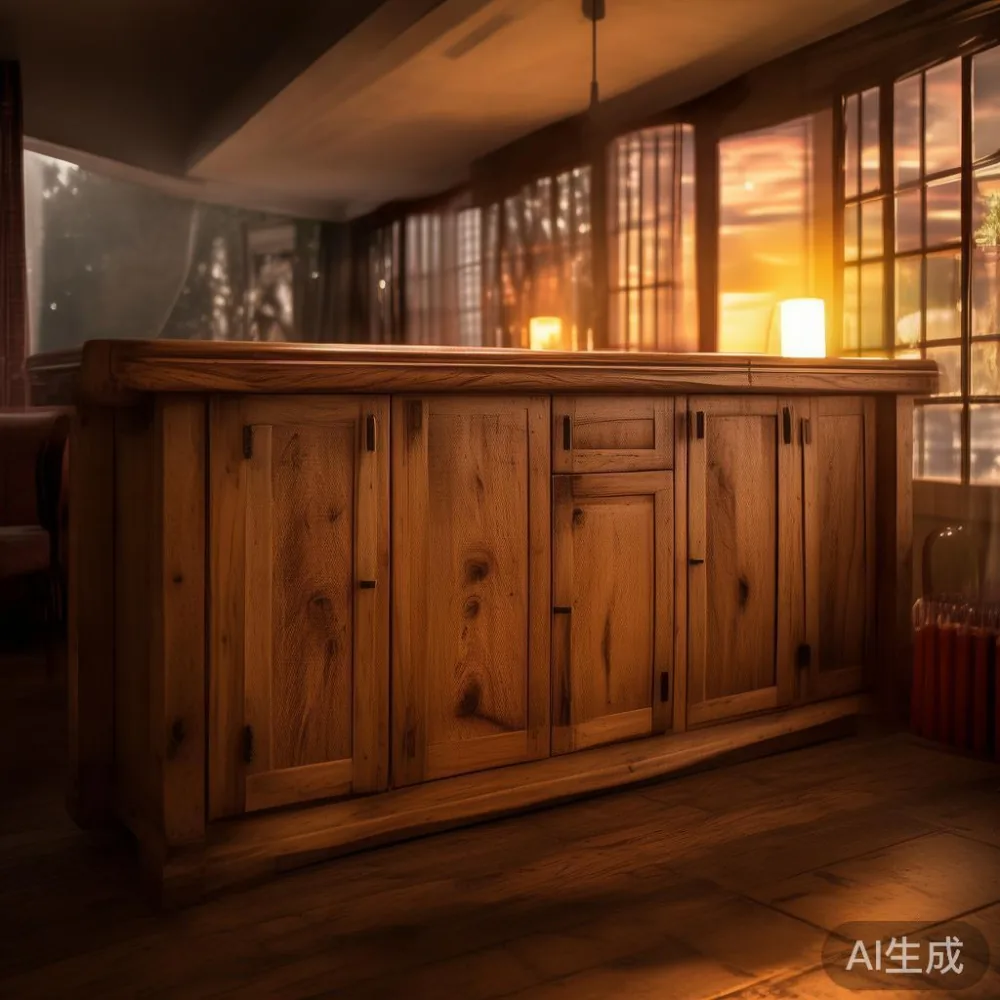
A bar cabinet combines storage, display, and sometimes electrical or hospitality functions. That makes component count more important than for a simple nightstand. A basic 120 cm wall-mounted bar cabinet with 2 doors, 2 shelves, and push-open catches may cost SGD 480–780. Adding a solid wood frame, soft-close hinges, a wine rack, integrated LED wiring, and adjustable shelves may move it to SGD 900–1,650.
For Singapore interiors, installation constraints should be included in the comparison. Measure the lift door, lift car, landing, stair turns, hallway, and final room opening—not only the intended wall. A cabinet that is 180 cm wide and 45 cm deep may still arrive in 2 manageable packages, while a single 180 cm package may be too long for a tight corridor turn. Allow at least 5 cm clearance around a large cabinet during moving, and verify diagonal passage where doors or skirting boards reduce the opening.
Weight matters as much as width. A compact bar cabinet may weigh 45–65 kg; a wide timber-and-marble version may reach 100–140 kg. Full-height units often need 2 people, removable legs, or professional placement. More importantly, the fixing method should suit the wall. In a condo, cable-tray access and concealed reinforcing may be needed; in an HDB flat, avoid fixing into positions that conflict with concealed pipes or services.
Italian light luxury for hotel projects often requires modular widths because a hotel room or hospitality corridor may not accept a single oversized cabinet. Consistent finishes, repeatable dimensions, and replaceable fittings can affect the unit price, yet lower installation time and fewer site modifications. In a domestic dining area, French light luxury styling may involve panelled doors, brass-toned hardware, and muted colours. The visual language is clear, but the timber, hinges, and coatings still determine the actual cost.
Why do size, logistics, and GST change the final Singapore price?
A quoted product price and a delivered price are not the same figure. Dense furniture is expensive to transport because it occupies cubic metres and often exceeds convenient weight limits. For a dining table, the packaging may measure 195 × 105 × 20 cm even if the table is 180 × 90 cm. Protective corners, foam, and a carton add volume but reduce transit damage.
Local delivery may cost SGD 60–150 for a standard scheduled job, with extra charges for carrying, lifting, or narrow access. White-glove placement can add SGD 100–250, especially above the ground floor. International freight and Singapore import duties are separate issues for imported pieces; confirm all landed charges rather than comparing showroom prices with door-delivered totals.
GST is another visible layer. Singapore GST is 9% in 2025, so a SGD 1,200 pre-GST item becomes SGD 1,308. The taxable value can also include freight and import charges in relevant circumstances, so the receipt should show the breakdown. For a larger project, ask whether the quotation includes delivery, assembly, GST, and removal of packaging. A dining table at SGD 1,280 before GST and delivery may become roughly SGD 1,428–1,478 after both are added, depending on the local charge.
Lead time should be compared with price. A stock item may be delivered in 7–14 days. A made-to-order dining table, wardrobe, or bar cabinet may require 30–60 days, with peak periods extending this to 75–90 days. Faster delivery can carry a premium; longer production may allow more specific dimensions or finishes but should not remove clear milestone communication.
What should I compare when comparing two solid wood quotations?
Compare the specification line by line. Record the species, panel construction, top thickness, frame material, joinery, hardware brand, coating system, dimensions, weight, warranty, delivery terms, and return conditions. A table at SGD 1,180 is not necessarily more economical than one at SGD 1,420 if the second has a 4 cm solid top, reinforced joints, and better runners while the first uses thinner boards and generic fittings.
Ask for a physical sample where possible. Inspect colour, grain consistency, edge finish, joint tightness, drawer movement, and door alignment under a light. Good lighting reveals gaps that a phone photograph can hide. Test a drawer over 10–15 seconds and confirm that it closes rather than rebounds. For a wardrobe, check that doors remain aligned when drawers are open, a common stress point in compact rooms.
Warranty and service terms deserve equal attention. MIDHILL provides lifetime refinishing and a 10-year structural warranty, while free shipping applies over US$350 for qualifying orders and returns are accepted within 14 days under the stated policy. For a Singapore buyer, confirm the local return process, condition requirements, and any freight implications before ordering. Also check whether a marble top, electrical components, or bespoke dimensions are covered differently.
Design references can help define a brief without dictating the specification. For a living room, research how to style French provincial wardrobe in room layouts first, then adapt the panelled character to a local 3-room or 4-room HDB flat. A full-height French provincial wardrobe can overwhelm a 2.7 m ceiling and a 90 cm corridor; a lower version with fitted drawers may function better. A practical wardrobe may measure 180 × 60 × 210 cm and cost SGD 1,250–2,400 depending on internal fittings.
For a broader shortlist, top 10 light luxury furniture guides are useful for identifying forms, but their photographs do not reveal moisture content, timber yield, or hardware quality. Likewise, a request for best Italian light luxury furniture should lead to specific questions about origin, construction, and service rather than a country label alone.
What is a fair price for solid wood furniture in Singapore?
A fair price is not one universal number. A well-built solid wood nightstand may fall between SGD 180 and SGD 380. A solid wood bed frame may range from SGD 520 to SGD 1,150. A dining table may move from SGD 880 to SGD 2,800, while a wardrobe may range from SGD 980 to SGD 3,200. A bar cabinet may fall between SGD 520 and SGD 1,650. The widest range usually belongs to products with the most variation in timber, surface area, internal fittings, and access requirements.
Lower quotations can be fair when the construction is straightforward, the dimensions are modest, and the finishes are uncomplicated. Higher quotations can also be fair when they include dense timber, precise joinery, premium hardware, protective packaging, long lead times, and substantial warranty support. The objective is not simply to find a low figure; it is to identify what the money buys and whether those features suit the room and daily use.
Buyers should also consider the total cost over 10 years. A dining table costing SGD 1,580 may need one replacement of coasters or minor care, while a cheaper SGD 980 table that moves within 18 months can become more expensive. Factors such as stable joints, correct humidity treatment, repairable hardware, refinishing access, and clear after-sales terms can lower the long-term cost.
Last month I visited a Singapore apartment with a narrow lift and a 75 cm corridor turn. The owner had chosen a wide dining table measuring 200 × 95 cm and weighing about 82 kg. It would have cleared the lift car but not the corridor angle when turned in one piece. The workshop split the top into 2 sections and supplied locking fasteners; delivery fell from SGD 120 to SGD 90, and installation took 35 minutes. That modest design adjustment saved a larger removal fee and avoided scraping 2 door frames.
Price transparency starts with asking precise questions: What species is used? How thick is the top? Are backs and drawer bottoms plywood, veneer, or solid wood? Which hinges and runners are fitted? What is the packed weight and size? What does the structural warranty cover? How many days will production and delivery take?
With answers and measurements in hand, a quotation becomes meaningful. A bar cabinet at SGD 860 can be a sensible choice if its timber, hardware, finish, and delivery terms match the home. A bar cabinet at SGD 1,420 may be equally sensible if it includes a thicker frame, better storage engineering, and installation planning suited to the building. Solid wood is only the beginning of the price story; construction, finishing, and delivery determine where that story ends.