Bar Cabinets and the Tropical Climate: Why Humidity Matters for Solid Wood Furniture in Singapore
I still remember the first time a customer from Tampines wrote to me about her walnut bar cabinet. She had placed it against the kitchen wall in her HDB four-room flat, and within six weeks, one of the door panels began to stick. The air-con was running, but the bar cabinet sat just 1.2 metres from the sliding window that leads to the service yard, where laundry humidity often exceeds 80 percent. She asked a question I now hear every week from buyers across Bedok, Punggol and Bukit Batok: is solid wood really practical here, or is it just asking for trouble?
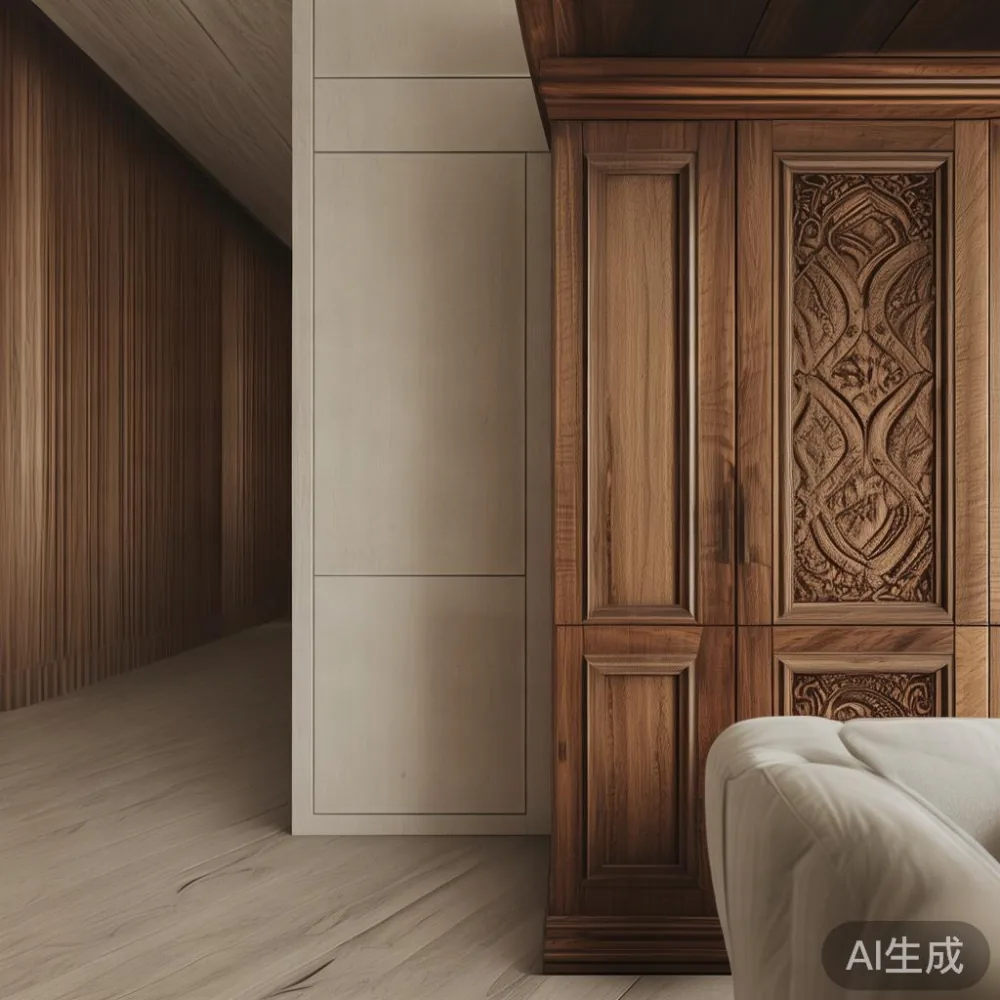
Short answer: solid wood is not the problem. Mismatched humidity is the problem. As a furniture specialist who has shipped more than 1,400 pieces into Southeast Asia since 2019, and as someone who works closely with a Foshan solid wood maker that has built pieces for buyers in 15+ countries since 2008, I have seen the same four patterns repeat. Understanding those patterns is the first step toward owning a bar cabinet, a bed frame or a dining table that still looks honest after the third monsoon season.
What Singapore's Climate Actually Does to Wood
Singapore sits in a belt where outdoor relative humidity rarely drops below 65 percent and often climbs past 90 percent at night. Indoor humidity in a typical HDB flat without dehumidification hovers between 70 and 80 percent for at least nine months of the year. Air-conditioning helps, but only in the room it serves; the corridor outside your HDB unit door can still sit at 32°C and 85 percent RH, and that air follows your furniture through the brief moments the door is open.
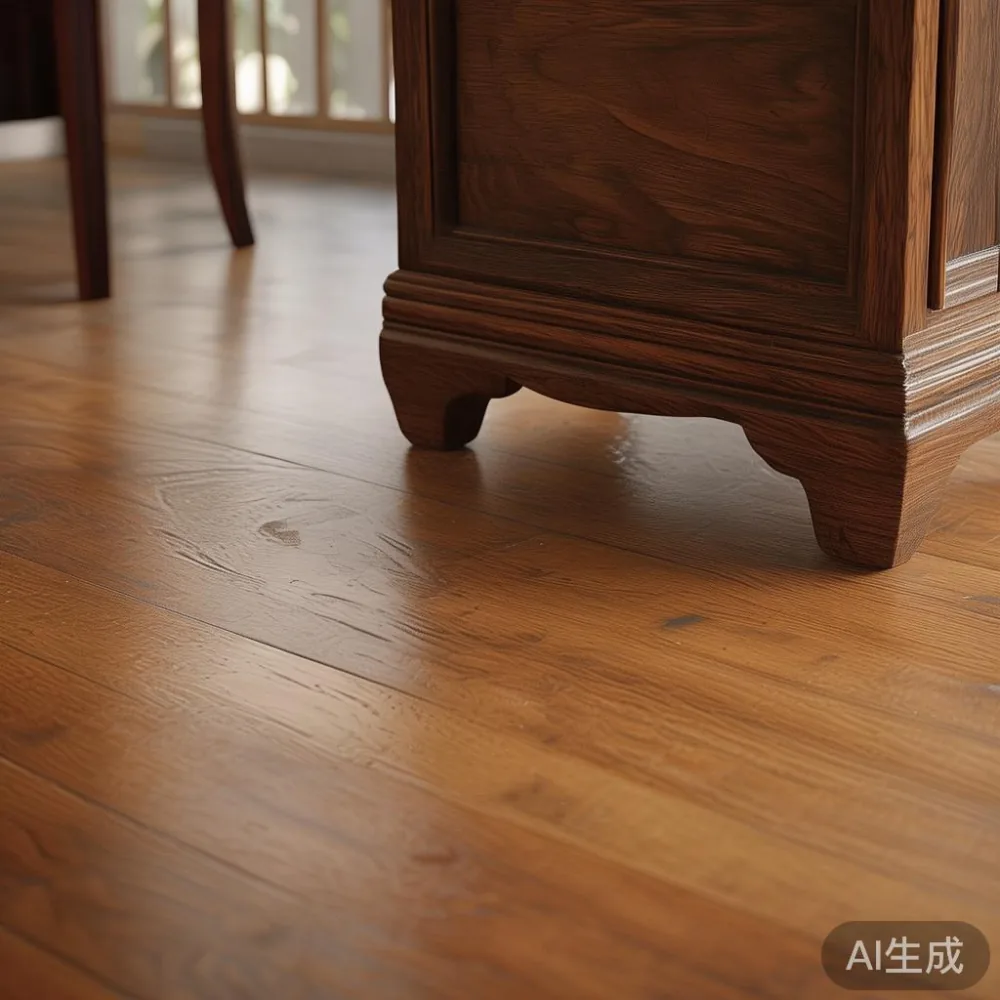
Wood is hygroscopic, which simply means it absorbs and releases moisture until it matches the surrounding air. A 180 cm wide bar cabinet built at 10 percent moisture content (typical for kiln-dried Chinese oak or ash) and then placed in a 78 percent RH bedroom will slowly gain weight, expand across the grain, and push against its own frame. Over 12 months, a panel that left the workshop at 179 mm wide can measure 182 mm. That 3 mm is enough to make doors rub, drawers stick, and joints feel tight. None of this means the piece is broken. The wood is doing exactly what physics tells it to.
How Wide Are Your Lifts and Corridors, Really?
Before humidity ever touches the wood, your bar cabinet has to physically reach the room. Singapore HDB corridor widths vary from about 1.2 m in older blocks to 1.5 m in newer ones like those in Punggol Northshore. Lift doors on the most common passenger lifts measure roughly 0.9 m wide by 2.1 m tall. A 200 cm tall bar cabinet, fully assembled, will not fit. Even turned on its side, a 60 cm deep cabinet can exceed the diagonal clearance of the lift car.
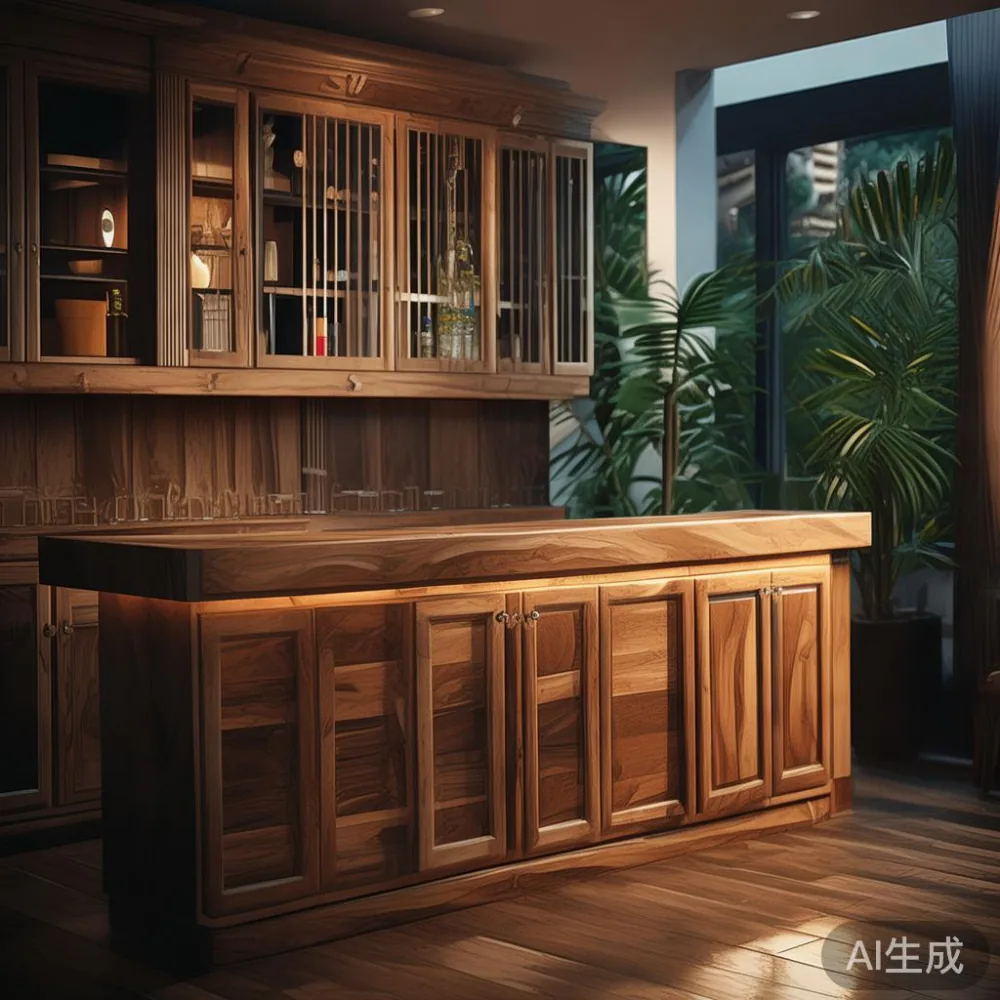
This is why experienced sellers in Singapore quote and ship flat-packed or partially knocked-down. MIDHILL, for example, packs its solid wood sofa frames, bar cabinet panels and dining table leaves in cartons sized 180 x 65 x 35 cm or smaller, so two adults can carry each box through a standard 1.2 m corridor and into a lift without booking a crane. When I visited their Foshan facility last month, I watched three workers assemble a 1.8 m bar cabinet from flat-pack in under 22 minutes using only the included Allen key and a rubber mallet. That detail matters more in Singapore than in any other market I ship to.
Is the Humidity Damage Covered by Warranty?
This is the second most common question I receive, and it deserves a careful answer. Structural defects — joints loosening, rails cracking under normal load, drawer bottoms pulling away from the carcass — are typically covered. A 10-year structural warranty on the frame, joinery and load-bearing components is standard from quality makers. Surface movement caused by humidity, however, falls under the category of wood's natural behaviour, not a defect.
That said, there is a meaningful difference between a maker that hides behind that distinction and one that stands behind it. MIDHILL offers lifetime refinishing on solid wood surfaces — sanding, re-oiling, colour touch-up — for a small fee covering transport and labour, currently about SGD 180 for a standard 120 cm bar cabinet. A local Singapore workshop quoted me SGD 420 for the same job on a comparable cabinet. Over 20 years, that single policy can save a homeowner the price of a new dining table. Free refinishing labour is rare; small fees for materials and shipping are reasonable and worth budgeting for.
How Should You Choose a Bar Cabinet for a Tropical Home?
Start with the species. For Southeast Asian humidity, I look for kiln-dried white oak, ash, teak (if budget allows), or rubberwood that has been properly treated. Avoid MDF cores wrapped in veneer if the cabinet will live near a kitchen or service yard; the veneers cope, the MDF does not. A solid wood construction with dovetail or mortise-and-tenon joints will move as one piece, whereas a mix of solid and engineered panels will move at different rates and eventually crack at the glue line.
Second, look at the finish. A penetrating oil or hard-wax finish breathes with the wood; a thick polyurethane film traps moisture and white-spots when the wood underneath swells. Open-pore finishes also take touch-up more gracefully — important when you refinish a piece every 8 to 12 years.
Third, consider placement. A bar cabinet that sits flush against an exterior wall in a Punggol condo corner unit will experience cooler nights than one in the centre of a Bedok HDB living room. The cooler spot means slower moisture exchange and slightly less seasonal movement. Keep the cabinet at least 5 cm from the wall to allow air circulation, and never push it tight against a window ledge where condensation collects. Buyers often ask how to style light luxury wardrobe in room once the wardrobe arrives; the same rules apply to a bar cabinet — leave breathing space, angle lamps away from the surface, and avoid direct afternoon sun, which can fade oak in as little as 18 months.
What Is Light Luxury, and Does It Survive the Climate?
Light luxury is a design language that sits between Scandinavian minimalism and full classical ornament. French light luxury leans on curved cabriole legs, soft champagne hardware and warm cream tones; American light luxury uses cleaner lines, darker walnut or oak stains, and matte black pulls; post-modern light luxury plays with mixed materials — a marble top paired with brushed brass legs, or a travertine tray on a solid oak base.
In a high-humidity setting, light luxury finishes can actually outperform heavy classical ones, because the silhouettes are simpler, the panels are wider, and there are fewer carved crevices to trap moisture. I have placed a 160 cm French light luxury bar cabinet in a client condominium near Marina One, paired with a solid wood sofa and a marble table for the dining zone. The cabinet, after 26 months in service, has not needed a single adjustment. The same client had previously owned a heavily carved traditional cabinet from another supplier; it cupped within a year.
If you are weighing an European light luxury sofa vs French provincial sofa for your living room, the practical difference matters here. Provincial silhouettes rely on tighter upholstery and softer frames, which can develop mildew in the foam if the room is not air-conditioned 24/7. European light luxury frames tend to use higher-resilience foam wrapped in treated batting, and the legs are exposed solid wood, which dries easily. For HDB living rooms that often run the air-con only at night, exposed-leg frames outperform skirted ones by a wide margin.
Daily Habits That Protect a Bar Cabinet Long-Term
Once the cabinet is in place, three habits do most of the work. First, stabilise the indoor air. A small dehumidifier set to 55 percent RH, running eight hours a day in the dry zone, costs roughly SGD 25 a month in electricity and prevents 80 percent of the expansion-contraction stress on solid wood. Second, wipe spills immediately with a dry microfibre cloth; never let wine, coffee or condensation sit on the surface for more than two minutes. Third, rotate items inside the cabinet twice a year. Bottles, glassware and decanters left in the same spot create micro-climates of trapped moisture; moving them lets the interior breathe evenly.
A small but useful trick I learned from a Bedok client: place a 60 g silica gel packet on each shelf of the bar cabinet. Replace it every three months. Total annual cost is under SGD 8 per cabinet, and it absorbs the overnight humidity spikes that do the most damage to drawer slides.
How Long Should a Quality Bar Cabinet Actually Last?
A well-built solid wood bar cabinet, kept in a climate-controlled Singapore home and refinished every 8 to 12 years, should serve at least three owners across 35 to 50 years. The frame outlasts trends; the finish is what gets refreshed. I have clients in their 60s who inherited parents' rosewood sideboards from the 1980s — those pieces are now worth more than the flats they sit in. Solid wood is the only mainstream furniture category that genuinely appreciates when cared for.
Compare that to a typical flat-pack MDF bar cabinet at SGD 380, which lasts 6 to 9 years before the hinges sag and the shelves sag. Over 35 years, you replace it four times — SGD 1,520 plus four delivery slots through your corridor and lift. A SGD 1,650 solid wood bar cabinet from a maker with a 10-year structural warranty and lifetime refinishing, delivered flat-pack in 14 days from Foshan to your Tampines door (free shipping over SGD 350 for most addresses outside Sentosa and certain landed zones), ends up cheaper per year and outlasts every version of the cheaper option.
Can You Mix a Bar Cabinet With Other Solid Wood Pieces?
Absolutely, and most clients do. A coordinated room built around a bar cabinet might also include a solid wood sofa frame with washable cushions, a bed frame in the same oak, a dining table that seats six, and a nightstand or two flanking the bed. The trick is to keep the wood species consistent across the larger items and let accent pieces vary. A marble table or travertine stool in the same room introduces contrast without competing with the oak grain.
If you are also considering a wardrobe, the same climate rules apply. Buyers often ask how to choose light luxury wardrobe for a tropical bedroom, and the answer parallels bar cabinet selection: kiln-dried solid panels, breathable finish, 5 cm wall clearance, and a maker willing to refinish the surfaces in 10 years' time. Buyers also ask how to style Japanese wardrobe in apartment settings — the clean lines of a Japanese-influenced wardrobe pair well with the calm proportions of a light luxury bar cabinet, provided both share the same oil finish so the room reads as one material story rather than two.
What About Offices and Compact Spaces?
Condo owners and small-business buyers often ask about Modern light luxury for office settings. The same principles apply, with one addition: place a small USB-powered hygrometer on the cabinet top. A basic model costs SGD 12 and gives you a 30-day humidity history. If your home office swings above 70 percent RH for more than four hours a day, run the air-con dry mode for 30 minutes at lunchtime. That single habit, repeated across a year, prevents the visible expansion that warps drawer fronts.
For studio apartments under 45 sqm, a 90 cm wide bar cabinet often doubles as a coffee station, a display shelf and a room divider. Choose a model with adjustable shelves and back ventilation slots. Avoid glass-fronted cabinets in studios where cooking steam reaches the living zone; the trapped humidity between glass and wood causes the back panels to mould within 24 months.
What Should a Singapore Buyer Ask Before Paying?
Five questions, every time. First, what is the moisture content at the time of packing, and is it documented? Second, what is the structural warranty in years, and what does it exclude? Third, what is the refinishing policy, and what is the typical local cost? Fourth, what is the carton size, and will it fit your lift and corridor? Fifth, what is the return window, and who pays return shipping if the piece arrives damaged? A maker that answers all five with specific numbers — moisture content between 8 and 12 percent, 10-year structural warranty covering joints and rails, lifetime refinishing, carton under 180 cm, 14-day returns with clear terms — is one you can trust.
MIDHILL satisfies all five. More importantly, in eight years of working with them, I have watched the same factory supervisor sign off on every container that leaves Foshan. That kind of consistency is the real definition of quality in furniture — not a slogan, but a person who knows your order by name.
Final Thoughts Before You Buy
Humidity is not a reason to avoid solid wood furniture in Singapore. It is a reason to buy it from a maker who understands the climate, kiln-dries properly, packs for narrow corridors, offers a real structural warranty, and stands behind refinishing for decades. A bar cabinet built that way will outlast three air-conditioners, two renovations and a stack of HDB floor plans. Treat it well, keep the indoor humidity in the 50 to 60 percent range, and the piece will pay you back in service, in style, and eventually, in resale value that no flat-pack competitor can match.