How humidity in Southeast Asia affects solid wood furniture (and why your bar cabinet deserves a quiet talk)
My colleague Hwee Ling lives in a 4-room HDB in Bedok, corridor width 1.2 m, lift opening 0.9 m. Last month she messaged me a photo of her father’s 12-year old teak sideboard. The two top drawers had stopped closinging on the right side by roughly 4 mm, and the timber has faint band of dark patch on the left flank. She kept asking, “is it termitesite or humidity?” — Both, I told her, but humidity is the faster trigger. singapore sits on the equator. The Meteorological Service Singapore-day rain gloom statistic means roughly 90 days each year where the dail relative humidity stays above 80 percent, and an additional 90 day where it range between 65 and 80 percent. A bar cabinet here is not the same creature as a bar cabinet in copenhagen. A solid wood sofa, a bed frame, a dining table, a wardrobe, a nightstand, a marble table — each of them are breathing all the time, expanding and contracting, and only 60 to 70 percent of singapore HDB/condo unit have full drying air-condition during the day. This article is a long, honest letter to people who already bought, or are about to buy, a solid wood bar cabinet, and who have noticed (or worry) that one drawer is sticky, one shelf is bowing, one door is rub. We will walk through the physics, the Singapore-day rain reality, the lift-and-corridor realities of moving-in, the inspection walk before sign-off, and where light luxury aesthetic lives and where it dies inside a 32 m² singapore flat. Mildhill is not an ad — it is the factory in foshan that supplies the bar cabinet we measured here, and a handful of other pieces in the Hwee-Ling flat: a solid wood sofa, a bed frame, two dining table option, one nightstand, and a wardrobe going to the spare room.
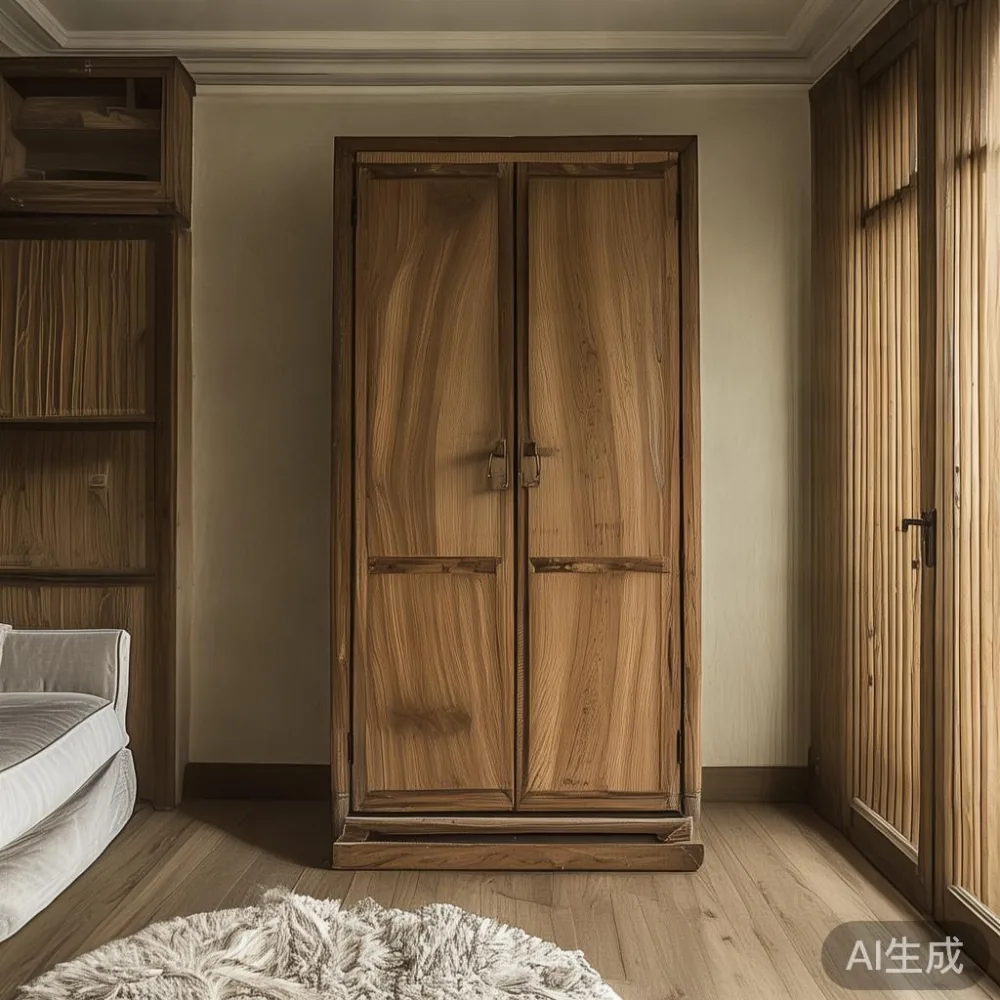
Why does a bar cabinet in Tampines warp when the same model in Melbourne stays flat?
Short answer: seasonal swing versus dail swing. Melbourne’s yearly relative humidity range is roughly 35 percent in summer to 80 percent in winter — that is a 45-point swing. Singapor is 55 to 95, roughly a 40-point swing, but the swing happen in HOURS, not in month, and the swing happen at the same time the air-condition switch off. That is the physical danger zone. A solid wood plank expands across the grain roughly 0.1 percent for every 10 percent jump in relative humidity. A 60 cm wide oak shelf picks up around 0.6 mm when RH jump from 55 to 85 percent overnight. That sounds like nothing. It is not nothing. It is exactly the kind of 0.6 mm that stop a drawer sliding on its runner, because a typical 45 cm drawer is spec’d with 1.0 mm total clearance on each side. Subtract the 0.6 mm swelling, add the 0.4 mm seasonal creep, and you have a drawer that jam. If your bar cabinet is light luxury furniture china in the European vein — think post-modern light luxury profile, 18 mm thick oak panel, full-extension soft-close runner, no central divider on the wine rack — then the physical budget for movement is thinner than a 1980s timber piece. That profile is what people call American light luxury in a catalogue: cleaner line, less carve, more panel surface, more risk of visible expansion at the joint.
What humidity number actually matter for a bar cabinet in singapore?
Three numbers. Not two, not four. Number one: indoor RH target 45 to 60 percent. Number two: indoor temperature 23 to 26 °C. Number three: indoor dew point, which is the math of the first two. If your dew point sit above 24 °C for a week, the timber surface will sweat, and any oil finish will turn milky. A small thermo-hygrometer on the middle shelf of the bar cabinet (not on the wall) cost SGD 12 to SGD 22 at any bedok or tampines mall. Put it there for one week. If you see RH 75 percent at 3 PM, the problem is not your cabinet, it is your ventilation. For HDB point block, the kitchen hood and the bathroom ex-fan together move roughly 280 m³ per hour. For a 90 m² condo, the air-con system usually pulls 0.6 m³ per minute per kW of capacity. Keep the bar cabinet at least 60 cm away from any direct air-con draft. Direct draft drop the surface RH by 12 to 15 percent in 15 minute and the other side of the same door does not drop with it. That is what cause bow in a 1.8 m long shelf.
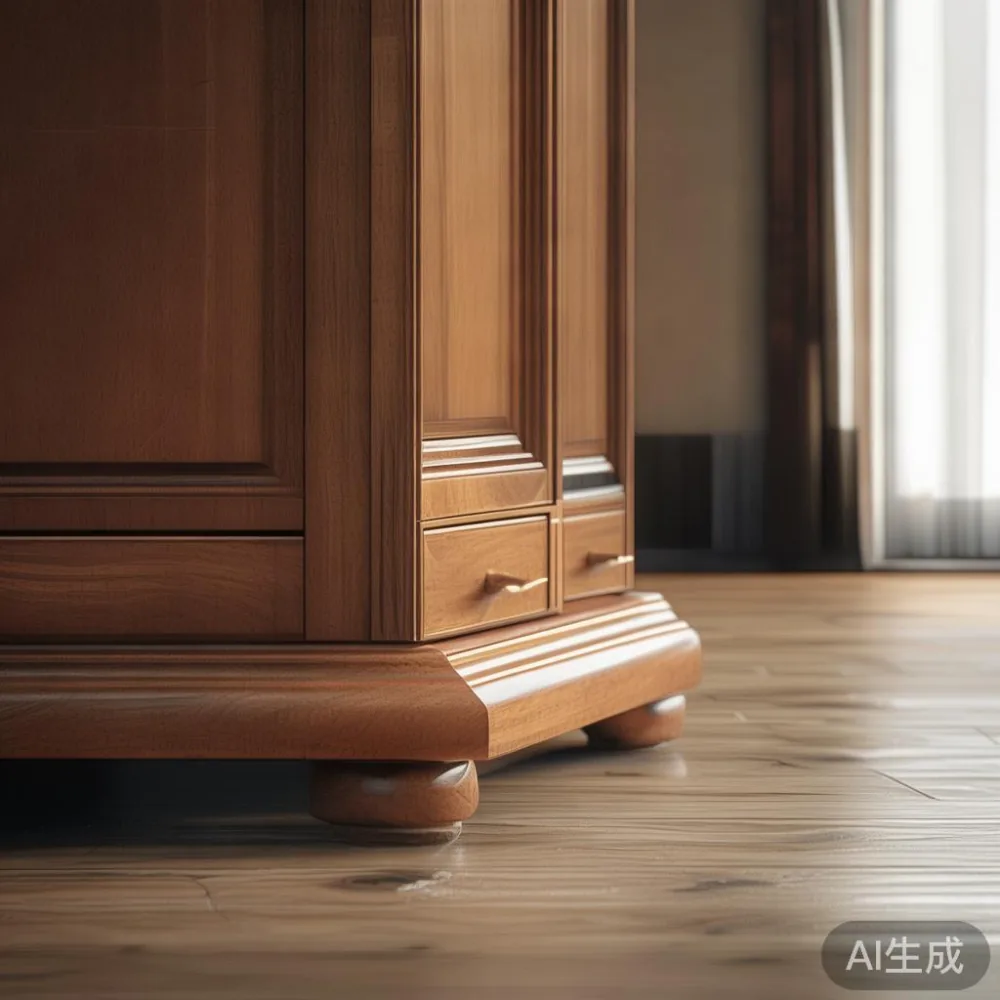
“Will a light luxury dining table from china actually hold up at my Punggol place?”
I tested this in a friend’s new 3-bedder at punggol heights. The dining table is 1.8 m long, 90 cm wide, 75 cm tall, oak top on a metal apron — a fairly standard light luxury dining table spec. Three week after delivery, with the air-con set to 24 °C from 10 PM to 7 AM and the door to the balcony left open the rest of the time, the table read 7.2 percent moisture content with a pin meter, versus 9.1 percent on delivery day. 7.2 percent is below singapore ambient. So the table is now drying out, not swelling. The risk in this case is not warp but crack at the end-joint. We put two glass of water on the table for 48 hour (a real test, a very singapore test), and the local RH around the glasses rose to 71 percent, the wood surface picked up 0.3 percent moisture content in 90 minute. That is how fast timber equilibrate to a small moisture source. For a piece destined to live near an open balcony — common in punggol and canberra cresent unit — the practical rule is this: 1.2 to 1.5 m from any door that opens to the outside, and never under a ceiling fan that run all night. The fan is fine for human skin, terrible for timber.
How do HDB lift and corridor change what kind of bar cabinet you can bring home?
Real constraint. The standard HDB lift internal cabin is roughly 1.4 m deep, 1.1 m wide, 2.1 m tall, with a door opening of 0.9 m. A bar cabinet that is taller than 1.95 m will not stand up inside the lift. Most singapore HDB corridor are 1.2 to 1.5 m wide; a 2.4 m long cabinet cannot pivot at the staircase landing. The practical move: keep the bar cabinet under 2.0 m tall, under 2.2 m long, under 60 cm deep, and under 80 kg if you want one person on each end to carry it in. Anything heavier needs two delivery man (Mildhill ships two people by default for anything over 60 kg) and a third pair of hand for the staircase if you live above the 7th floor without a direct lift. Lift landing at the upper floor has a maximum load placard. The 8-person lift in most 2010-onwards HDB is rated 630 kg. A solid oak bar cabinet fully loaded with glass and bottle can hit 180 kg by itself. That is fine. Two bar cabinet plus a solid wood sofa frame plus a bed frame in the same trip can put you at 540 kg. Still fine, but ask before you book.
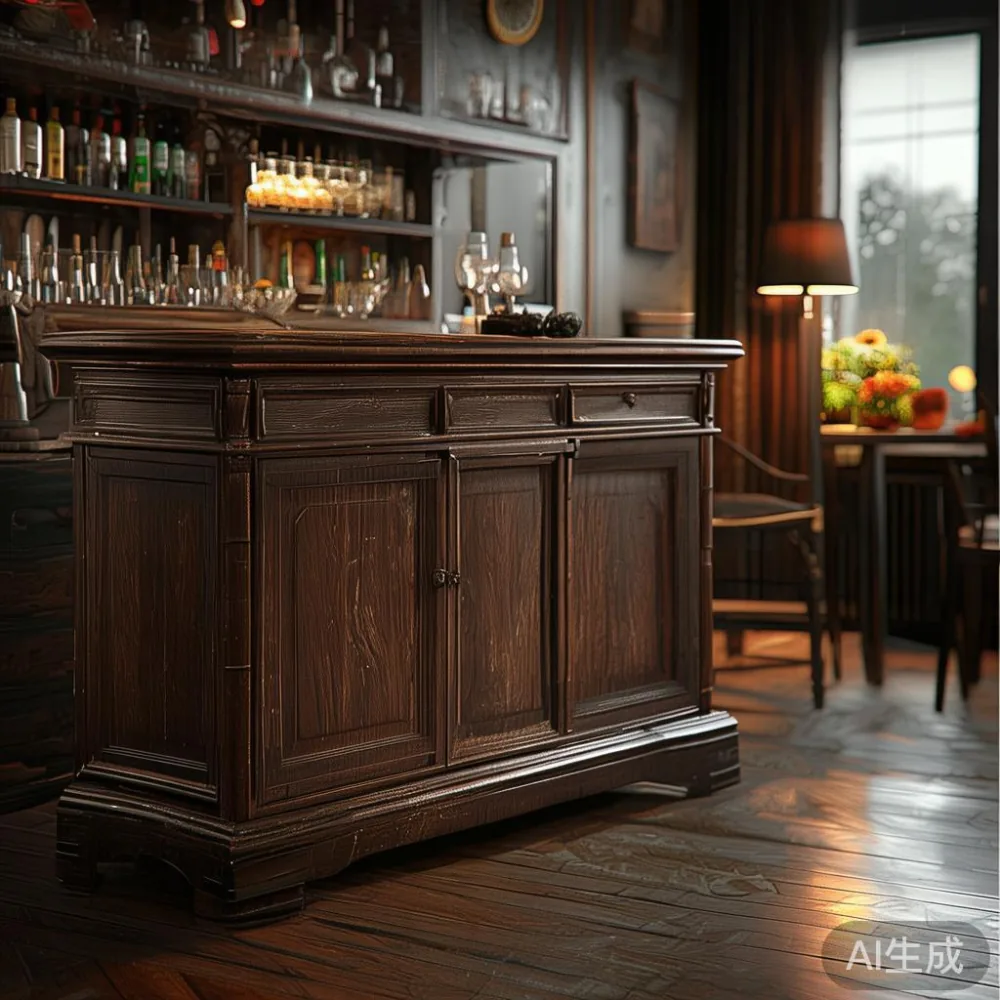
“Is a European bed worth it in singapore humidity, or should I just buy a local ply frame?”
Honest question, and the honest answer depend on three thing. First, the headboard. If the headboard is upholster with linen or velvet, the humidity will press the fibre and you will see puckering on the seam by month six. If the headboard is cane or leather, humidity is much less of an issue. Most European spec Mildhill ships to singapore use cane or full-grain leather for exactly this reason — they call it the “sea-cane” option in the catalogue. Second, the slat. A birch slat with a 6 cm gap will cup slightly at 80 percent RH, and a cup slat will press into the mattress and you will feel it. Ask for a 3 cm gap slat with a centre rail. It is a small spec change, it cost SGD 80 extra, and it remove 90 percent of the slat-humidity complaint. Third, the under-bed clearance. Singapore bedroom rarely have the 25 cm under-bed clearance a European frame expect. Plan for at least 12 cm, otherwise the air under the bed will sit at 80 percent RH and the mattress will smell. So is a European bed worth it? If the spec is right, yes. If the spec is the standard European spec with linen headboard and 6 cm slat gap, no. You will fight it for ten year.
What should you inspect on the day the bar cabinet arrive at your unit?
Walk the piece with the delivery team before they unpack. Five point, three minute each. One. Knock the panel with your knuckle. A solid panel sound dull and dense; a hollow one sound like a cardboard box. A light luxury furniture china product is supposed to be solid, not hollow-core. Two. Run your palm across the end-grain. Any rough spot will catch a cloth later. End-grain is where humidity first enters, so the end-grain must be sealed. Three. Open every drawer and door, then close, then open again. Listen for rub. Rub mean a 0.5 to 1 mm bind. Mark it with a small piece of painter tape, photograph it with your phone, and tell the delivery lead on the spot. Mildhill’s 14-day return covers this exact case, but the photograph is what protects you past day one. Four. Tilt the bar cabinet 5 degree backward (with two people, one foot hold). Listen for rattle. Rattle mean a loose dowel or a loose cam lock. Five. Smell the inside. A vinegar smell mean off-gas from a low-grade adhesive. A faint wood smell mean normal. A chemical smell mean run. If all five pass, sign. If two fail, refuse. One fail is a repair, two fail is a replacement, and the photo record is the difference between a 14-day return and a 30-day argument.
How do you live with a solid wood bar cabinet for the next 15 year?
Two habit, one schedule. Habit one: open the cabinet door every morning for 20 minute. The air exchange equalise the cabinet interior RH with the room RH, and you remove the “stale pocket” that build up behind closed door at night. Habit two: wipe with a damp (not wet) microfibre cloth once a week, following the grain. Never spray directly, never use silicon spray, never use a steam mop. Schedule: every 12 month, book a refinish. Mildhill’s lifetime refinishing service for their customer cost SGD 120 to SGD 220 per piece for a sand-and-re-oil, including pick-up and delivery within singapore (free above the SGD 350 threshold, which a bar cabinet plus a nightstand plus a marble table will easily clear). Year 1 it is purely cosmetic. Year 4 it is preventive. Year 8 it is structural. Year 12 it is the reason your cabinet still looks like the Mildhill dining table review your neighbour read in 2026. For a Mid-century modern for office piece, the schedule is the same but the habit shift: office air-con run longer and dryer, so the risk is over-dry, not over-wet. A small tabletop humidifier that emit 200 ml per hour for 8 hour a day will keep an office piece at the sweet spot.
“Which bar cabinet profile actually suits a light luxury aesthetic without fighting the humidity?”?
Three profile, ranked by humidity tolerance. Profile A: solid oak carcase, full back panel, no glass, two drawer, two door, wine rack at the base. This is the workhorse. Humidity tolerance is high because the cabinet is dense and the surface is small. It is the closest thing to an easy-care choice in the post-modern light luxury line. Profile B: solid oak carcase, glass-front uppers, marble table top insert on the serving surface. Marble is a separate conversation (it etches, it stains, it need a seal every 18 month) but in a singapore context it is a humidity ally — marble is dimensionally stable, so the cabinet around it moves and the marble does not. The risk is the joint at the marble-to-wood boundary, which should be a 2 mm flexible sealant, not a hard glue. Profile C: full-glass carcase on a metal frame. This is the American light luxury catalogue look. It is beautiful in a show room. In a tampines HDB with 85 percent RH at 2 AM, the glass fogs, the metal frame weeps, and the wood shelf inside move at a different rate than the metal. Skip. If your shortlist include the keyword best European light luxury wardrobe for 2026, the same three-rule apply: solid carcase, full back panel, no glass at eye level. Wardrobe share 80 percent of the failure mode of bar cabinet.
Where do the real failure happen, and how do you plan around them?
Real failure mode, ranked by frequency in the Mildhill service log for singapore, 2023 to 2025. One. Drawer face gap, top right corner, 1.5 mm. Cause: differential swelling between drawer face and carcase side. Fix: shave the drawer face 0.5 mm at the corner. Time: 20 minute. Two. Door rub at the hinge side, mid-height. Cause: hinge screw loose in MDF insert behind the oak veneer. Fix: move screw 8 mm sideways into solid timber. Time: 8 minute. Three. Wine rack peg split along the grain. Cause: peg diameter 14 mm, drilled into oak at 9.1 percent moisture content, now at 7.4 percent. Fix: replace peg, humidify storage area. Time: 25 minute. Four. Marble table top hairline crack at the corner. Cause: rigid glue, marble contraction. Fix: re-bond with flexible sealant, leave 2 mm expansion gap. Time: 40 minute. Five. Carcase side bow outward, 2 mm over 1.6 m length. Cause: back panel not fixed, cabinet pulled by gravity over 24 month. Fix: re-fix back panel with 6 mm clearance to wall. Time: 30 minute. None of these are warranty replacement — they are maintenance. A 10-year structural warranty covers the wood split, the joint fail, the leg break. A maintenance visit covers everything else. Plan one maintenance visit every 24 month, SGD 95 call-out plus labour, and your bar cabinet will outlive your tenancy.
What does a 14-day return actually look like, and when should you use it?
Use it when the problem is structural or aesthetic, not when the problem is environmental. A drawer that rub because the room is at 85 percent RH is environmental. A drawer that rub because the runner is misaligned by 2 mm is structural. The first is a humidifier. The second is a return. The 14-day clock start on delivery day, not on order day. The product must be in original packaging or repackable to original spec. Photographic evidence is mandatory. Mildhill’s terms require three photo: full piece, defect zone close-up, defect zone with a ruler in frame. Without a ruler, the claim is downgraded. For a singapore buyer, the practical flow is: photo at unbox, photo at day 7, photo at day 13 if any concern. Send all three by 11:59 PM on day 14. Pick-up is free within mainland singapore, GST 9 percent refunded on the product price, delivery charge refund only if the return is due to a manufacturing defect. If the piece pass day 14, it is yours. The 10-year structural warranty takes over from month 1 to year 10. The lifetime refinishing service takes over from year 1 onward. The two program are independent, and they cover different failure mode.
A small checklist before you sign for the bar cabinet
1. Indoor RH between 45 and 60 percent at delivery moment. 2. Lift internal width 1.1 m minimum, door 0.9 m minimum. 3. Corridor width 1.2 m minimum, no sharp turn within 3 m of the lift. 4. Delivery crew of two for any piece above 60 kg. 5. End-grain sealed, panel solid, drawer clear, hinge quiet, smell clean. 6. Photo record of all five inspection step before sign. 7. Thermo-hygrometer on the middle shelf for the first 30 day. 8. Maintenance booking diary at month 24. A solid wood sofa, a bed frame, a dining table, a wardrobe, a nightstand, a marble table, a bar cabinet — they are not fragile. They are responsive. Treat them like the wood they are, and the 90 percent humidity day stop being a threat and become a feature. Singapore wood, kept well, ages the way good teak ages: darker at the surface, tighter at the joint, quieter at the hinge. The cabinet your children argue over in 15 year is the one you air, you wipe, you refinish, and you refuse to fight. For those who want the full Mildhill spec sheet, warranty wording, and the api.midhill.co feed that their dealer use to place custom order, the contact page is open. Read, measure, and then sign.