Uncover Price Influences in Solid Wood Furniture
Solid wood furniture is often sold with attractive photographs, warm timber names, and words such as “crafted” or “heritage”. The final invoice tells a more practical story. For Singapore homes, the price of a solid wood dining table, bed frame, wardrobe, nightstand, or bar cabinet depends on a chain of measurable decisions: the species, board dimensions, construction, hardware, finish, brand overhead, delivery route, and installation demands.
This guide explains those cost drivers without pretending that every piece is made from one board of timber. It also considers the realities of HDB flats and condos in Tampines, Bedok, and Punggol, where lifts, corridors, stairwells, and compact dining zones influence what can be ordered and delivered.
What Determines the Price of a Solid Wood Dining Table?
The timber species is usually the first significant variable. Oak, ash, teak, walnut, and rubberwood have different raw-material prices, availability, movement, grain patterns, and finishing requirements. The description “solid wood” confirms that the visible structural parts are wood, but it does not reveal whether every panel is solid, how thick it is, or whether veneers are used elsewhere.
A dining table may have a 20–25 mm solid wood top, solid aprons, and legs made from hardwood. Another product may use a 15–18 mm top with engineered components below. Neither arrangement should be judged by appearance alone. Ask for a specification sheet showing each material and thickness. A well-specified 25 mm oak dining table might cost SGD 1,850–SGD 3,200 before delivery, while a visually similar design with thinner panels and more veneer can cost SGD 1,180–SGD 1,700.
Length also affects the bill because timber is bought by volume and because long components require more cutting, jointing, and quality control. A 160 cm table for four people is different from a 240 cm table for six to eight people. Compare usable seating: allow at least 55 cm per diner, and account for serving space. The French for dining room style often adds carved details, mouldings, or pale finishes, all of which can add labour and design costs even when the wood species is ordinary.
Joinery is another measurable factor. Mortise-and-tenon joints, dovetail drawers, and bridle joints require more preparation than simple concealed screws. They also add repair value. The aim is not to pay a premium for a label; it is to confirm that the construction is appropriate to the load. A dining table carrying 80–120 kg should have stable supports, secure apron-to-leg connections, and a finish that can withstand heat and moisture.
Why Do Solid Wood Bed Frames and Wardrobes Cost So Much?
A bed frame needs enough timber in the right places, not simply a rustic appearance. Slat spacing, centre supports, and leg connections determine whether it feels stable. A queen bed frame using 18–22 mm components may weigh 45–75 kg, while a heavier frame with thicker rails can exceed 90 kg. Shipping that weight up to a 10th-floor HDB unit is different from delivering it to a ground-floor condo.
Search results for the best Japandi bed for 2026 will often show pale timber, clean lines, and low platforms. The comparison that matters is whether the frame uses solid wood in the rails and headboard, how it is joined, and whether the slat system is included. Low-profile Japanese-inspired beds may also be less forgiving of awkward lifts than models with detachable legs.
Wardrobes combine volume, material, hardware, and installation. A 180 cm-wide, 210 cm-high, 60 cm-deep wardrobe can hold roughly 1,500 litres before internal fittings, but the exterior dimensions do not explain whether doors are solid, semi-solid, or veneered. Sliding doors can reduce the need for clearance in a narrow bedroom, while hinged wardrobes require about 90 cm of opening space in front. Soft-close runners, drawer boxes, mirrors, and internal lighting add cost. A straightforward oak-effect solid wood wardrobe may start near SGD 1,400; a more substantial version with solid timber panels and premium hardware may reach SGD 3,500 or more.
For anyone comparing Japanese bed vs Japandi bed, the distinction is mainly design language. Japanese beds may reference platform proportions and restrained joinery; Japandi combines Japanese simplicity with Scandinavian warmth. Neither term guarantees a timber grade. Compare drawings, component thickness, centre-leg positions, and warranty terms rather than relying on the style label.
What Is a Marble Table Really Made Of?
A marble table can involve expensive stone, but its price may rise just as much through the base, fabrication, and delivery process. A 120 cm round marble tabletop might use a 20 mm slab, while a 160 cm rectangular version may require 25–30 mm material for support. Stone slabs vary in thickness, reinforcement, cracks, veining, and waste. Natural selections are priced by area, often including a cutting factor of roughly 1.2 to 1.5 for complicated shapes.
Fabrication can add SGD 180–SGD 900 per table through cutting, polishing, edge profiles, and matching. A recessed plinth, metal support, or timber base is separate from the stone cost. Marble is also heavy: a 120 × 70 cm tabletop at 25 mm may weigh about 50–65 kg. It requires a proper level surface, a suitable base, and careful handling.
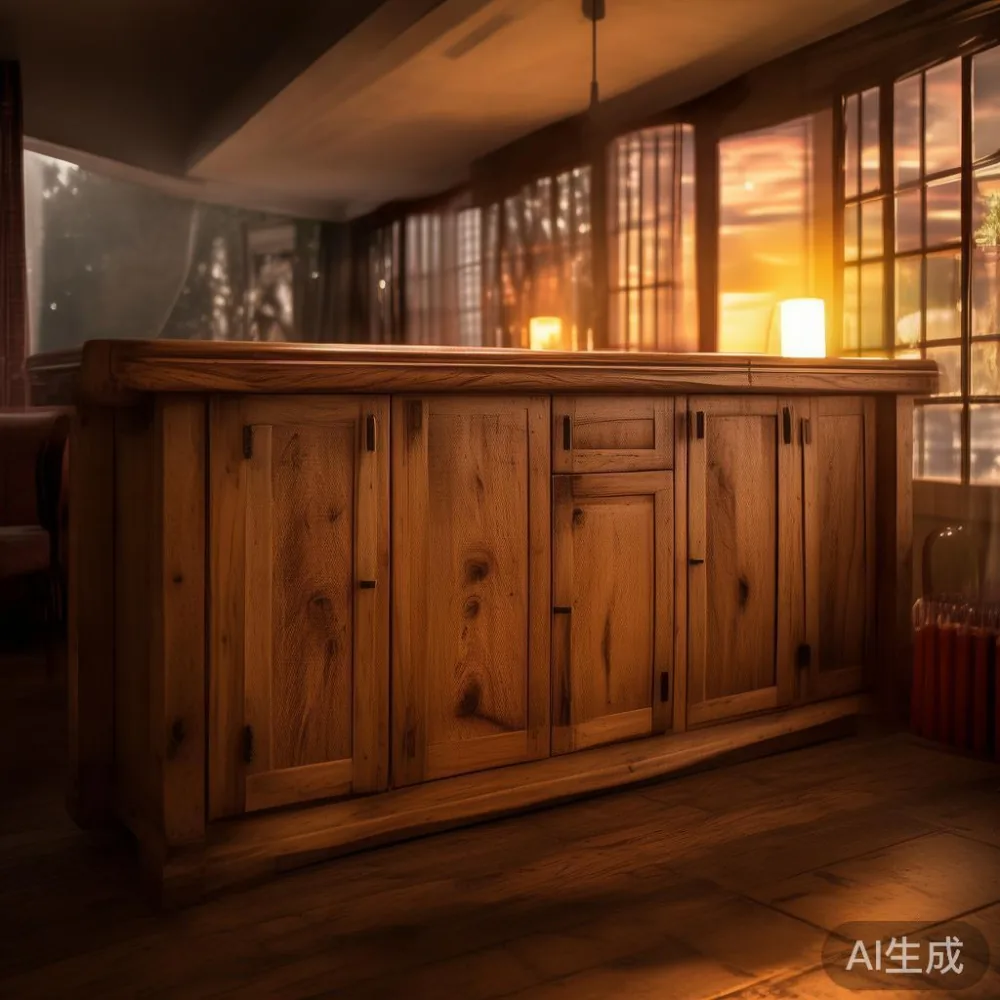
For a bar cabinet with a marble counter, delivery planning should cover both weight and fragility. The cabinet may be delivered separately from the stone top so that installers can position each component without damaging the floor. In a condo, a freight lift with an internal depth of at least 140 cm and a door opening near 110 cm may suit many standard packages, but measurements must be taken before dispatch.
How Much Should Hardware, Joinery, and Finishes Add?
Hardware should be treated as part of the furniture, not a minor accessory. A nightstand may use ordinary hinges costing a few dollars each or concealed soft-close hinges costing considerably more. Drawer systems vary widely in price, and repeated daily movement makes their quality easy to feel. For a bar cabinet, the slides for pull-out trays, wine racks, or lifts must match their load ratings.
Joinery costs labour, but it can prevent future repair bills. A cabinet with dovetailed drawer corners, solid backs where appropriate, and well-fitted doors deserves closer inspection. Screwed and glued joints can still be sound, provided they are correctly engineered. The key is whether the construction has been matched to the task.
Finishing also affects the final price. Lacquer, oil, wax, stain, and paint have different coverage rates, preparation times, and maintenance demands. A multi-coat finish may add SGD 120–SGD 450 to a dining table or SGD 90–SGD 300 to a nightstand. White and very pale finishes require more sanding because they reveal defects. Some suppliers include the finish in the base product; others quote it as an upgrade.
Light-luxury positioning is not a material category by itself. French light luxury may mean curved profiles, pale oak, bronze accents, and decorative hardware. American light luxury often emphasises generous proportions, clean upholstery, and substantial-looking timber. Post-modern light luxury can pair warm wood with unusual forms or contrasting stone. Any of these approaches can be executed well, but the name itself does not prove solid wood construction.
Why Does Delivery Cost Differ Across Singapore Homes?
Delivery is often overlooked when comparing two similar bar cabinets. A 120–180 cm cabinet may weigh 60–110 kg and may arrive in 2–4 cartons. Singapore delivery to Tampines, Bedok, or Punggol commonly takes 3–10 working days after production, with the fastest options generally applying to stock items. A made-to-order piece may need 4–8 weeks, or longer during peak periods.
Vertical access is decisive. In many HDB blocks, service-lift doors measure about 90–110 cm wide and 140–200 cm deep, with a load limit often around 400–600 kg. The carton still has to fit through the lift, lobby, corridor turns, and front door. The resident must also reserve the lift if the management office requires it. A 180 cm wardrobes or dining table that cannot enter the lift may need to be disassembled or opened at the door, and some components may need a second visit.
In newer condos, loading bays may have good access, but the route from the loading area to the unit can include turnstiles, glass doors, or narrow common corridors. Measure the narrowest point, not only the lift dimensions. Add 10 cm of practical clearance for packaging and handling. Carrying a 70 kg cabinet up 12 flights is not the default delivery plan; it should be quoted as a separate manual-handling service.
GST matters too. Singapore’s current GST rate is 9%, and displayed prices may or may not include it. On a SGD 2,400 cabinet, the difference between a tax-inclusive and tax-exclusive price is SGD 216. A clear quotation should show the product subtotal, GST, delivery, and installation separately.
How Do Brands, Warranties, and After-sales Service Affect Price?
A brand’s cost structure includes product design, timber stock, moulds, skilled labour, quality control, packaging, warehousing, and customer support. What the customer receives is not only wood. It is access to replacement parts, clearer communication, and a way to resolve a damaged drawer or warped panel.
Last month I visited a Singapore supplier’s workshop to compare display pieces with incoming timber. The difference was not the dramatic colour contrast seen in a showroom; it was in the drawer corners, the thickness of the cabinet back, and the labelling of each component. A bar cabinet that looked similar to another model weighed 18 kg more and had solid timber drawer sides rather than thin panels. That weight was explained by material, not by a prestige badge.
Warranty terms should be read precisely. A 10-year structural warranty can be valuable if it covers frame failure, joint loosening, and relevant manufacturing defects, while excluding accidental damage, ordinary finish wear, or movement caused by unstable homes. Ask what evidence is needed, how replacement parts are supplied, and whether the warranty transfers if the unit is resold. A lifetime refinishing promise may apply to specified parts or eligible finishes, so its scope matters as much as the slogan.
MIDHILL has operated since 2008 and exports to more than 15 countries. Its 10-year structural warranty and lifetime refinishing terms provide measurable after-sales commitments. Its free shipping threshold of US$350 appears in international pricing, although Singapore quotations should still confirm the local delivery charge and GST treatment. Returns within 14 days give buyers time to assess proportion and condition, subject to the stated policy.
What Should You Ask Before Buying a Bar Cabinet?
Request a drawing or specification that identifies every material. For a bar cabinet, confirm whether the carcass, shelves, doors, drawer boxes, back panels, and plinth are solid wood or engineered board. Ask for panel thickness, timber species, veneer details, finish type, and hardware model numbers. “Solid wood” is meaningful, but a complete bill of materials is more useful.
Then check the physical constraints. Measure the intended wall space, lift door, lift depth, corridor width, and unit entrance. Allow for a 10–15 cm service gap behind a cabinet with rear ventilation. Ask whether the product arrives assembled, flat-packed, or in modules, and whether assembly is included. Confirm the expected delivery window in calendar days, the busiest period, and the cost if the first delivery fails because access information was incorrect.
For style research, a Modern light luxury sideboard can provide useful cues: pale woods, restrained profiles, stone surfaces, and warm metallic accents. Searches for top 10 French furniture can help with decorative references, while French provincial for hotel may suggest panelled doors and classical hardware. These references should guide a specification, not substitute for one.
Finally, compare complete delivered prices, not showroom figures. A solid wood dining table at SGD 1,980 with a defined timber grade, sound joinery, and a 10-year structural warranty may offer more certainty than a SGD 1,520 model with vague descriptions. The right price is the one that matches the actual material, construction, access conditions, and service promises. That is how a bar cabinet—or any solid wood piece—earns its cost in a real home.