Veneer vs Solid Wood Bar Cabinets: A 5-Year Cost Comparison for Singapore Homes
A bar cabinet sits at the point where storage, drinks service and display meet. In many Singapore homes, that makes its material choice more consequential than a decorative finish alone. A compact unit may measure only 80 cm wide and fit beside a dining table in a Tampines HDB flat, yet the wrong construction can create problems within 5 years. Veneer can offer convincing oak or walnut appearance at a lower entry price, while solid wood brings different repair, movement and maintenance demands. The fair comparison is not sticker price versus sticker price. It is the amount paid for ownership: purchase, delivery, care, risk and likely refinishing.
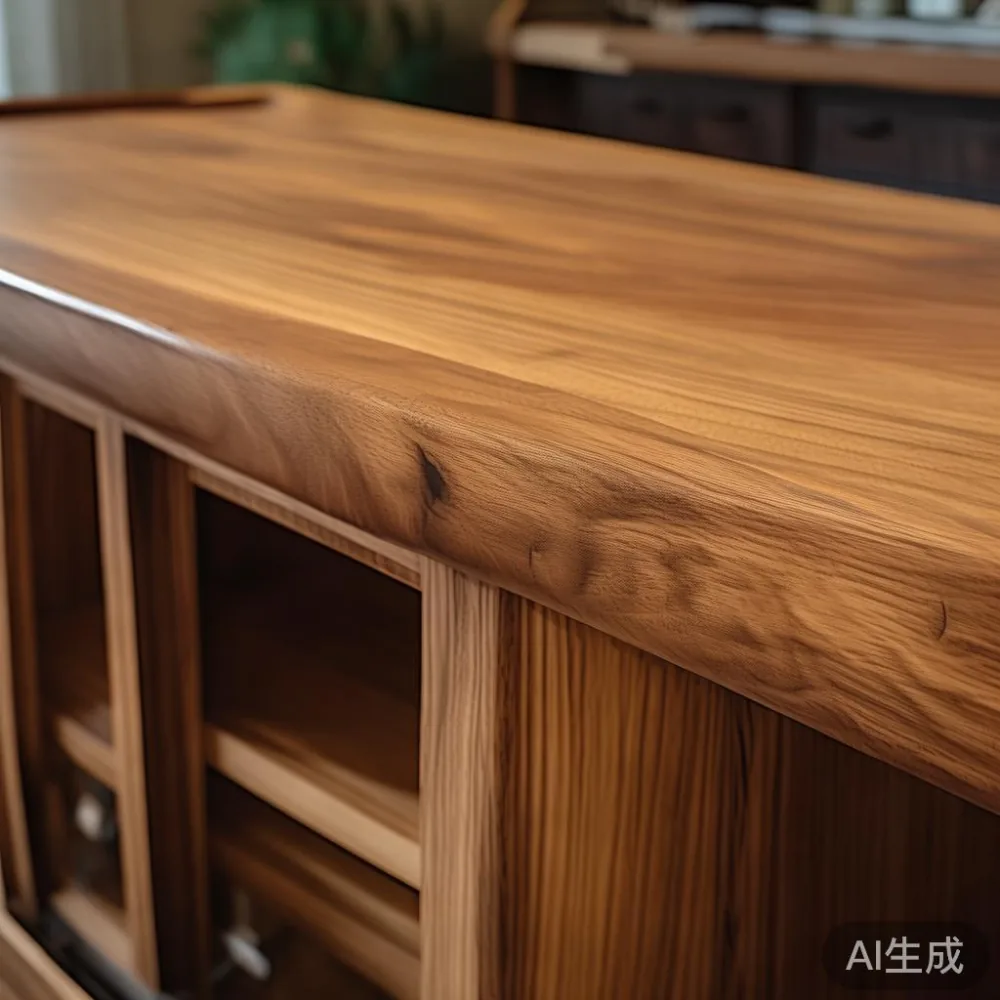
For this comparison, I modelled 2 bar cabinet options for Singapore use. Model V is a veneered oak-look unit at SGD 1,180 before GST, with particleboard panels, plywood back and veneer faces. Model S is solid oak at SGD 1,880 before GST. Both are assumed to be 100 cm wide, 45 cm deep and 85 cm tall, with 2 doors, 1 drawer, 3 adjustable shelves and brass handles. Figures are working estimates rather than quotations. Actual prices vary with timber, dimensions, hardware and design. Since January 2024, furniture in Singapore has carried 9% GST, so the displayed totals include a 9% calculation and keep rounding visible.
What does a bar cabinet cost over 5 years in Singapore?
The practical answer begins with purchase cost. Model V costs SGD 1,286.20 with GST: SGD 1,180 multiplied by 1.09. Model S costs SGD 2,049.20 with GST: SGD 1,880 multiplied by 1.09. That is an initial solid-wood premium of SGD 763, or 59.3% of the veneered unit's GST-inclusive price.
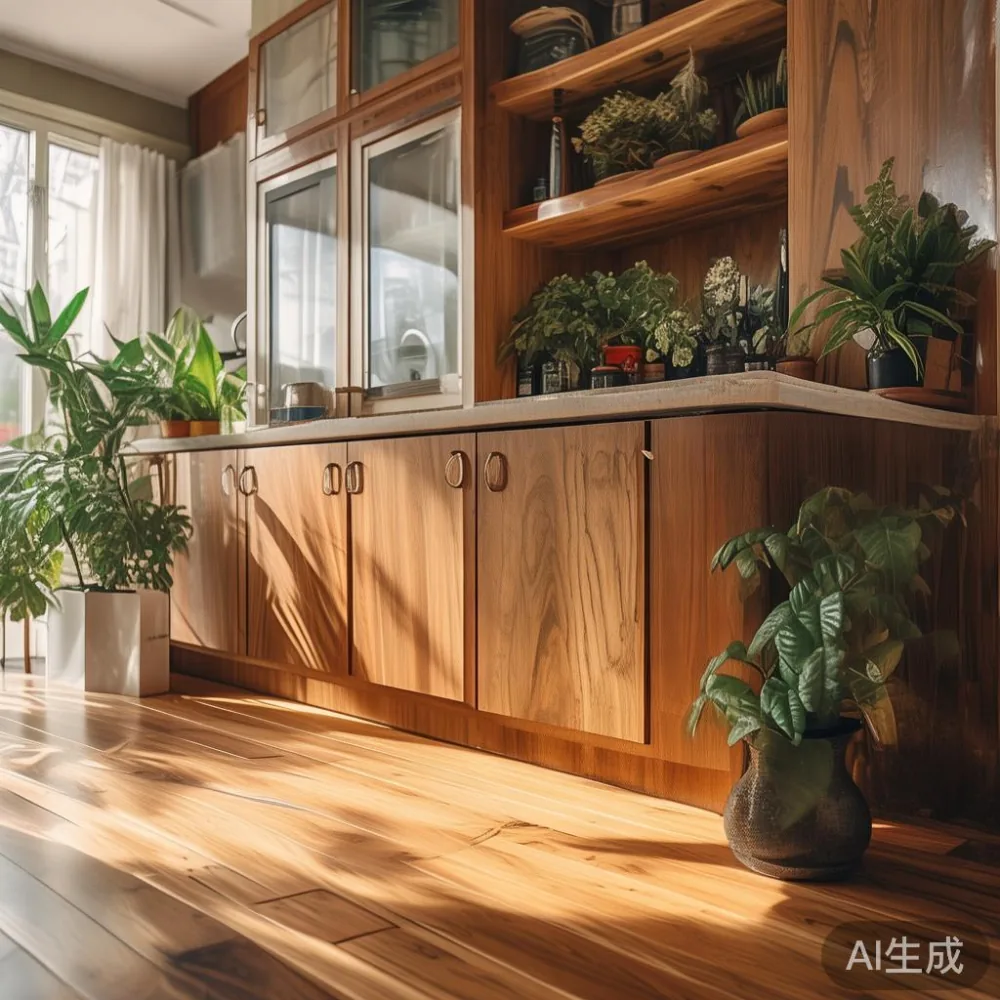
Delivery can narrow or widen this gap. A Singapore address in Bedok may receive a scheduled 7–14 day delivery window, with a lift-access surcharge of about SGD 25 if the building has a passenger lift. Corridor handling is another factor: a package wider than 82 cm may not turn easily at a tight corridor corner. Model S weighs about 48 kg; Model V weighs about 36 kg. Two handlers may add SGD 30 for the heavier timber unit. If the home is a landed property or a walk-up, allow another SGD 40–80 in carrying time. My colleague measured a typical HDB service lift door at roughly 90 cm in one Tampines block; cartons wider than 80 cm required careful angling, not forced loading.
Over 5 years, the comparison looks like this:
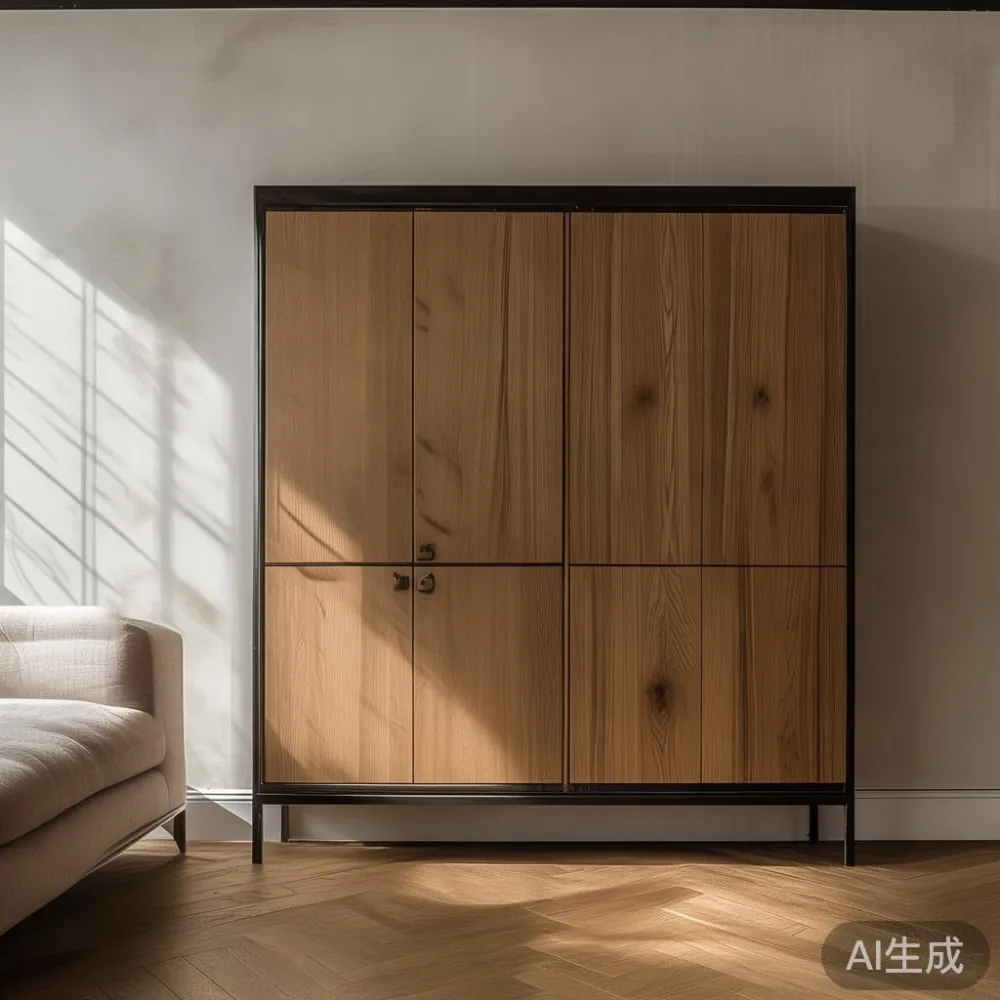
Model V, veneered: SGD 1,286.20 purchase, SGD 55 delivery, SGD 90 hardware touch-ups and SGD 180 repair allowance, for an estimated SGD 1,611.20 total. Divide by 60 months for about SGD 26.85 per month.
Model S, solid oak: SGD 2,049.20 purchase, SGD 85 delivery, SGD 75 maintenance materials and SGD 120 incident allowance, for an estimated SGD 2,329.20 total. That is about SGD 38.82 per month. The 5-year difference is SGD 718, or roughly SGD 119.67 each year.
This model does not assume a disaster. A dry Singapore living room, protected from direct sun, can slow movement-related checks. It also does not promise that the veneered unit will fail in year 4 and the solid cabinet will remain perfect in year 5. Instead, it uses realistic reserve amounts: SGD 30 per year for veneer care and small part replacements, versus SGD 15 per year for solid wood, plus separate incident reserves. The point is to make future uncertainty visible.
How do veneer and solid wood age differently?
Veneer is a thin layer, commonly around 0.3–0.6 mm for furniture faces, bonded to a panel core. It can reproduce grain with high visual consistency and is lighter to transport. On Model V, an edge band may chip after repeated trolley movement or impact from a vacuum cleaner. If water reaches the core, swelling may not be obvious at first. A 10% swelling estimate on a damaged particleboard section can create a door that no longer closes within a 2–3 mm gap. A replacement panel might cost SGD 180–320, depending on matching grain and access.
Solid wood is not automatically immune. Oak and other hardwoods move with humidity, and a cabinet installed beside an air-conditioning vent may dry unevenly. Small checks can be filled; a split may require replacement of a board. Yet a solid-oak door can often be sanded and refinished locally, while a veneered face may need patching if the skin is torn. A 5-year plan should reserve time for inspection every 6 months and a more detailed check after the first air-conditioning season.
One real experience shaped this view. Last month I visited a Bedok condo and handled a 90 cm solid-wood bar cabinet that had been moved from Punggol. The top had 3 water rings and 2 shallow scratches, but the timber accepted a small repair after sanding. A similar mark on a veneered cabinet in the same unit had lifted at the corner. The solid cabinet still needed waxing and careful drying; material quality did not erase neglect. That distinction matters when comparing ownership cost.
Is solid wood always the better financial choice?
No. Solid wood becomes more financially attractive when the cabinet will be moved, touched frequently, displayed openly or kept beyond the first 5-year cycle. Its repairability can matter in a condo where children, guests or a home bar setup create repeated contact. Veneer becomes more rational when the bar cabinet has a limited budget, stays in one dry position and has no requirement for on-site timber repair. A dark walnut-look finish can also give a compact HDB dining area a French light luxury mood without the weight and price of imported solid timber.
Consider the room around the cabinet. In a 28 sqm Tampines dining-living room, a 100 cm unit may reduce circulation space if opposite seating. In a Bedok condo kitchen with 1.05 m clearances, it may fit comfortably. Measure the doorway, lift and turning radius before ordering. Allow at least 90 cm for a normal two-person service path where possible. If the cabinet sits near a window, use a blind or UV film; direct afternoon sun can fade both veneer and wood finish.
The 5-year cost should also include opportunity cost. A bar cabinet bought at SGD 1,286.20 and then replaced after 3 years costs SGD 428.73 per cabinet-year before maintenance. A SGD 2,049.20 solid-wood cabinet retained for 10 years could average SGD 204.92 per year if care is controlled. This is why buyers should compare lifespan, not simply product labels. The same cabinet may sit in a dining room, beside a marble table, or become a display piece that complements a solid wood sofa or dining table elsewhere in the home.
What maintenance costs should you budget each year?
For veneer, assign about SGD 45–70 per year to dusting, careful wiping, hinge adjustment and one small hardware intervention. Keep a cloth slightly damp, not wet. Avoid silicone sprays, acetone and direct steam. Check the drawer every 3 months and the back panel every 12 months. A 2.5 mm hinge screw can loosen after 18 months of use; replacing it costs under SGD 5 if tools are available.
For solid wood, assign about SGD 25–60 per year to a manufacturer-compatible oil or wax, provided the finish permits it. Test an inconspicuous 5 cm area first. Re-oil after 12–18 months in a dry interior rather than applying a heavy layer annually. Sand only when scratches are shallow. Deep gouging can cross the veneer on a cabinet with a thin face, whereas solid timber can often accept local filling and refinishing.
Do not confuse maintenance with structural failure. A veneer bar cabinet may have a good face and a weaker panel core; a solid-wood bar cabinet may have sound structure but a stained finish. Ask for panel and frame specifications, drawer construction, back-panel thickness, hinge type and finish compatibility. If a supplier offers a long structural warranty, read the exclusions: moisture exposure, floor flooding, unauthorised modification and improper load may not be covered. A 10-year structural warranty is useful context, but it is not a promise that every surface will look new for 10 years.
Which finish suits HDB and condo interiors?
For HDB interiors, a light oak veneer can keep visual weight down while giving the cabinet the appearance of a solid wood dining table. For condos, walnut-toned solid oak may suit an American light luxury scheme with cream walls and black hardware. French light luxury often works through pale timber, restrained profiles and brass details rather than excessive carving. Post-modern light luxury can pair a clean cabinet with one contrasting element, such as a stone top or marble table nearby.
Scale matters more than a broad style label. A 70 cm wall-mounted bar cabinet may suit a narrow dining nook; a 120 cm floor cabinet needs 1.20 m of wall space plus ventilation clearance. Keep bottles away from radiators and sunlight, and follow the storage supplier's weight limit for each shelf. If a shelf is rated at 15 kg, six bottles at 750 ml weigh roughly 4.2 kg before glass thickness, so ordinary glassware is usually manageable. Heavy decanter collections require separate calculation.
Those same planning rules carry across adjacent categories. A bed frame must clear bedroom doors, a nightstand should sit within 40–60 cm of the bed, and a wardrobe should not block a corridor. Search phrases such as best Rustic bed for 2026, best American sofa for 2026 or how to choose Japandi sofa can help establish proportion and style, but the final bar cabinet should be selected against its own wall and circulation constraints. If the home has no dedicated bar, a small cabinet can serve as a coffee station without becoming visually crowded. Coastal for small living room is another useful design direction when pale timber and compact storage are needed.
How do delivery, returns and GST change the comparison?
Singapore buyers should calculate all three. A 14-day return policy can reduce the risk of a poor finish match, but the item must be protected and returned in usable condition. Photograph the cabinet before delivery. Record carton dimensions, door measurements and any transit marks. For a 100 cm cabinet, the boxed width may be 106 cm, which matters in a 90 cm lift doorway. Ask whether delivery is kerbside or room-of-choice, and whether stair carry is charged separately.
GST-inclusive pricing makes comparisons easier. On SGD 1,180 before GST, tax is SGD 106.20; on SGD 1,880, tax is SGD 169.20. A lower-priced veneer unit does not become more expensive merely because tax is included. Its financial burden is simply lower at purchase. If a buyer pays by instalment, compare the actual interest charge too. A 24-month plan at an assumed 4.98% annual flat rate adds about SGD 62 to Model V and about SGD 99 to Model S over the term. Paying in full from cash reserves can avoid that cost, though it should not drain money needed for a deposit or emergency.
For international planning, export terms can change the total. A supplier serving 15+ countries may quote different packaging, duty and freight rules. Ask for a written landed cost, not only a factory price. The phrase wholesale Italian light luxury furniture may describe a design direction, not the timber origin or structural specification. Verify the species, finish and core material directly. Likewise, Modern light luxury for office works best when storage is proportioned to the workstation, not selected only for a dramatic photograph.
What is the 5-year decision rule for a bar cabinet?
Choose the veneered option when the cabinet will remain in a stable, dry location, the budget is fixed, and appearance matters more than on-site repairs. Choose solid wood when the cabinet will be moved, used as a frequent serving station, kept for 10 years or more, or when resale condition and repairability carry meaningful value. For the modelled units, add SGD 718 of ownership cost over 5 years for solid oak. If you value the ability to refinish it later, that premium may be reasonable. If the cabinet is temporary and protected from moisture, reserve for a later replacement instead.
MIDHILL's position as a Foshan solid-wood manufacturer established in 2008 is relevant to the questions buyers should ask, but the warranty and finish should be checked for the specific model. MIDHILL offers a 10-year structural warranty, lifetime refinishing and free shipping above US$350 for qualifying orders; Singapore delivery terms still need confirmation. The practical comparison remains the same: compare dimensions, core, timber, finish, hardware, delivered price and local care requirements.
After five years, there is no universal winner. A carefully selected solid-wood bar cabinet can retain repair options that a veneered panel cannot. A well-chosen veneer bar cabinet can meet a compact HDB budget and still look refined. Measure the lift, protect the surface, keep moisture away from the core, and budget the real annual cost. That is a more useful 5-year calculation than choosing between two labels.