How Southeast Asian Humidity Affects Solid Wood Furniture
Singapore’s tropical climate can change the appearance of solid wood furniture more dramatically than many buyers expect. Humidity enters through open windows, corridor air-conditioning gaps, kitchen steam and bathroom condensation, then settles inside timber as moisture moves into and out of the grain. The result is not always dramatic decay. More often, a solid wood bar cabinet develops small gaps at its joints, a cloudy surface, swollen drawer runners or doors that no longer close squarely.
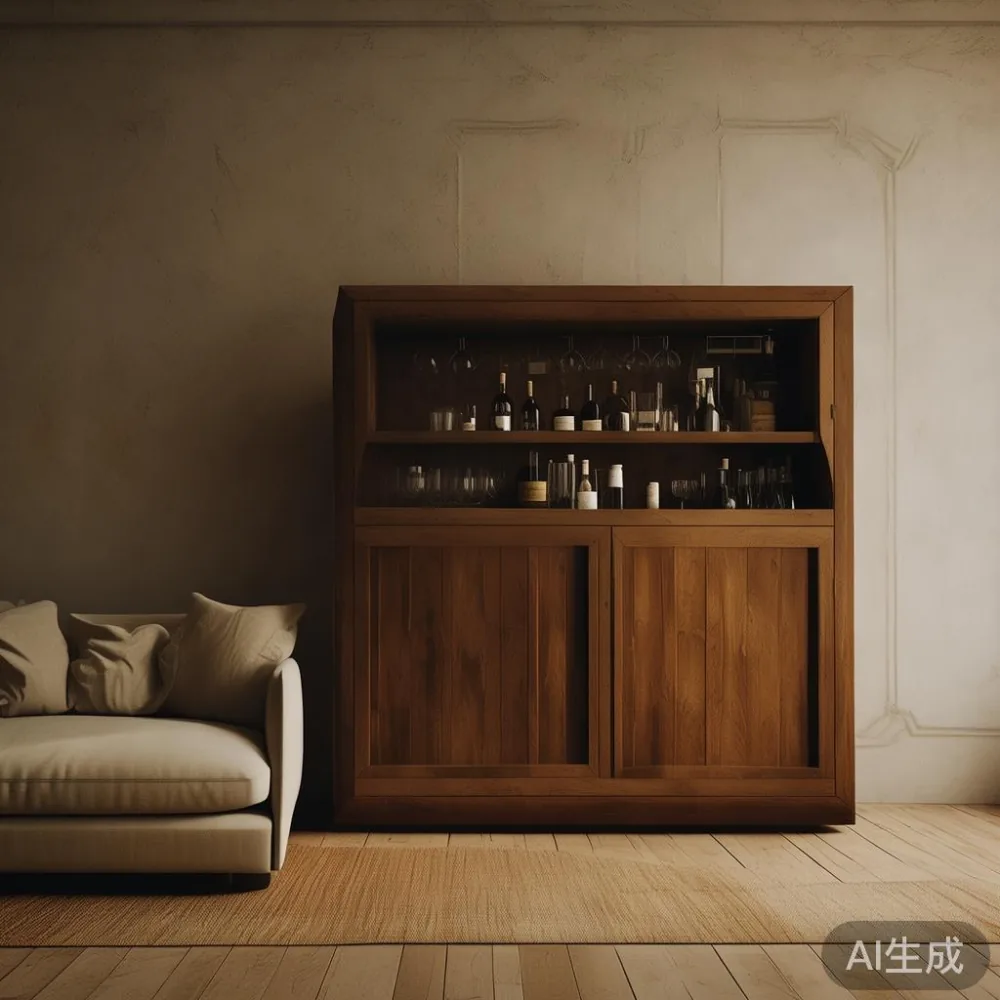
For HDB flats in Tampines, Bedok and Punggol, the practical issue is often the space between furniture and wall. A 180 cm bar cabinet may look secure against a dining-room wall but restrict airflow behind its back. In a condo, the exposure may be different: a unit facing the sun can heat a timber panel to 34°C by late afternoon, while a nearby window can raise the room’s relative humidity to 78%. Those conditions make stable construction, suitable wood and controlled maintenance more important than decorative details alone.
MIDHILL has made solid wood furniture since 2008 and ships to more than 15 countries, so humidity management is part of the product conversation rather than an afterthought. Its 10-year structural warranty reflects the joinery and load-bearing design, while lifetime refinishing gives owners a practical path when a surface ages. This guide focuses on bar cabinets and their relationship with Singapore’s moisture levels, with measured care for buyers comparing dimensions, delivery and long-term upkeep.
How Does Humidity Change Solid Wood?
Wood is hygroscopic: it gains or loses moisture according to the surrounding air. In Singapore, outdoor relative humidity commonly ranges from about 65% to 90%, while air-conditioned interiors may fall to 45% to 60%. A sudden change of 15 percentage points can be enough for seasoned timber to expand or contract by roughly 0.5% to 1.5% across its width.
That movement is normal. A stable solid wood bar cabinet should accommodate it through well-fitted joints and a finish that resists moisture. Poorly sealed end grain, however, can absorb water faster than the face grain. One edge may swell by 2 mm, while the centre remains unchanged, producing a ripple or lifted lacquer appearance. Repeated wetting and drying can then encourage checking, especially if a hot drink or damp glass is left near a serving surface.

Temperature matters as well. Warm, humid air holds more water than cooler air. During Singapore’s afternoon storms, interior relative humidity can climb from 60% to 75% within 30 minutes. The same timber may then cool after a downpour, creating condensation on a nearby metal handle or marble top. For a bar cabinet, this combination of moving moisture and changing temperature can place extra stress on veneer, hinges and drawer slides.
Not every reaction signals defective wood. If a cabinet door needs a small adjustment after 6 months in a new unit, that may reflect drying, building movement or an uneven wall. The more serious warning signs are persistent mould, deep splits wider than 2 mm, swollen particleboard, or a base that no longer sits level. These need investigation rather than repeated cosmetic treatment.
Which Wood and Construction Suit Singapore Homes?
Teak and ash are practical choices for humid interiors because their stability, grain structure and reaction to moisture are relatively predictable. Teak contains natural oils that slow water uptake, while ash offers a lighter colour and crisp profile for a post-modern light luxury bar cabinet. Oak can also work well when it is properly kiln-dried, sealed on all faces and allowed to acclimatise. Dense tropical hardwoods may perform well, but their behaviour depends heavily on seasoning and protective finishes.
The construction matters as much as the species. A cabinet built with dowels, mortise-and-tenon joints and solid drawer boxes is more serviceable than one assembled around particleboard panels. Drawer runners should have at least 2 cm of clearance on each side. Door hinges need vertical adjustment so seasonal movement does not pull the frame out of square.
For a 160 cm-wide bar cabinet, leave 5 cm to 8 cm behind the unit and 10 cm above it where ventilation is needed. A wall-adjacent setup should not trap wet air against the back panel. If the cabinet includes a marble table top, choose a material with low porosity or apply a professional sealer. Marble may tolerate humidity better than many timbers, but its weight demands a level base, suitable fixings and safe transport.
The same principles apply when coordinated pieces enter the home. A solid wood sofa needs breathable upholstery and a stable timber frame; a bed frame needs sound centre supports and moisture-resistant joints; a dining table needs an even finish across its underside; a wardrobe needs functioning ventilation; and a nightstand benefits from closed storage near a bathroom. A reliable maker should explain wood species, moisture treatment and care instructions for each type.
Will a Bar Cabinet Fit an HDB Flat or Condo?
Measure the route before measuring the cabinet. New HDB tower corridors are commonly about 150 cm to 180 cm wide, and older lift lobbies can include turns, thresholds or projecting fire hoses. A polished 160 cm bar cabinet will not turn a 90-degree corridor corner if its diagonal exceeds the available manoeuvring space. Remove carton packaging as well: assembled furniture can fit where the same item in a flat pack does not.
For delivery, record the lift car’s internal dimensions and door width, not only the lift’s rated capacity. A 500 kg capacity lift can still be too shallow for a 65 kg bar cabinet with a 120 cm length and 50 cm depth. Furniture should be protected with blankets, corner guards and moisture-resistant wrapping. MIDHILL offers free shipping for orders over US$350, equivalent to about SGD 455 before GST, although international freight terms should be confirmed separately.
Singapore delivery typically takes 5 to 10 working days for stock items, while custom finishes or made-to-measure pieces may require 30 to 45 days. These are planning ranges rather than guarantees. Customers should confirm the day, time slot, lift reservation and stair-carry charge before dispatch. A 14-day return period gives useful time to check scale and finish, but installed furniture may be subject to handling terms and restocking conditions.
Condo owners should also check delivery rules. A 20 cm-wide service lift and a 75 cm parking-lift opening are both restrictive for a broad drinks cabinet. If a bar cabinet must arrive through a common corridor, protect the floor and request two-person carrying when the piece exceeds 55 kg. Never drag a cabinet across a marble lobby floor: the abrasions can cost more than the delivery charge.
What Should You Do When Humidity Causes Movement?
Start with the room, not the cabinet. Keep relative humidity near 45% to 65% where possible, and avoid directing air-conditioning vents at a timber face. A refrigerator or drinks chiller should have at least 10 cm of ventilation space. If a bar cabinet houses bottles, use a drip tray and maintain the manufacturer’s clearances for a built-in appliance.
Wipe spills within 15 minutes and dry edges with a soft cloth. Do not soak a joint, and avoid steam cleaners, bleach and silicone-based furniture polish. Clean a lacquered surface with a slightly damp cloth and mild pH-neutral soap, then dry it at once. Oiled timber should receive the product’s approved oil or wax at intervals of 6 to 12 months, depending on exposure and finish type.
Do not force a swollen drawer. Remove its contents, raise the cabinet’s humidity exposure, and check whether the runner is rubbing or the timber has changed dimension. Small gaps of less than 2 mm may be corrected through hinge adjustment. Deep splits, blackened mould or odours require professional assessment. Sanding away every mark can erase evidence of what caused the problem.
Seasonal care also applies to related pieces. For designer French provincial furniture, protect pale finishes from tea stains and damp hands. For a Mid-century modern dining table, check that leaves and joints remain dry. Comparing European sofa vs Mid-century modern sofa is useful for design, but timber frames and joinery should still be checked independently. Searches for under 2000 light luxury furniture and for sale European furniture can reveal many styles, yet the moisture specification should be compared rather than assumed.
How Can You Buy a Humidity-Resistant Bar Cabinet?
Ask for the wood species, moisture content range used in production, finish type and back-panel construction. For Singapore conditions, kiln-dried timber around 8% to 12% moisture content is a sensible reference for interior furniture, with the exact target adjusted to the destination climate. A responsible supplier should also explain how a cabinet should acclimatise in an air-conditioned flat.
Inspect each visible face for filled defects, open joints and finish consistency. Look beneath shelves, inside drawer boxes and behind removable panels. A quality bar cabinet should have smooth transitions between boards, even gaps of roughly 2 mm to 3 mm, secure hinges and drawer runners with room to move. Confirm that the top can carry a bar tray, glassware and serving equipment without excessive flex.
Price should be considered alongside service and maintenance. A mid-range solid wood bar cabinet may cost from SGD 1,800 to SGD 3,800 before GST, while more elaborate designs with marble, lighting or integrated refrigeration can range from SGD 4,000 to SGD 9,000. Multiple drawers, lifting doors and appliance ventilation add complexity. For a 140 cm unit, a practical target weight is 45 kg to 75 kg, depending on materials and construction.
MIDHILL’s export experience is relevant because pieces travel across climates. Its production base in Foshan works with international design and manufacturing requirements, and a 10-year structural warranty provides a defined level of support. Lifetime refinishing is another useful point of comparison, provided the customer follows the care guidance and retains the original finish information.
Can Humidity Damage a Marble-Top Bar Cabinet?
Humidity usually affects the timber frame before it attacks a properly sealed marble top. Marble is not eaten by water in the way particleboard can swell, but moisture can travel through joints and weaken adhesives around the stone. Thermal shock is another concern: placing a chilled bottle on a warm surface can create stress concentrated around a cut-out.
Ask whether the marble is natural or engineered, its thickness and the sealing treatment. A 20 mm slab is common, while 12 mm versions may require additional support. Inspect the underside for continuous bonding, clean alkaline spills promptly and avoid acidic drinks such as wine and citrus soda. Use coasters and a bar tray rather than wet glass directly on stone.
A marble-topped bar cabinet should still be treated as a solid wood product where the cabinet body is timber. Check the base level every 6 months and keep at least 2 cm from a shower or kitchen sink. If the environment regularly exceeds 75% relative humidity, use a cabinet ventilation gap and a dehumidifier rather than sealing the unit tightly against the wall.
What Is the Best Way to Care for a Bar Cabinet in Singapore?
A simple maintenance rhythm is easier to sustain: dust weekly, wipe spills immediately, inspect runners every 3 months, and check humidity every season. Keep the cabinet away from direct afternoon sun, which can lower relative humidity while raising temperature. A hygrometer placed near the unit helps provide useful readings; aim for roughly 45% to 65% and avoid long periods above 70%.
At the end of a humid period, do not immediately polish a dull area. Let the timber settle for 48 to 72 hours, then clean and condition it according to the finish. At the end of a dry air-conditioned period, use controlled humidification rather than spraying the wood. Small adjustments to hinges and runners are normal; repairs to failed seals or swollen boards are not.
For buyers creating a complete interior, coordinate the cabinet with a solid wood sofa, bed frame, dining table, wardrobe or nightstand through shared wood tones and restrained detailing. Modern light luxury for guest room planning should account for ventilation, clearances and safe weight as well as visual style. A well-proportioned bar cabinet, correctly specified for the home, can remain handsome through Singapore’s changing seasons for many years.