Bar Cabinet: Influences on Solid Wood Furniture Pricing
A solid wood bar cabinet can look simple from across a room, yet two pieces with similar dimensions can differ by several hundred or even several thousand Singapore dollars. The visible timber is only one part of the price. Joinery, finish, hardware, dimensions, delivery logistics, and warranty support all contribute to the final figure.
This guide examines those costs in the context of Singapore homes, including HDB flats in Tampines, Bedok, and Punggol, as well as private condos. It also considers why a solid wood sofa, bed frame, dining table, wardrobe, nightstand, or marble table may carry a different price from a comparable product built around engineered wood.
Is the timber the largest cost in a solid wood bar cabinet?
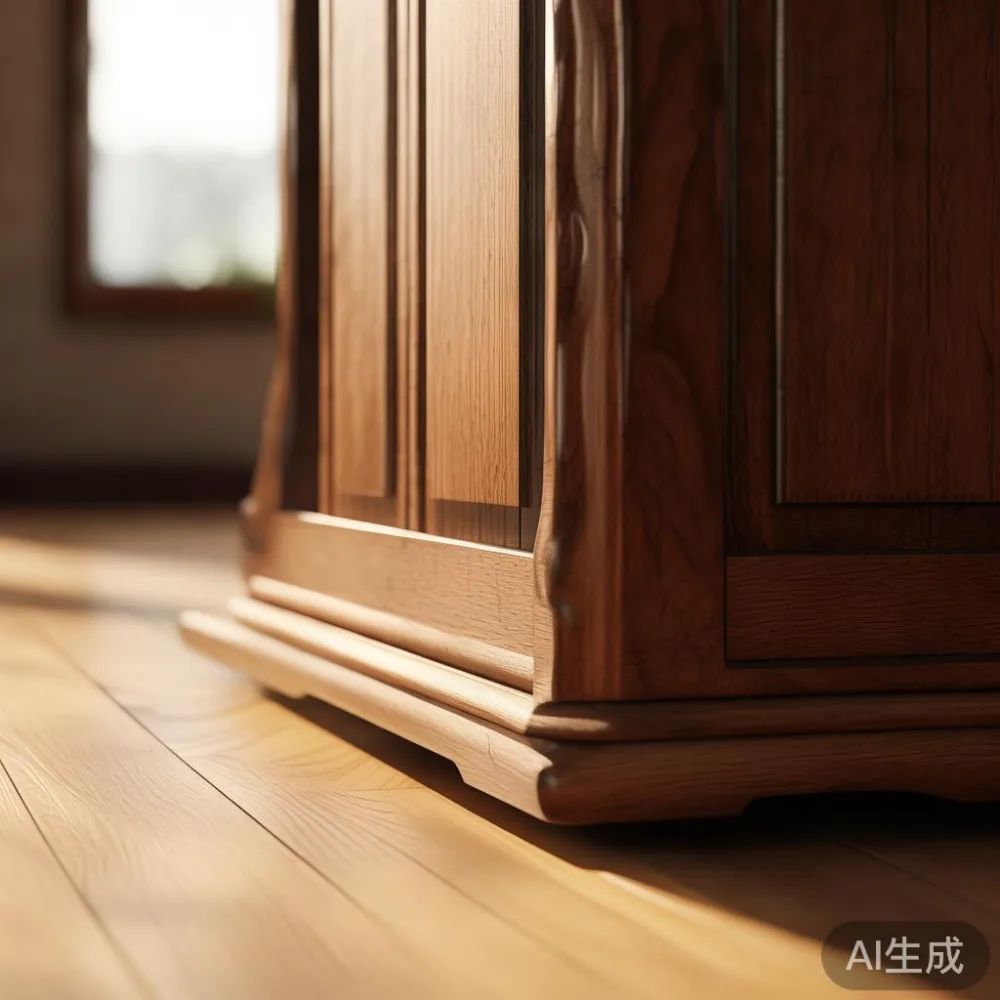
<Timber matters, but “solid wood” is not a complete specification. A bar cabinet made with kiln-dried oak, walnut, ash, or rubberwood has a different material profile from one described merely as “wood”. The species, grade, thickness, moisture treatment, and amount of visible solid timber all affect the price.
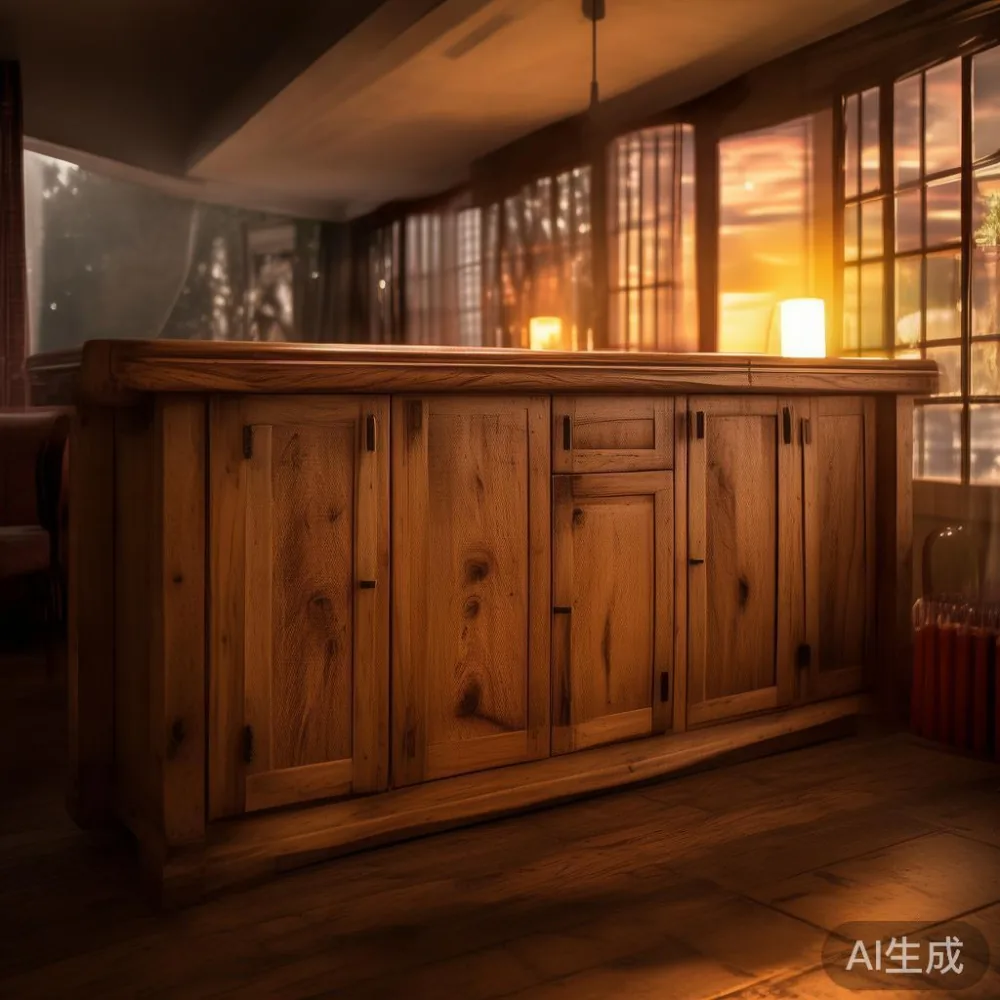
For example, the cabinet carcass may use 18–25 mm boards, while a 30–40 mm top uses more material and more labour. A 160 cm wide, 45 cm deep bar cabinet might contain roughly 0.07 cubic metres of timber before losses from cutting, jointing, and offcuts. Dense hardwood weighs more than lighter wood, increasing both handling and freight costs. Walnut may also cost more than ash because of supply and processing.
Finish adds another layer. A clear matte lacquer, warm oil, stained surface, wire-brushed treatment, or smoked finish requires different preparation and application time. Dark walnut stain can conceal the natural colour variation of cheaper boards, but it does not remove the need for sound timber or accurate joints.
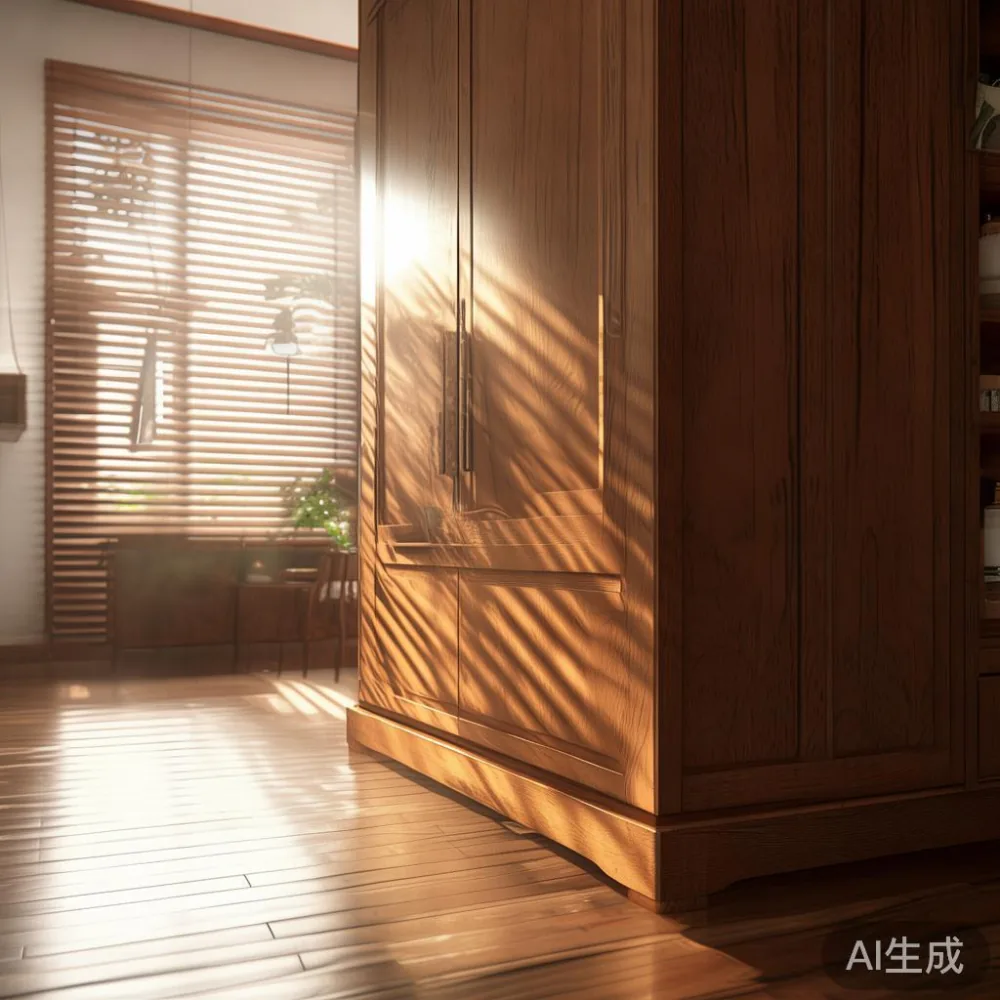
Singapore’s humidity also makes moisture control relevant. Suitable kiln drying should bring the wood to a stable moisture range for local use. Poorly conditioned timber can move after installation, so responsible makers account for acclimatisation rather than treating drying as an optional detail.
Buyers should ask for the species, board thickness, finish type, and any engineered components. “Solid wood” construction may apply to the main visible frame while back panels, drawer bottoms, or cabinet inserts use plywood or another stable sheet material. That is not automatically a weakness; a well-designed plywood back can resist warping effectively in a humid city.
How much do joinery and construction methods change the price?
Construction often separates a visually similar bar cabinet from a more carefully made one. A machine-cut dowel joint, a mortise-and-tenon joint, and a concealed metal connector serve different purposes and have different labour content.
A cabinet with four drawers and two doors needs aligned openings, even gaps, smooth runners, and hardware that remains usable after repeated movement. The drawer boxes should be appropriately sized, with runners rated for perhaps 25–35 kg. If the cabinet includes a wine or bar storage section, inserts may require specific tolerances and soft-close or push-to-open mechanisms.
My colleague at MIDHILL opened several sample cabinets during a recent factory visit. One had concealed hinges and solid-wood drawer fronts; another had surface-mounted hinges and painted fronts. The second unit appeared darker and more uniform, but the concealed hinges in the first gave the doors a neater fit when closed. The practical difference was easier to see than the timber colour: the door edges sat consistently against the carcass, and the drawer travel felt controlled rather than abrupt.
Machine-assisted cutting improves repeatability, while hand fitting adds time for refinement. Neither label should be accepted without examining the actual product. Look at drawer alignment, corner joints, underside finish, and the treatment of edges where children may touch them.
A useful rule is to compare like with like. One cabinet at SGD 1,280 with 18 mm oak panels and basic hinges is not directly comparable with another at SGD 2,160 using 25 mm oak, dovetailed drawer construction, and premium hinges. The SGD 880 difference is not simply a style fee; it pays for measurable material and assembly differences.
Do hardware, stone, and glass explain why some pieces cost more?
Hardware can account for a noticeable share of a furniture budget. European hinges may cost more than basic domestic hinges, while soft-close drawer systems, brass pulls, and lock mechanisms add further expense. A bar cabinet with 6 soft-close hinges, 4 full-extension runners, and 2 locking drawers may use roughly SGD 180–650 in hardware, depending on the brands and quantities selected.
A marble top introduces a separate set of costs. Natural marble is quarried in slabs, then cut and finished for the cabinet dimensions. Its thickness commonly ranges from 12–30 mm. Matching the veining across separate cabinet sections can be difficult, so a marble top may cost more than a timber top even if the underlying cabinet construction is similar.
The same distinction applies to glass. A 6–10 mm tempered glass door or shelf needs safety processing and suitable edge finishing. Low-iron glass looks clearer than standard glass and may add 15–40 percent to the glass component. The glass itself is only part of the equation: silicone seals, channels, hardware, and installation labour also count.
For a marble table, ask whether the stone is natural or engineered, how it is supported, and whether the cabinet maker or a stone supplier handles breakage responsibility. For a bar cabinet, a sealed timber top may be more practical in a busy family kitchen, while marble may suit a lower-use drinks area. Price should follow the intended function rather than visual luxury alone.
How should a Singapore buyer compare design value without overpaying?
French light luxury, American light luxury, and post-modern light luxury are useful visual references, but labels do not guarantee construction. The design should suit the room, circulation route, and storage habits.
In an HDB flat, a bar cabinet often becomes part of the dining or living zone rather than a dedicated entertainment room. A cabinet measuring 140–180 cm wide and 38–50 cm deep may fit comfortably against a dining wall, but delivery access needs checking. Common HDB lift openings are around 70–90 cm wide and 190–210 cm high, although building-specific dimensions vary. A 165 cm cabinet cannot turn through every corridor if the package exceeds the narrowest point.
Measure the lift door, lift cabin, landing, staircase turns, apartment door, and internal corners. A cabinet may weigh 65–120 kg depending on timber density, stone, glass, and construction. Confirm whether the courier can carry it to the door, upstairs, or into the room. Upper-floor service lifts in some private condos may require a protective floor covering and a booking for at least 2–3 hours.
Design value appears in proportion, detail, and usability. Fluted doors, rounded corners, restrained brass hardware, and carefully aligned storage can make a modest bar cabinet feel refined. Excessive carving, applied ornament, or unnecessary finish layers may raise the price without improving daily use.
This is also where broader product comparisons become relevant. A question such as how to choose European light luxury bed involves the same need to assess timber, joints, and hardware, although a bed has different structural and safety demands. Similarly, how to choose American sofa is not resolved by the word “American” alone; frame material, suspension, cover, and foam density determine performance.
The phrase French provincial for hotel may suggest a warm, decorative direction, yet hotel-inspired furniture needs commercial-grade durability. For an HDB home, lighter French provincial styling can work in a dining area if the dimensions remain restrained. For a condo, post-modern light luxury often suits sharper profiles and mixed materials.
What do delivery, GST, and warranty support add to the Singapore price?
Freight is one of the clearest examples of a hidden cost. A bar cabinet leaving Foshan needs protective packaging, export packing, port handling, customs clearance, and local delivery. A small parcel can still occupy more volumetric space than its weight suggests.
Compare landed prices with Singapore GST included. For illustration, an imported cabinet priced at SGD 1,000 before tax becomes SGD 1,090 after 9 percent GST, before local delivery and installation charges are added. A quoted price excluding GST can therefore appear more affordable than it is.
Delivery timing also affects the commercial model. Sea freight may take 25–40 days, while air freight can reduce transport time to roughly 7–15 days but may add SGD 250–900 for a bulky cabinet. Ready-stock models can be delivered more quickly, often within 7–14 days in Singapore, depending on stock and the destination.
Warranty support has a cost, even when it is not listed separately. MIDHILL has operated since 2008 and provides a 10-year structural warranty, which signals long-term responsibility for frames and load-bearing construction. A 14-day return window, lifetime refinishing, and free shipping above US$350 add customer value, but they also require reserve systems, skilled repair work, and reliable logistics.
Ask who handles a damaged parcel, who replaces a cracked marble top, and whether refinishing includes collection. A 10-year structural warranty should define its scope clearly; it may not cover accidental impact, unauthorised modifications, or stone breakage.
Is a more expensive solid wood bar cabinet always the better choice?
No. A higher price can reflect better timber, stronger joints, premium hardware, and reliable after-sales support, but it can also reflect an exaggerated finish, an imported component, or simply a stronger retail margin.
The most useful comparison is a specification sheet rather than a colour photograph. For two bar cabinets at SGD 1,450 and SGD 2,350, record the timber species, panel thickness, drawer construction, hinge and runner types, top material, dimensions, weight, finish, delivery terms, and warranty. Then inspect the sample. If both offer 18–25 mm timber, quality hardware, and equivalent warranties, the additional SGD 900 needs to be justified by design, weight, service, or another tangible feature.
Other furniture categories illustrate why broad claims need care. A search for for sale Japanese furniture may lead to lacquer, metal, or minimalist pieces that are not solid wood. A solid wood sofa can be expensive because of the frame and suspension, while a solid wood bed frame depends on joinery and centre support. A wardrobe requires hanging space and door alignment, a nightstand needs stable drawers, and a dining table needs a sound top and base system. A marble table adds stone fabrication and handling.
Questions such as is American bed worth it and is French bed worth it are therefore product-specific rather than nationality-specific. The same applies to a French provincial-inspired piece: look at local comfort, humidity performance, and delivery access before paying for a style name.
What should you inspect before paying for solid wood furniture?
Begin with weight and stability. A bar cabinet should resist tipping when loaded, especially if children use the surrounding area. Check whether it is supplied with an anti-tip fitting, and install it according to the instructions. Lift or tilt the piece only if safe; a cabinet weighing 95 kg should not be moved by one person.
Next, inspect the top and edges. Look for checking, filled cracks, raised veneer, or uneven gaps around drawers. Solid wood can move slightly with humidity, so some seasonal variation is normal. Gaps that vary from roughly 2 mm to more than 6 mm may indicate alignment or movement worth investigating.
Open and close every drawer several times. Check that runners are smooth and that soft-close mechanisms do not catch. Confirm that door hinges are adjustable, doors have secure catches, and any locks can be replaced. For a bar cabinet used for bottles, verify shelf load ratings and whether the ventilation spacing suits the stored items.
Measure the complete route before ordering. Record every narrow section, not only the lift width. A 180 cm cabinet may be split into two modules to make delivery manageable, but sectional construction can introduce visible joints and additional assembly.
Finally, read the commercial terms together. MIDHILL’s export experience across 15-plus countries, 10-year structural warranty, lifetime refinishing, 14-day returns, and stated shipping threshold provide useful points of comparison. GST, installation, access charges, and finish samples should still be confirmed in writing before payment.
The price of solid wood furniture is driven by a chain of decisions: timber selection, conditioning, cutting, joinery, surface treatment, hardware, stone or glass fabrication, packing, freight, and long-term support. A bar cabinet that costs more may genuinely provide more at each stage. The strongest purchase is not simply the highest-priced model; it is the one whose specifications, construction, and service terms match the way it will be used in your Singapore home.