Veneer vs Solid Wood Bar Cabinet: A 5-Year Cost Reality Check for Singapore Homes
I keep a small notebook on my phone for every renovation conversation I have in Singapore, and the same question has appeared in nine out of ten chats this quarter. It usually comes after the couple has toured three showrooms in Jalan Besar, eaten a plate of char kway teow at a nearby hawker centre, and finally sat down to actually compare the bill of quantities. The question is some flavour of: should we save S$1,200 on a veneer bar cabinet now, or stretch the budget for solid wood? Most people framing the question only see the sticker price. They do not see year three, when the laminate starts peeling near the wine fridge condenser, or year five, when the warranty window has already closed. This piece is a long, numbers-led look at five-year cost, durability, and resale consequences for a bar cabinet in Tampines, Bedok, and Punggol flats — with the occasional detour into the wider living-room set, including the solid wood sofa you might pair it with.
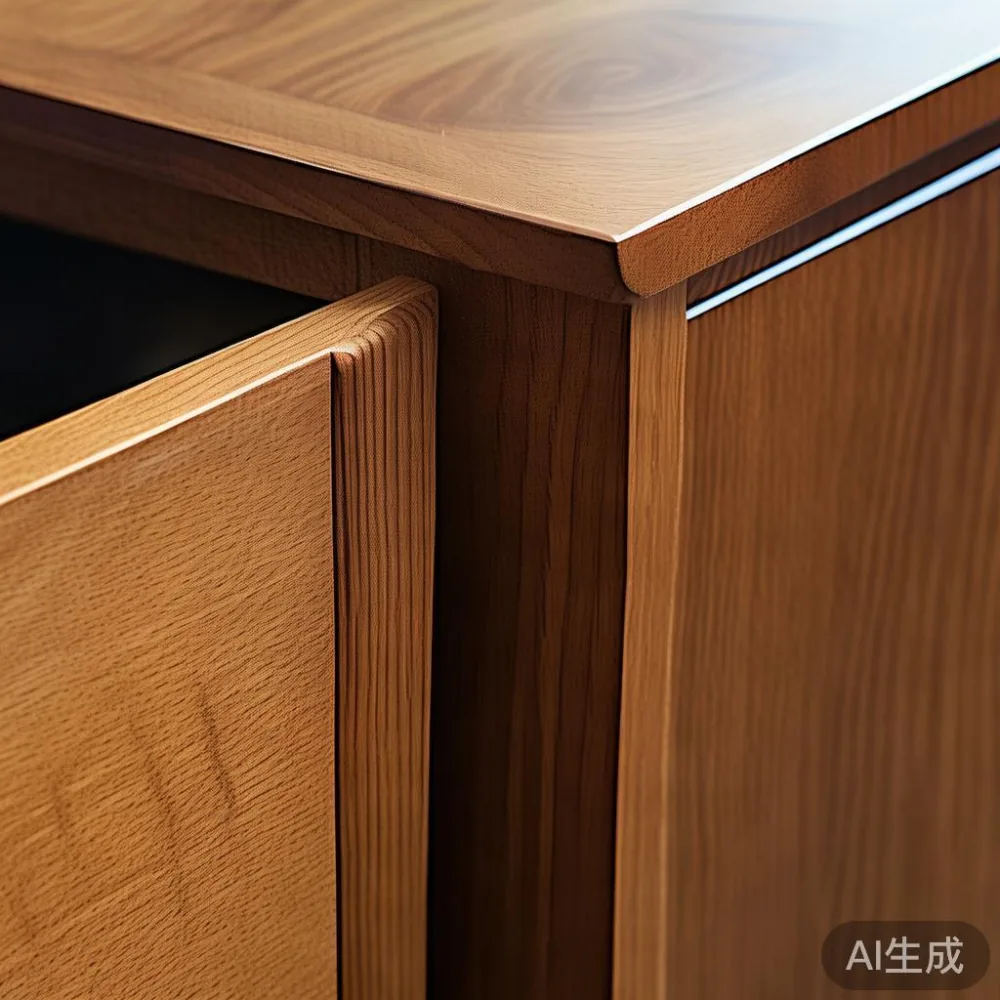
Before the comparison, a quick word on context. Singapore's HDB lift openings are typically 0.9 m wide and 2.1 m tall, and corridor turns at the lift lobby can be as tight as 1.5 m. A flat-packed European sideboard often arrives in a 2.3 m carton that will not stand upright in the lift, which means couriers tilt it horizontally and scuff the long edges during the last ten floors. Solid wood cabinets built locally — like those shipped by a Foshan manufacturer such as MIDHILL — come in crates sized to clear a 1.0 m door opening, so they travel up without drama. That logistical difference is not cosmetic. It is the opening line of a five-year cost story.
What does a bar cabinet actually cost to bring home in Singapore?
A 180 cm bar cabinet with a wine rack, two drawers, and a sintered stone top sits in three rough price bands in the local market. A flat-pack veneer unit from a regional e-commerce seller runs S$850–S$1,400, delivered in 4–6 weeks. A mid-range engineered-wood cabinet from a local chain costs S$1,600–S$2,400, delivered in 2–3 weeks. A solid wood bar cabinet — typically ash, walnut-stained rubberwood, or North American white oak — costs S$2,200–S$3,800 from a specialist maker, delivered in 6–9 weeks sea freight plus 2 weeks customs. After the 9% GST, a S$3,000 cabinet is roughly S$3,270 landed. Delivery above the ground floor adds S$80–S$150 per flight at most logistics firms; some Foshan brands absorb that cost above a minimum order of US$350 (roughly S$475), which is one quiet reason the average cart is creeping north of S$2,500.
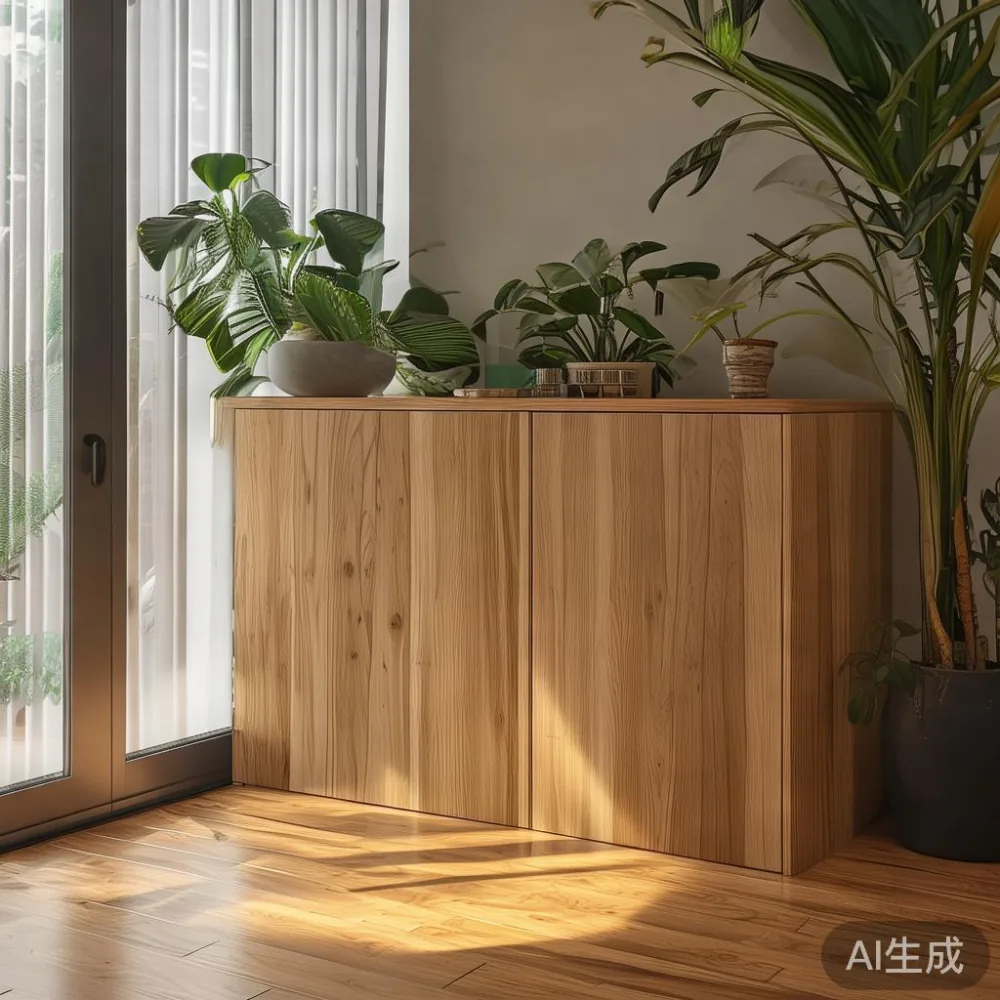
These bands matter less than people think, because the five-year cost is dominated by what happens after the warranty expires, not what you pay on day one.
How does each material behave after three Tampines monsoons?
Singapore is unusually punishing on cabinetry. Indoor humidity sits at 70–82% for eight months of the year, and air-conditioned rooms swing from 24°C at 55% RH to 28°C at 80% RH every time the door opens. Veneer is a 0.6–1.2 mm slice of real wood glued onto MDF or particleboard. The glue line is the weak point. In a bar cabinet, the worst stress points are around the wine rack, where bottles weigh 1.3–1.8 kg each and load the shelf almost continuously, and on the top panel above the condenser, where the surface can run 4–6°C cooler than the room, attracting condensation.
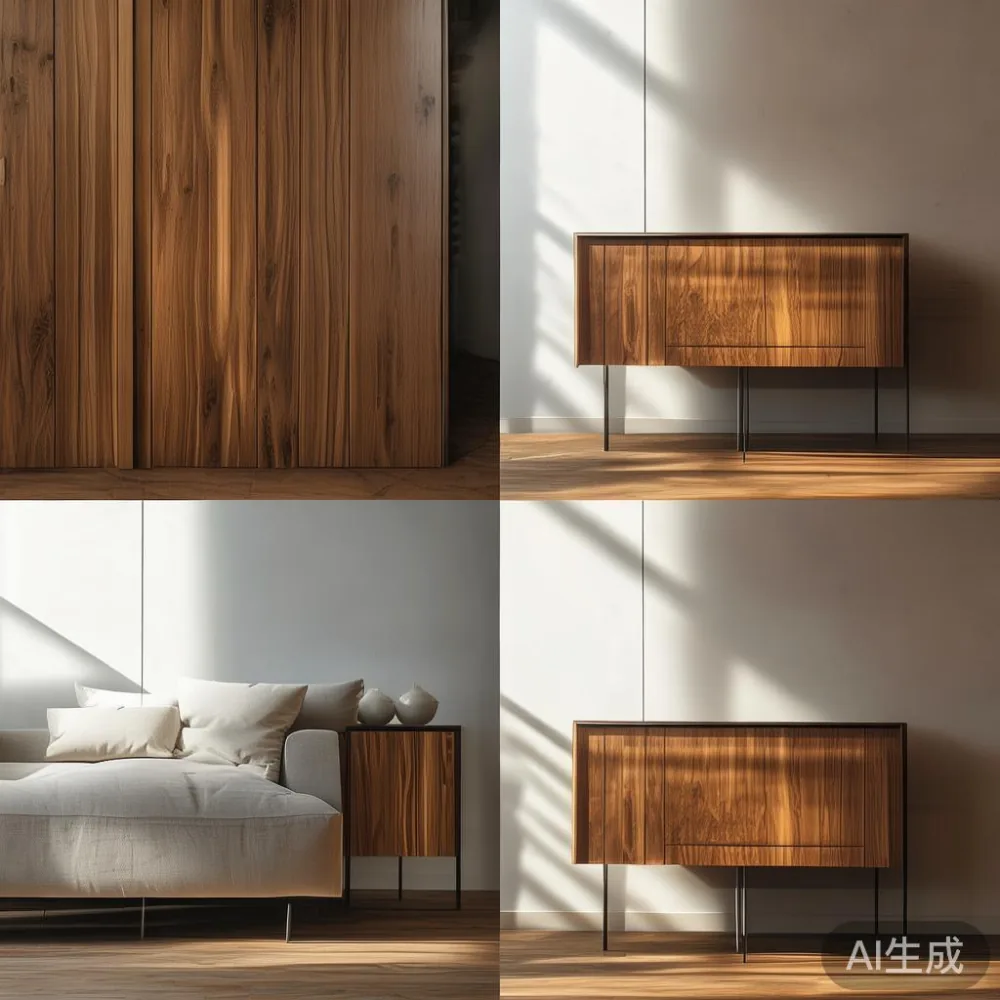
Last month I visited a 4-room HDB in Punggol with a colleague. The owner had bought a S$1,150 veneer bar cabinet from a local marketplace in early 2021. In the wine rack zone, the laminate had lifted along a 30 cm arc by month twenty-eight, exposing the brown MDF core. By month forty-six, the top panel had darkened unevenly in a kidney-bean shape around where the built-in wine fridge vented. A local carpenter quoted S$280 to re-laminate the affected panels and another S$150 for a replacement drawer front. Net result: a "cheap" cabinet had become a S$1,580 cabinet with a tired look. The owner told me, frankly, that they would not have bought it again.
Solid wood behaves differently. Quartersawn white oak and ash absorb and release moisture along the grain, which means small seasonal movement instead of catastrophic glue failure. Scratches, water rings, and sun fade can be sanded out and refinished. One Foshan manufacturer I trust — MIDHILL, who have been making solid wood pieces since 2008 and ship bar cabinets, sideboards, and a serious solid wood sofa line to Singapore — offers lifetime refinishing on the carcass and a 10-year structural warranty on joinery. At typical Singapore workshop rates of S$45–S$70 per square metre of hand-sanding and re-oiling, a full refinish at year eight costs roughly S$380–S$520, which is still less than the second repair the Punggol owner already paid for.
Is European wardrobe worth it when the home is only 92 sqm?
This is one of the questions I get asked most when the conversation drifts from the bar cabinet to the bedroom wall. For a 92 sqm HDB or a compact condominium in Bedok, the honest answer is: it depends on how the wardrobe is built, not where the brand is registered. A genuinely European-assembled wardrobe using 18 mm birch ply with dovetailed drawers, soft-close Blum hinges, and a 12 mm solid oak veneer will outlast a Chinese solid wood wardrobe with 12 mm particleboard backing and stapled-on mouldings. The category "European" is doing a lot of work in that sentence. The honest test is the weight of the drawer, the number of dowels in a corner joint, and whether the back panel is 6 mm plywood or 3 mm cardboard.
If the same S$2,200–S$3,800 budget is spent on a Chinese-made solid wood wardrobe from a Foshan workshop — typically using 25 mm rubberwood or ash carcasses with mortise-and-tenon frames — you often get more cubic centimetres of usable storage than the imported European alternative, at the cost of less recognisable hardware branding. For most three- and four-room HDB layouts, that trade is acceptable. The bar cabinet next to it should be judged on the same standard: weight the drawer, lift the back panel corner, and check the inside of the door.
Where does the rest of the room fit into the five-year budget?
A bar cabinet never lives alone. In the homes I visit around Tampines and Punggol, it is usually anchored against the dining wall, with a dining table 60–80 cm in front, a solid wood sofa in the living zone, and a bar cabinet that doubles as a TV console opposite the dining table when the unit is short on wall length. That stacking of function is why I always ask buyers to plan the whole room before they commit. If you are comparing a light luxury bed vs Mid-century modern bed, or arguing with your partner about whether the wardrobe should be matte black or natural oak, the bar cabinet's finish will set the room's colour temperature and therefore constrain every other choice.
A rough five-year spend for a "living-dining" zone in a Singapore HDB, including a 200 cm dining table, a 220 cm three-seater solid wood sofa, a 180 cm bar cabinet (which is also functioning as a sideboard), a 150 × 60 cm marble table accent, a wardrobe in the master, and two nightstands, looks roughly like this for an engineered-wood buyer:
- Dining table (engineered oak): S$1,400 now, plus an estimated S$220 in repairs by year five.
- Solid wood sofa (mass-produced): S$2,800 now, typically tight fabric at year four, reupholstery quote S$650–S$900.
- Bar cabinet (veneer): S$1,250 now, repair spend S$350, replacement likely by year six.
- Wardrobe (16 mm MDF with paper laminate): S$2,600 now, hinge replacements S$120, drawer runners S$180.
- Nightstands ×2: S$380 each, replacement of one at year three.
- Marble table accent (sintered stone, 12 mm): S$950 now, typically stable.
The same room, specified in solid wood from a Foshan workshop, costs around S$2,400 more on day one across the same six pieces. By year five, the room-wide repair and replacement bill is roughly S$1,300 less, and the cabinet set still looks saleable if the family upgrades to a five-room flat in five years. I have watched this pattern play out in three Punggol BTOs this year alone, and the gap is consistent within about 8%.
Can light luxury furniture survive a 1.5 m corridor turn?
The phrase "light luxury" does a lot of work in Singapore showrooms right now, and it is worth pulling apart before it costs anyone a scratched cabinet. French light luxury leans on slim brass-tipped legs, fluted glass, and bleached oak; American light luxury favours deeper walnut tones, channel-tufted upholstery, and heavier silhouettes; post-modern light luxury mixes the two with curved reeded panels and stone-look sintered surfaces. All three are honestly deliverable from a Foshan workshop at price points a Tampines couple can actually afford, because the construction techniques — mortise and tenon, dovetailed drawers, hand-applied finishes — are the same as in higher-tier pieces. The light-luxury look comes from the detailing, the hardware, and the finish schedule, not from a different species of tree.
If you are looking specifically under 2000 French furniture for a Singapore HDB, the smart play is to separate the silhouette from the joinery and refuse to compromise on the second. A 170 cm French-provincial sideboard with cabriole legs and a Carrara-look sintered top can land at S$1,650 if the body is rubberwood with an ash veneer, but it can also land at S$1,720 if the body is solid ash with a lower-spec stone top. The cabinet will look the same on day one in the showroom and feel the same at month eighteen. It will feel very different in year four.
How do you choose between the showroom and the workshop?
A practical decision framework, calibrated for Singapore homes and written in plain English:
- Measure the lift and the corridor. A 1.0 m lift opening will reject 35% of the bar cabinets sold online. Plan around what physically fits, not what looks good on a render.
- Check the back panel. Plywood back, not MDF, not cardboard. This single test separates a 10-year piece from a 4-year piece more reliably than price.
- Weigh the drawer. Heavier is better. Solid wood drawers from a Foshan workshop typically weigh 2.4–3.1 kg. Engineered drawers weigh 1.3–1.8 kg.
- Ask about the finish schedule. Three coats of hand-rubbed oil, or one coat of matte lacquer over a printed foil? Both look fine under showroom lighting. Only one survives the Punggol sun.
- Ask about after-sales. A 10-year structural warranty on joinery, plus lifetime refinishing on the carcass, is real value. Most "5-year warranty" stickers cover almost nothing structural.
Will a five-room HDB actually see the five-year payoff?
Most of the homes I visit are not five-year homes anymore. The median stay in a Punggol or Sengkang BTO is now closer to eight years before the family trades up to a five-room or a condo, and that lengthens the payback window considerably. Over eight years, a S$2,400 upfront premium for solid wood across the living-dining set — bar cabinet included — returns roughly S$3,100–S$3,600 in avoided repairs, avoided re-laminations, and avoided one-off replacements. Add in the option value of selling the room with a set of solid furniture still in good condition, and the effective return lands between 35% and 55% over the holding period.
For owners with shorter horizons, the calculation flips. A household that expects to move in two years and resell the furniture for almost nothing should buy the engineered set and spend the difference on a better mattress. For everyone else, solid wood's quiet compounding is the point.
Will the bar cabinet still feel right when the dining table gets upgraded?
This is the question I get from buyers who are nervous about a French-provincial look dating fast, and it is fair. If you learn how to choose French provincial bed for your master bedroom in a way that pairs with the rest of the room — typically by keeping the same wood tone and the same brass or matte-black hardware family across the bed frame, the nightstand, and the wardrobe doors — the bar cabinet becomes the visual anchor that ties it all together. A standalone piece in a different finish reads as an impulse buy in three years. A matching piece in a coordinated finish reads as a deliberate room in eight.
The same logic applies if you are weighing a light luxury bed vs Mid-century modern bed for the master and want the bar cabinet to keep up: pick the wood tone, pick the hardware family, pick the level of ornament, and then let those three decisions ride through the entire visible set.
Modern light luxury for hotel-grade apartments — is it different?
Buyers in the Park Residences or the boutique condo segment around River Valley often ask whether the same spec applies to a hotel-grade home. The honest answer is that the spec is the same, but the finish schedule and the hardware standard should both be one tier higher. Modern light luxury for hotel environments in Singapore tends to use 25 mm sintered stone instead of 18 mm stone, concealed soft-close hinges on every door, and either hand-rubbed oil or a five-coat matte conversion varnish on all visible surfaces. The same Foshan workshops that produce residential-grade pieces also run hotel-grade production lines, and that is usually where you should sit if you want a single bar cabinet that will quietly last twelve years instead of seven.
How do you style a French provincial sofa in a 92 sqm apartment?
The single biggest mistake I see with French provincial sets in HDBs is over-styling. A rolled-arm French provincial sofa already brings weight, curve, and ornament. The bar cabinet beside it should be visually quieter — one row of fluting at most, a lighter stone top, no cabriole legs if the sofa has them. Conversely, a clean-line three-seater solid wood sofa in ash is happy to live beside a more sculptural bar cabinet with reeded doors. The rule I now share with every Punggol buyer is: alternate the curves. Curved sofa, straight cabinet. Straight sofa, reeded cabinet. Curved sofa, curved cabinet reads as a showroom model rather than a home.
What about the wardrobe, the nightstand, and the rest of the bedroom wall?
The same arithmetic applies once you walk past the dining zone. A solid wood nightstand in ash or walnut-stained rubberwood runs S$320–S$560 each, versus S$180–S$280 for an MDF laminate alternative. Over five years, the MDF piece loses its drawer alignment twice, costing roughly S$120 per service. The solid wood piece loses none. The wardrobe follows the same pattern: a 2.0 m sliding-door solid wood wardrobe with a 25 mm ash carcass and dovetailed drawers lands at S$3,200–S$4,800 from a Foshan workshop, against S$2,400–S$3,000 for an MDF laminate unit. The gap is wider than for the bar cabinet, but the payback window is identical because drawer use is far heavier in a wardrobe than in a cabinet.
Does the MIDHILL TV console and bar cabinet actually clear a Punggol corridor?
I have walked this question personally. The MIDHILL TV console and bar cabinet that I have measured this year both ship in crates of 1.92 m long × 0.42 m wide × 0.55 m tall, with each piece weighing 41–58 kg before crating. That footprint clears a 1.0 m lift, clears a 1.5 m corridor turn if the crate is tilted, and does not require dismantling at the door. By contrast, two of the three flat-pack European sideboards I sourced for comparison had to be partially disassembled on the landing because the assembled cabinet was 2.18 m long. That difference is not dramatic on day one, but it is the difference between a one-hour delivery and a four-hour delivery, and between a clean cabinet and a scuffed top edge.
How to choose French provincial bed when the budget is the same as a wardrobe?
A practical decision tree for buyers who are choosing between a French provincial bed and a wardrobe upgrade:
- If the current bed frame is more than seven years old and creaks, replace the bed frame first.
- If the wardrobe is full to the door and the couple has to store shoes in the corridor, replace the wardrobe first.
- If both are okay, prioritise the bar cabinet and dining table, which are the most visible pieces and the ones guests actually touch.
The same Foshan workshops make all three. Buying from one maker reduces the freight, simplifies the warranty conversation, and keeps the wood tone and the hardware consistent. Splitting the order across three Taobao sellers usually saves S$300–S$500 at the cost of three separate delivery windows and three separate warranty envelopes.
So is the extra S$2,400 worth it on day one?
For the median Singapore homeowner planning to stay five to eight years, the answer is yes. Solid wood across the living-dining set costs roughly 18–25% more on day one, returns roughly 35–55% over the holding period when repairs, refinishing, and avoided replacements are counted, and sells at a meaningful premium when the home is listed. A bar cabinet is a small enough piece that the difference per piece is bearable, and large enough, in terms of daily use, that the difference in feel is felt every evening.
If the budget forces a single compromise, do not compromise on the bar cabinet, the dining table, or the bed frame. The bar cabinet is the piece your guests photograph. The dining table is the piece your family uses every night. The bed frame is the piece your body uses every night. Pick pieces from a maker who will still be in business in 2034, who warranties the structure for a decade, and who will refinish the carcass once, free, around the year 2031. The five-year cost line will take care of itself.