Humidity, HDB Corridors, and Solid Wood: What Every Singapore Homeowner Should Know Before Buying a Bar Cabinet
Singapore sits right on the equator, and the numbers tell the story before you even step inside a flat. The average relative humidity hovers around 80% for most of the year, peaking at roughly 84% during the December to February monsoon window. Indoor humidity in a Tampines 4-room HDB without a dehumidifier regularly settles between 65% and 75%. If you have ever walked past a corridor on the 12th floor of a Punggol Waterway block and felt the air thicken, that is not your imagination. That is the climate your furniture has to live with, every single day.
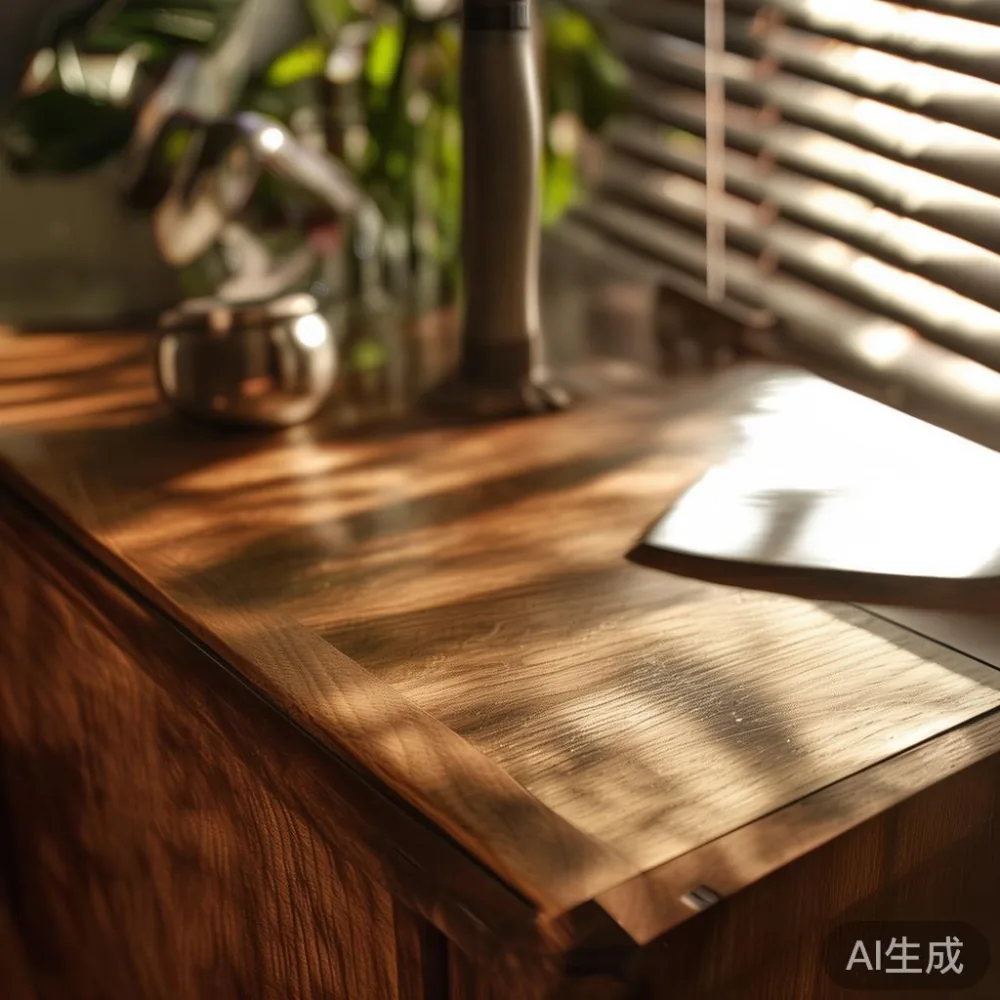
Last month, I visited a client's resale flat in Bedok Reservoir to inspect a teak sideboard that had started cupping at the top. The piece was just over three years old, kept near the service yard door. The relative humidity reading next to the wood was 78%. The opposite side of the same room, near the air-con vent, was reading 61%. That 17-point swing is exactly the kind of spread that pulls solid wood apart at the joints. It is also the reason I now walk every customer through the climate question before we talk about a bar cabinet, a dining table, or a nightstand.
Why does Southeast Asian humidity damage solid wood so quickly?
Solid wood is hygroscopic, which is a polite way of saying it drinks and breathes water from the air. When humidity rises above 70%, the cells in the timber swell. When it drops below 50%, they shrink. The motion is small per cycle, usually between 1% and 3% in width across a 180 cm plank, but it is relentless. Over 12 months you can see a tabletop bow by 4 to 6 mm, and over 36 months a door panel can rack out of square by 8 mm. Multiply that by the dozens of joints in a tall bar cabinet and you start to see why so many flat-pack veneer pieces fail in local homes within five years.
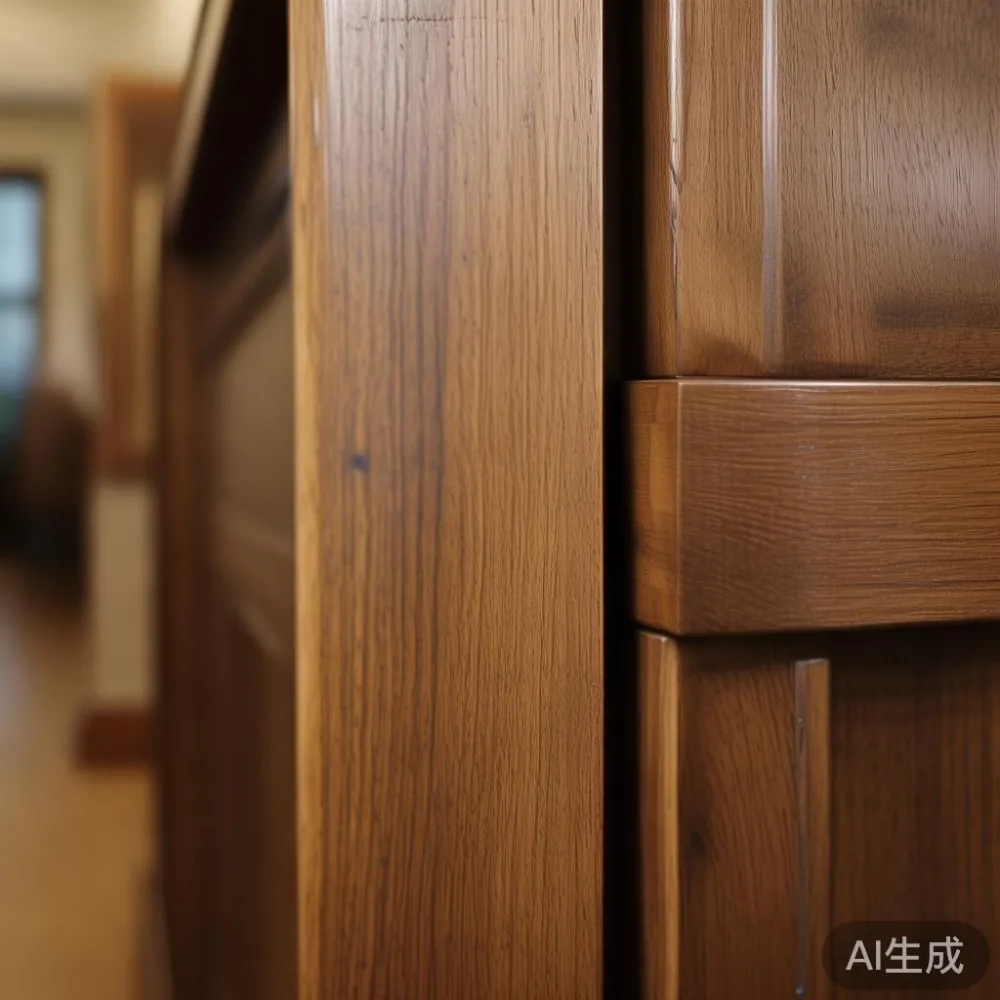
The damage pattern is recognizable once you know it. You will spot hairline gaps opening along the breadboard ends of a dining table in March, then closing again by July. Drawer fronts on a wardrobe will stick in the wet season and rattle in the dry season. A marble table top will look unaffected, but its wooden underframe will quietly warp, leaving you wondering why the whole piece suddenly feels unsteady.
Three forces are usually working together: the wood movement itself, salt-laden air that corrodes unprotected metal hinges, and biological pressure from mould spores, which sit dormant in your air-con filter until conditions are right. A dehumidifier set to 55% RH does most of the heavy lifting, but it only works if the room is closed up and the unit is sized properly, roughly one unit per 25 sqm.
Which solid wood species actually hold up in a HDB or condo?
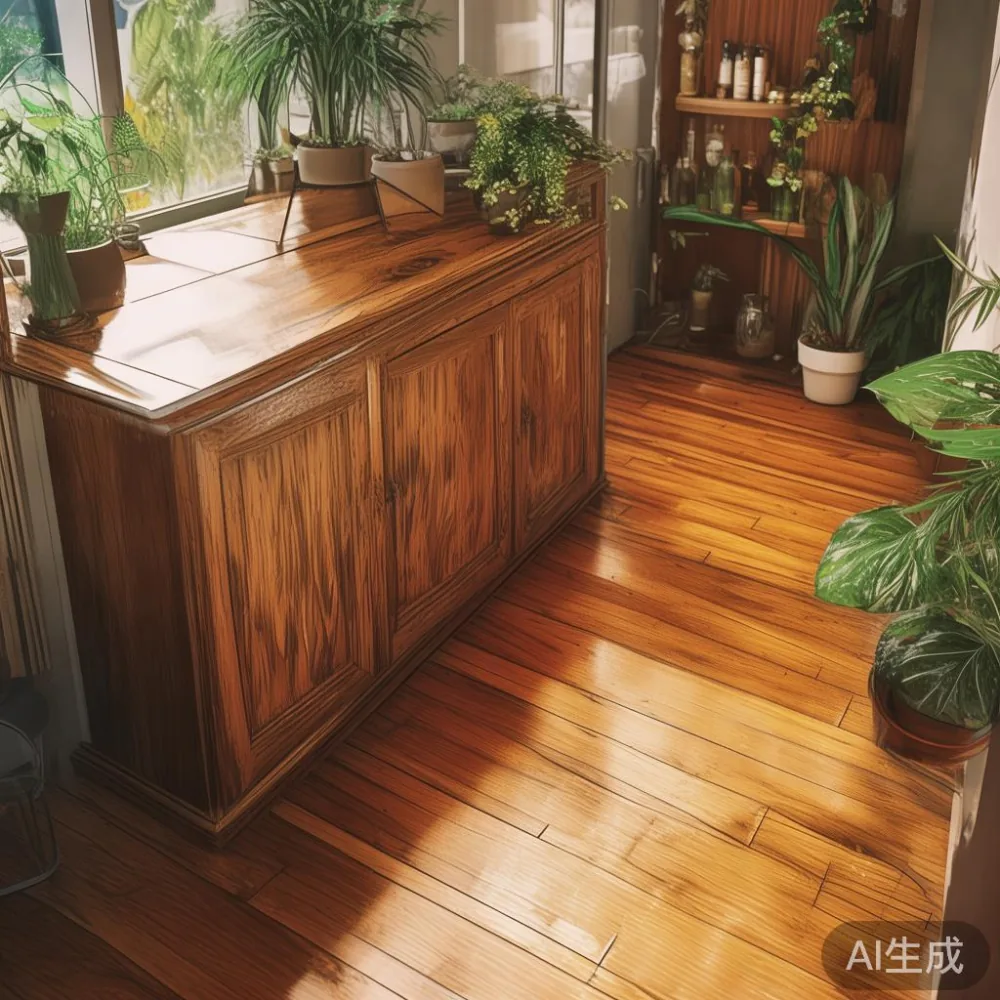
Not all hardwoods behave the same way, and the difference is not subtle. Teak, white oak, ash, and walnut are the four species I recommend most often for Singapore interiors. Teak is the most stable because its natural oils slow down water exchange; a kiln-dried teak plank will move about half as much as rubberwood of the same dimensions. White oak and ash perform well in air-conditioned rooms but react sharply when moved next to a balcony door. Walnut is beautiful and stable indoors, but it darkens under UV, so keep it away from windows facing west.
Acacia and rubberwood are the budget options you see in many Singapore showrooms at SGD 899 to SGD 1,499. They are perfectly serviceable if the kiln-drying spec is correct, ideally down to a moisture content between 8% and 10% before construction. If the seller cannot show you a moisture meter reading, walk away. A 2 cm difference in starting moisture content translates into roughly 3 mm of extra seasonal movement, which is the difference between a door that closes and a door that scrapes.
Mango and suar wood are popular for the chunky, post-modern light luxury look, but both are softer and more porous than teak. They need an extra coat of lacquer and they need to stay at least 60 cm away from any wall that gets afternoon sun. A solid wood sofa frame made from mango, paired with performance fabric cushions, is a fair compromise, but I would not put mango into a wardrobe that faces the service yard.
Will a solid wood bar cabinet even fit through my HDB door and lift?
This is the question that quietly decides whether you get the piece you wanted or the piece that actually fits. Standard HDB doors in a 4-room flat measure roughly 90 cm wide by 210 cm tall. Service lift openings are typically 80 cm wide by 200 cm tall, and main passenger lifts in newer condos are usually 90 cm by 210 cm with a diagonal of about 220 cm. Corridors turn at right angles, often with a wall-mounted hose reel or a fire extinguisher cabinet eating 10 to 15 cm of usable width.
A tall bar cabinet at 180 cm high, 90 cm wide, and 45 cm deep sounds tidy on paper, but its diagonal is about 100 cm, which clears most doorways. The trouble starts when the cabinet has a cornice or a curved top. A 12 cm cornice adds 12 cm to every dimension that matters, and suddenly the diagonal is 112 cm. I have measured three Tampines blocks in the past six months where the main door diagonal after the corridor turn was only 108 cm. The customers in those flats had to choose between a flat-packed unit and a custom shorter height.
Ask the showroom for the fully assembled dimensions including the top moulding, then subtract 10 cm for manoeuvring clearance. Anything above 200 cm in any single axis will not go into a standard HDB service lift and will require a hoist or a staircase carry, which adds SGD 180 to SGD 350 to your delivery bill. If you are buying from a Foshan factory shipping consolidated, the crated dimensions are usually 8 to 12 cm larger than the bare furniture, so factor that in too.
How should I acclimatise a new bar cabinet before it goes against the wall?
Acclimatisation is the step most homeowners skip, and it is the step that determines whether your first six months with the cabinet are peaceful or painful. The rule is simple: let the piece sit in its final room, unwrapped, with all doors and drawers open, for at least 7 days for every 10°C of temperature difference between the warehouse and your home. A Foshan factory sits at roughly 22°C and 70% RH most of the year. Singapore bedrooms run at 24 to 26°C and 60 to 70% RH, so a 7 to 14 day rest is plenty.
During that window, do not load the cabinet with bottles, do not push it tight against the wall, and do not run the air-con 24 hours a day right next to it. Leave a 3 to 5 cm gap behind the back panel so air can circulate. If you can, place a small digital hygrometer on the middle shelf and watch the reading. When the wood stops gaining or losing moisture day to day, it is ready.
I learned this the hard way with a friend's dining table. We placed it against the air-con wall immediately after delivery. Within three weeks the breadboard end had opened a 2 mm gap. We pulled it out, let it breathe for 10 days, then moved it to the centre of the room. The gap closed itself and has stayed closed for four years. That is the rhythm solid wood wants, and the rhythm a good bar cabinet, a bed frame, or a nightstand will settle into once you give it room to find its balance.
How can I keep my bar cabinet looking new without spending every weekend on it?
A short, repeatable routine beats an occasional deep clean. Once a week, wipe the cabinet down with a barely damp microfibre cloth, working with the grain. Avoid ammonia, bleach, and silicone polishes; they soften lacquer and leave a film that traps moisture. Every quarter, check the hinges and tighten any screw that has worked loose by a quarter turn, never a full turn, because over-tightening strips the wooden threads faster than humidity ever will.
Twice a year, ideally once in March before the monsoon peak and once in September before the dry spell, apply a thin coat of hard wax oil. One 250 ml tin costs around SGD 28 to SGD 45 and covers a 180 cm bar cabinet twice. Rub it in along the grain, wait 15 minutes, buff it off with a clean cotton cloth. The wax slows water exchange at the surface by roughly 30%, which is enough to take the edge off the worst seasonal swings.
Keep the cabinet away from direct sunlight. UV breaks down lignin and darkens timber unevenly, so a UV film on the nearest window, at about SGD 18 per square metre installed, pays for itself in two summers. And if you spill a drink on the marble table top nearby, wipe it within five minutes. Marble is porous and acids from wine or citrus will etch it within an hour.
What about warranty, delivery, and the long-term view from Foshan?
Buying solid wood from a Foshan manufacturer changes the maths because the pieces are made where the species actually grow, and the kiln-drying is done at source. MIDHILL has been building solid wood bedroom and living pieces since 2008 and ships to more than 15 countries, so their factory climate data is calibrated to the same equatorial belt that Singapore sits in. When you buy a bar cabinet from a workshop that already operates at 70 to 80% RH year-round, the wood has spent its life in conditions close to yours, which means fewer surprises in your corridor.
Their standard 10-year structural warranty covers joint failure and severe warping, which is the part humidity usually destroys first. Lifetime refinishing is the detail I value most, because it acknowledges that lacquer will wear, and a scheduled respray every 8 to 12 years keeps the piece serviceable for decades. For a Singapore buyer, free consolidated shipping above US$350, roughly SGD 480, removes the headache of dealing with three forwarders, and a 14-day return window lets you acclimatise the piece in your home before committing.
Delivery from a Foshan consolidated warehouse to a Singapore HDB doorstep typically runs 35 to 55 days sea freight, plus 7 to 14 days for the acclimatisation buffer I described above. Plan a six to ten week window from order to first glass placed on the marble table inside your new bar cabinet. It is slower than a local flat-pack, but the cabinet will still be serviceable when your children move into their own flats.
Is light luxury styling compatible with Singapore's climate?
Yes, with the right material palette. French light luxury leans on curved silhouettes and softer lacquer finishes; both work in Singapore as long as the curves are routed from kiln-dried stock and the lacquer is a two-component polyurethane, not a single-pack nitrocellulose. A solid wood sofa in white oak with a French curve reads as light luxury without fighting the climate, and the frame will outlast every cushion you put on it.
Post-modern light luxury is more graphic, with brass accents and stone tops. Brass handles need a clear lacquer or they will patinate unevenly in a corridor that faces the morning sun. Stone tops, including the marble table trend in many condo renovations, are stable but cold to the touch, so plan for a small footstool or a Modern light luxury accent chair nearby so guests do not avoid the surface in winter.
For shoppers comparing pieces, a category worth knowing is under 2000 European light luxury furniture built around solid wood frames and engineered tops; the price point usually covers a bed frame plus two nightstands, leaving budget for the bar cabinet. Bedroom shoppers should also weigh the best Japanese bed for 2026, which typically uses low platforms and unfinished ash to absorb small humidity swings without visible cracking.
If you are styling a wardrobe, the guides on how to style Japandi wardrobe in apartment settings favour sliding fronts over hinged ones, which saves 60 cm of swing clearance in a narrow HDB room. A Modern light luxury dressing table with a slim oak base and a powder-coated steel leg pairs well with the same palette, and a second Modern light luxury accent chair at the vanity keeps the room visually balanced. For commercial projects such as a boutique hotel along Orchard Road, the French provincial for hotel brief usually maps to a 70-30 mix of solid wood frames and upholstered panels, all specified for tropical conditions.
What is the smartest way to plan a bar cabinet purchase this year?
Measure the doorway, the lift, and the corridor turn before you fall in love with a photo. Write the three numbers on a piece of paper and keep them next to your phone. Confirm the species, the moisture content reading, and the lacquer spec with the seller. Budget 7 to 14 days for acclimatisation and another day for assembly and waste removal. A typical MIDHILL bed frame, dining table, and bar cabinet ordered together clears the US$350 free-shipping threshold easily and arrives on a single pallet, which keeps the corridor traffic to one event rather than three.
Set your dehumidifier to 55% RH in the room that will hold the cabinet, and keep it there for the first six months. Recheck the hinges after the first wet season, which in Singapore usually runs from November through January. If a door has dropped by 2 mm, a single shim behind the upper hinge fixes it in ten minutes with a screwdriver you already own.
Buy once, plan for thirty years. A well-made solid wood bar cabinet in a Singapore home is not a fantasy; it is a routine. The owners I visit in Punggol and Tampines who still love their cabinets at year eight all do the same three things: they keep humidity between 50 and 60%, they wax twice a year, and they never push the cabinet tight against an exterior wall. Everything else is decoration.