Caring for a Lacquered Bar Cabinet in a Singapore Home: A Practical Guide
I spent the first weekend of last month in a Tampines HDB on the 14th floor, watching my colleague wipe down a brand-new bar cabinet she had just wheeled into her living room. The unit itself was 180 cm tall, 90 cm wide, and 45 cm deep — a sensible size for a 4-room flat in Singapore, where the lift door opening is roughly 90 cm wide and most corridor turns ask for a cabinet depth under 50 cm. By the end of the afternoon, her two young children had already left fingerprints across the open shelves, and the dehumidifier in the corner was reading 68 percent relative humidity. That afternoon is what made me want to write this guide. If you live in a tropical climate — Bedok, Punggol, or a Yishun condo balcony — and you own, or are about to buy, a lacquered bar cabinet, the rules of furniture care written for London or New York do not apply. The lacquer here must survive heat, monsoon humidity, and the kind of condensation that runs down a glass of cold beer on a 32-degree afternoon.
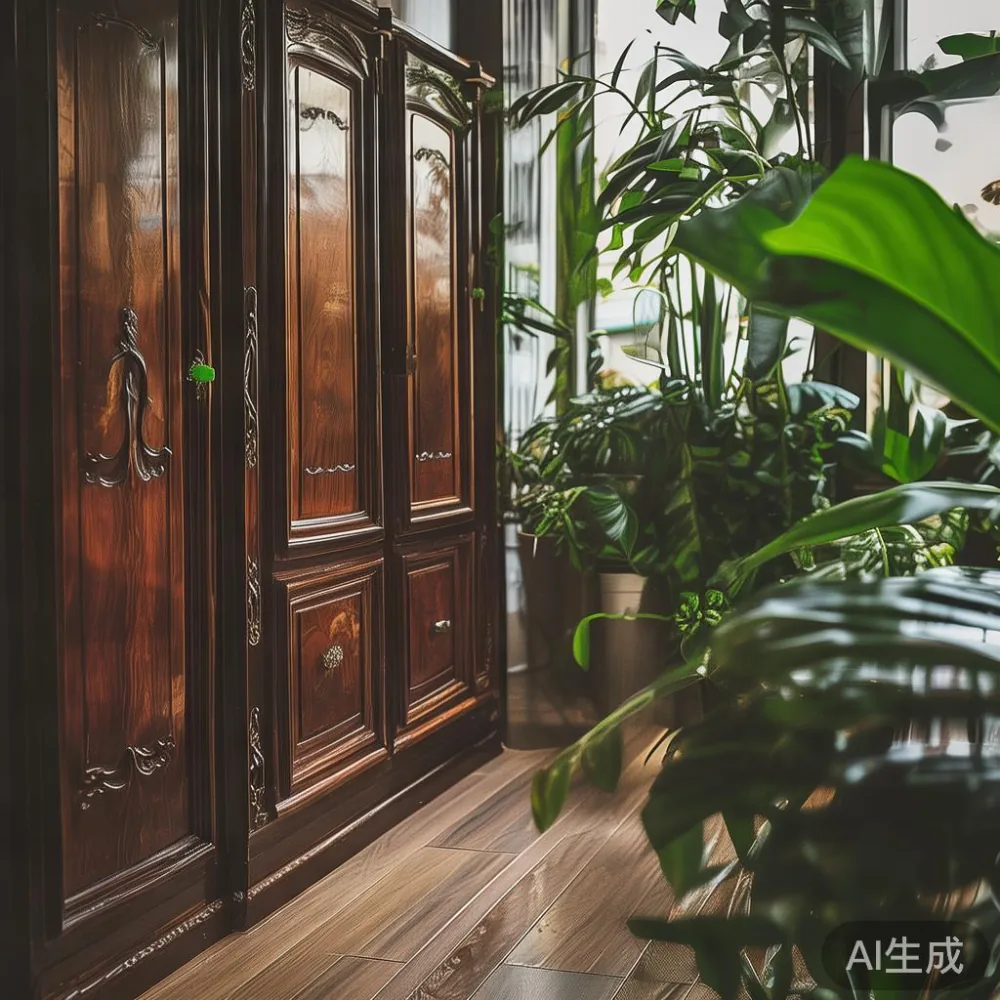
For context, MIDHILL has been making lacquered and solid wood pieces out of Foshan since 2008 and ships to more than 15 countries. Their standard structural warranty runs ten years, refinishing is offered for the life of the piece, free shipping kicks in above roughly US$350, and returns are accepted within 14 days. Several of the references in this article come from conversations I have had with their after-sales team about warranty claims from Singapore customers, which is why the advice below leans practical rather than aspirational. We will talk about how to style French provincial wardrobe in room settings without compromising lacquer care, because the same climate rules apply across a wardrobe, a bed frame, a dining table, and a nightstand. We will keep the focus narrow: the lacquered bar cabinet in your home, and what to do to it every day, every month, and every year.
Why a Singapore Home Is Hard on Lacquer
Lacquer is a finish, not a material. On a bar cabinet, it is typically a high-gloss or piano-gloss layer of polyurethane or acrylic resin sprayed over a sealed substrate — either MDF or, in the case of MIDHILL, a solid wood frame under a multi-coat lacquer. Gloss looks beautiful under a 3000K warm ceiling light, but it is also unforgiving. In Singapore, the ambient relative humidity sits between 65 and 85 percent for most of the year, with daily swings of 10 to 15 percent when the air-conditioner cuts in and out. Lacquer expands and contracts very slowly compared to the wood beneath it. Over 12 to 24 months, that mismatch shows up as hairline cracks near the door hinges of a wardrobe, or as micro-crazing on the top of a dining table placed near a window.
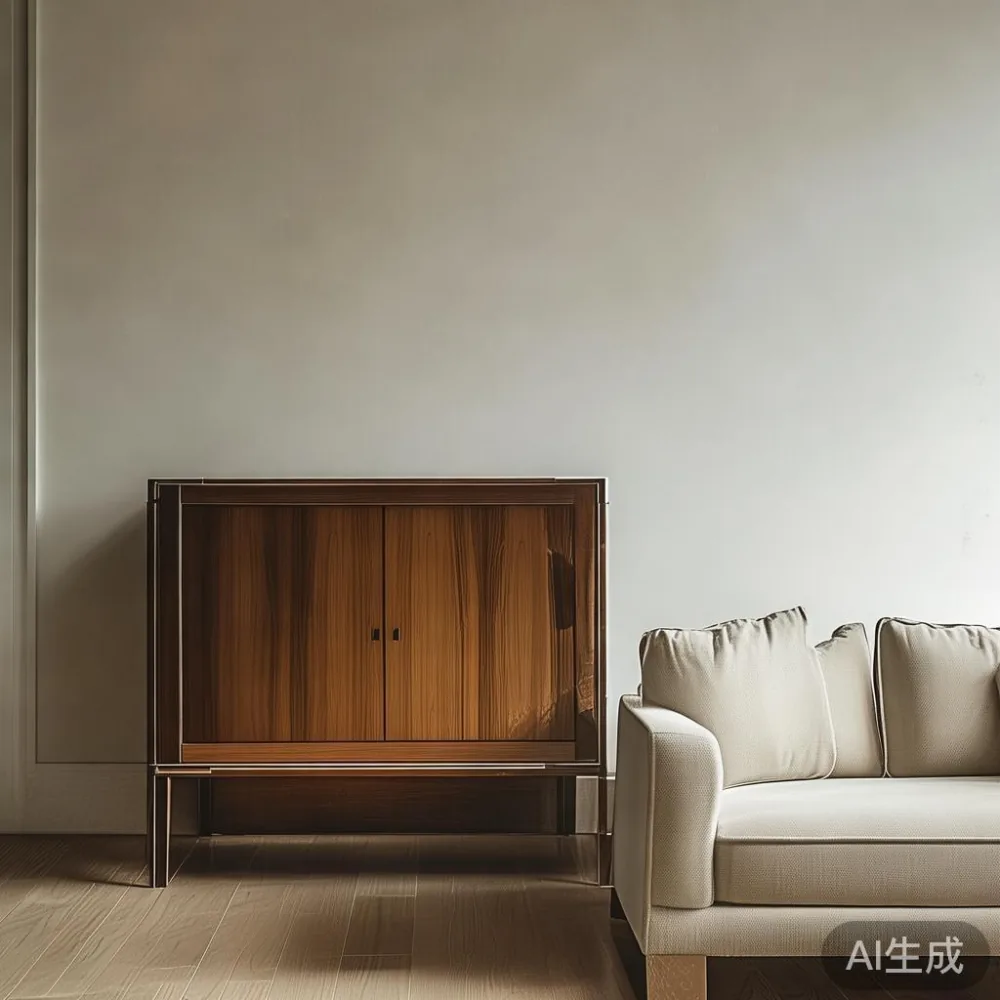
Temperature matters too. A west-facing window in a HDB block can hit 45 degrees on the inside surface in March. Place a bar cabinet within 1.5 m of that window and the lacquer on the back panel ages at three times the rate of the front. Salt-laden air is the third enemy: if your home is within 2 km of the coast — Punggol Waterway, East Coast, Sentosa Cove — chloride particles settle on every surface and attract moisture, which keeps the lacquer damp long after the rest of the room has dried. None of this means you should avoid lacquer. It means you should plan around it.
What does daily care for a lacquered bar cabinet actually look like?
Daily care is short and boring, which is why people skip it. It takes 90 seconds, twice a day, and it does more for the lifespan of the cabinet than any quarterly deep clean. Here is the routine I watched my colleague follow in Tampines, and the one I now follow at home.
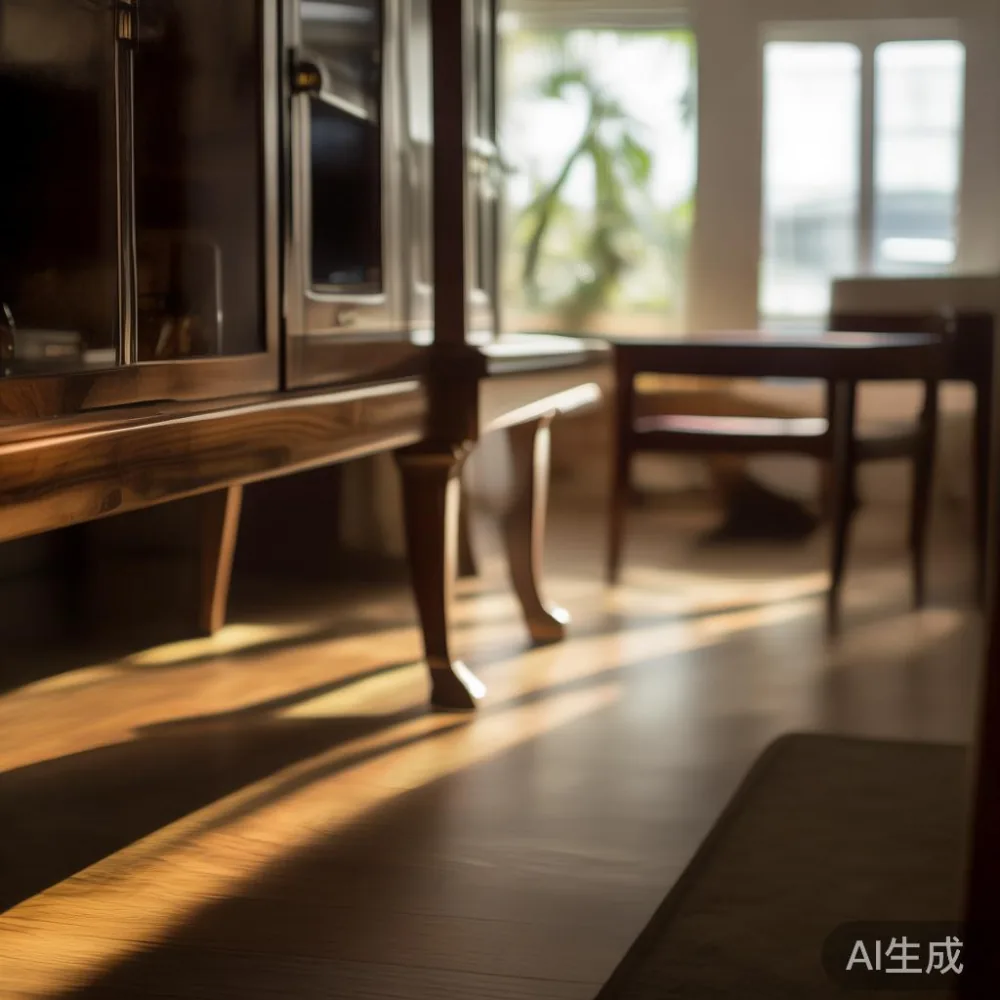
First, a soft microfiber cloth, ideally 40 by 40 cm, lightly dampened with distilled water. Wring it until no drops fall — the cloth should feel almost dry. Wipe the front panels, the side panels, and the top in straight lines, not circles. Circles redistribute dust into the micro-scratches that already exist. Second, dry the surface immediately with a second dry microfiber cloth. Leaving moisture to air-dry on gloss is how you get water-spot etching, which is permanent and which most warranties do not cover. Third, if you have just served drinks, wipe the cabinet within ten minutes. Gin, tonic, and whisky are acidic; cola and sour plum juice are worse. A single dried drop will etch the lacquer within an hour under warm indoor lighting.
Avoid these daily mistakes: paper towels (they are abrasive at fibre level), silicone polishes (they build up a film that yellows under UV), and any cleaner containing ammonia or acetone. In Singapore, you will find dozens of "furniture polish" sprays at NTUC FairPrice or Taobao that contain silicone. They will make the cabinet look glossy for a week and dull it for the next five years. Stick to distilled water and a clean cloth.
Monthly and Quarterly Routines That Actually Matter
Once a month, give the cabinet a deeper clean. Use a pH-neutral wood soap — a 30 ml concentrate diluted in 500 ml of distilled water costs about SGD 18 at any household shop in Bedok Mall or Jem. Apply with a microfiber cloth, wipe in the direction of the grain (even on a lacquered surface, follow the wood grain underneath), and buff dry within three minutes. Once every three months, check the rubber door bumpers. A 5 mm rubber bumper costs SGD 2 at a neighbourhood hardware shop and protects the lacquer inside the cabinet from contact with the door. When bumpers harden or fall off, the doors slam against the frame and chip the lacquer at the contact point.
Quarterly, also check the back of the cabinet. Pull it 30 cm away from the wall — in a HDB corridor, you often cannot pull it further, and that is fine — and vacuum the dust on the back panel with a brush attachment. Dust on the back holds moisture against the wall and creates a dark tide mark that creeps around to the side panels over six to nine months. If you store a marble table in the same living area, the same rule applies: marble is porous and will absorb any silicone or oil that drifts off an adjacent lacquered piece.
Twice a year, in March and in September, do a full inspection. Open the doors and look at the inside edges near the door hinge with a torch. Look at the top edges for yellowing. Look at the bottom corners for swelling. In Tampines and Bedok, where the monsoon transitions happen roughly in those months, this is when most lacquer damage begins to show. Catching it early is the difference between a SGD 180 spot refinish and a SGD 1,200 panel replacement.
Should I Place a Bar Cabinet Near the Kitchen or the Window?
Placement is the single biggest determinant of how long a lacquered cabinet will last in Singapore. The three rules below are non-negotiable in my view, and they apply just as much to a solid wood sofa frame, a bed frame, or a dining table sitting in the same room.
Rule one: at least 1.5 m from any external window, especially west- and north-facing ones. UV is the leading cause of yellowing in clear lacquers and the leading cause of micro-cracking in pigmented ones. If the only place for the bar cabinet is near a window, install a 5 percent UV film on the glass — a 1.4 m by 1.4 m panel costs about SGD 65 installed, and it cuts UV transmission by 99 percent.
Rule two: at least 30 cm from any air-conditioner vent. Direct, cold airflow onto one side of a cabinet creates the worst kind of humidity swing. I visited a Punggol condo last year where a client's wardrobe had warped 4 mm at the bottom because the AC louver was pointed straight at it. The fix was a SGD 40 vent deflector and a six-week period of controlled humidity.
Rule three: keep the cabinet away from the stove, the oven, and the kettle station. Steam and grease are lacquer killers. If your kitchen opens directly into the living room — which is true for most 4- and 5-room HDB flats — put the bar cabinet on the wall opposite the stove, not on the same wall. A 90 cm clearance is a sensible target.
How do I fix small scratches and dull patches without calling a technician?
Small scratches are inevitable. The fix depends on the depth. Surface scratches — fingernail catches — can be buffed out with a furniture-grade scratch cloth. A pack of ten cloths costs about SGD 25 and is available at most DIY counters. Work in 15 cm straight lines, no circles, and replace the cloth as soon as it looks dirty. Going over a dirty patch grinds the dust back into the lacquer.
Deeper scratches that catch paper but not the wood underneath need a touch-up marker. Match the colour in daylight, not under your living room downlight. Apply inside the scratch, leave for 60 seconds, wipe off the excess. Most touch-up markers are lacquer-based and will soften slightly into the surrounding finish within 24 hours. Chipped lacquer — where a flake has come off — is harder. For chips smaller than a 5-cent coin (about 1.5 cm across), you can fill with a clear lacquer pen, SGD 12 at any DIY shop. For chips larger than 2 cm, or anywhere on a high-visibility door panel, call a professional. MIDHILL offers lifetime refinishing on its pieces, and their team can dispatch a technician to Singapore for site work on selected models — typically at a cost of SGD 280 to SGD 480 per panel, including a 7 to 14 day lead time for shipment of the matching lacquer.
Yellowing, dullness, and haze across the entire surface mean the top lacquer coat has oxidized. There is no DIY cure for this. A full sand-and-respray by a professional lacquer shop in Singapore costs between SGD 600 and SGD 1,400 for a 180 cm bar cabinet, depending on the number of coats and the sheen level. Expect the cabinet to be out of service for 5 to 10 working days.
Climate-Control Tools Worth the Money in Singapore
You do not need a smart home. You need three things: a hygrometer, a dehumidifier, and a small fan. A basic digital hygrometer costs SGD 15 and tells you the relative humidity next to the cabinet. Aim for 50 to 60 percent. Below 45 percent, solid wood shrinks and joints loosen; above 65 percent, lacquer swells and the risk of white haze rises sharply.
A 12-litre dehumidifier suitable for a 30 sqm living area costs between SGD 280 and SGD 450. Run it on a humidistat setting rather than continuously — the unit cycles on and off and keeps the room within a 5 percent band. In a HDB flat, expect the unit to pull 4 to 6 litres of water per day during the December and June monsoon periods, and 1 to 2 litres on a fair day. Empty the tank every morning or, better, plumb it to a floor drain via a SGD 25 hose kit.
The small fan is the cheapest tool and the one most people skip. A SGD 35 clip fan pointed at the back panel of the cabinet keeps air moving, prevents the stagnant damp that breeds mildew, and helps the dehumidifier work efficiently. Place the fan so it blows along the back wall, not directly at the cabinet face.
How Do I Move a Lacquered Bar Cabinet Through a HDB Lift and Corridor?
This is the question that most damage happens during. A 180 cm tall, 90 cm wide, 45 cm deep bar cabinet typically weighs 55 to 75 kg fully assembled. Most HDB passenger lifts have a door opening of about 90 cm wide and 210 cm tall, and an internal cabin of roughly 1.4 m by 1.6 m. The cabinet fits, but only if it stays upright. Tipping a lacquered cabinet on its side, even for 30 seconds, can cause the top panels to sag, the doors to shift on their hinges, and the lacquer at the corners to crack under the new stress direction.
The right technique: keep the cabinet upright at all times. Two strong people can slide a 70 kg cabinet on a furniture dolly (SGD 45 rental for a day) into the lift. In the corridor, wrap the corners in 5 mm thick foam wrap and secure with stretch film. Two wraps of stretch film, each costing about SGD 4, are enough. Do not use moving blankets alone — they slip and the corner of the cabinet will hit a wall corner at the lift door, where the steel bumper sits 60 cm above the floor. That bumper has chipped more lacquer than any other surface in a HDB block.
If your corridor turn is tight — under 1.8 m radius — unbolt the doors and carry them separately. Two doors plus hinges weigh about 8 kg and the cabinet body drops to around 60 kg, which is much easier to pivot. Reattach the doors inside the home. Most MIDHILL bar cabinets use a standard 35 mm cup hinge, and the company ships spare hinges in every carton, which is a small touch that saves a lot of frustration.
Warranty, Refinishing, and Long-Term Ownership
A lacquered bar cabinet in Singapore, looked after with the routines above, should give 12 to 18 years of service before the first refinish. The structural frame — typically solid rubberwood, ash, or beech — will outlast the lacquer by decades, which is why MIDHILL offers lifetime refinishing rather than lifetime replacement. When the time comes for a refinish, the cabinet does not need to leave your home; a technician can sand and respray on site, masked off from your walls and floor, in two to three working days. The cost is roughly SGD 480 to SGD 720 for a 180 cm cabinet with two doors and three drawers, depending on the sheen level you choose.
Keep your warranty card, your original invoice, and a small file of care notes. Photograph the cabinet on the day it is delivered. Send those photos to the after-sales email on file. If a problem develops, those photos are how the warranty team confirms the issue is manufacturing-related rather than climate-related. Singapore's GST is 9 percent as of 2024 and applies to all imported furniture, so retain your tax invoice for at least five years — the IRD occasionally asks for it during a home-office audit, and it is also useful when you eventually sell the piece.
One last thought on style. A lacquered bar cabinet does not have to live alone. Pair it with a French provincial TV console in cream or off-white for a softer, post-modern light luxury feel — the contrast between the gloss bar cabinet and the matte console reads as quietly expensive without shouting. If your taste leans American light luxury, choose a bar cabinet in charcoal or deep walnut with brushed brass pulls, and anchor the room with a MIDHILL coffee table in the same finish. For a French provincial wardrobe in the adjacent bedroom, repeat the lacquer tone on the wardrobe doors so the eye carries the same warm white from the living room through to the bed frame and nightstand. If you are researching the best French provincial wardrobe for 2026, treat the lacquer care rules here as the baseline, since provincial styling with high-gloss lacquer asks for the strictest humidity control. And if you are browsing for sale light luxury furniture listings, ask specifically whether the lacquer is acid-cured, polyurethane, or acrylic — the answer will tell you how much climate control the piece will need. The same applies when comparing a top 10 Nordic furniture shortlist: many Nordic pieces are oil-finished, which behaves very differently from lacquer, and a buyer used to oil will need to relearn care once a lacquered bar cabinet enters the home. Knowing how to style European bed in bedroom spaces next to a lacquered wardrobe follows the same logic — keep the bed at least 30 cm from any external wall and out of direct AC airflow, and the lacquer on the headboard detail will hold its gloss for a decade or more.
That is the routine. Ninety seconds a day, ten minutes a month, an hour every quarter, and one annual check in March and in September. The lacquered bar cabinet is one of the few pieces of furniture in a Singapore home that you can keep looking new for fifteen years with nothing more than a microfiber cloth, distilled water, and a hygrometer that costs less than a kopi at the neighbourhood kopitiam.